Breaking news
Formula 1
McLaren takes suspension to next level
F1's first test has offered a decent look at the 2018 cars – and a proper chance to get close up to some of the more interesting innovations that had not been so obvious in the carefully-manipulated launch images.
Giorgio Piola Jonathan Noble
Edited: Feb 28, 2018, 10:56 AM
Copy link
Share on Viber

Giorgio Piola's F1 technical analysis
Giorgio Piola is the preeminent Formula 1 technical journalist. View our full selection of Giorgio's technical illustrative content
One of the best examples of this is McLaren's aggressive rear suspension design, which features a bold repositioning on the inboard connecting points of the upper wishbone.

McLaren MCL33 rear
Photo by: Giorgio Piola
Considering the team had to revise its suspension so late in the car design process – because of the switch to the Renault engine – the change shows how clear it was for McLaren's designers that there are good aerodynamic benefits to be had.
Its work has resulted in it reshaping and co-joining the wishbone elements to deliver the most aerodynamically efficient shape possible.
McLaren is no stranger to going the extra mile with its suspension to help benefit aerodynamics, which has often mean integrating it with diffusers or rearward aerodynamic devices to help airflow at the back of the car.
It was the first team to introduce a bracket on the top of the wishbone back in 2013, which was introduced to help clean up airflow that was being channelled inside the rear wheels.

McLaren MP4/28 rear suspension design, third view
Photo by: Giorgio Piola
In 2014, it went further by repositioning the location of the wishbones so they were more streamlined – with the lower one shaped in a way that it could act as an aerofoil as had been used in 2007.

2014 McLaren MP4-29 rear butterfly suspension
Photo by: Giorgio Piola
One of the most extreme suspension solutions that we have seen in F1 was adopted by McLaren that year too, with the butterfly shaped rear suspension to help channel airflow and increase the effectiveness of the diffuser.

McLaren MP4/30 rear suspension comparison
Photo by: Giorgio Piola
The following year, McLaren changed the angle of the wishbones dramatically – with the top one much further forward than the bottom one. Again this was about helping the diffuser be able to extract more air than would otherwise have been the case.
Attention more recently has shifted to making big aero-brackets from the wishbone elements, with Toro Rosso in 2015 experimenting with this at the rear of the car.

Toro Rosso STR10 rear suspension and Mercedes W06 front suspension comparison
Photo by: Giorgio Piola
Now McLaren has gone a step further, with the whole upper elements forged into a near single unit to help deliver an aerodynamic boost.
It is also important to note how (compared to the Toro Rosso), the pick-up point of the pushrod link has been moved as far away from the rear wheel as possible to help free up airflow.
Teams are constantly battling the effects of airflow inside the rear wheels and a little help here in avoiding external interference will be welcomed by the aerodynamicists.
However, such a move does not come without potential compromises in terms of weight and stiffness from the suspension point of view. But McLaren will almost certainly have concluded that the aero benefits of its approach outstrip these negatives.
We want your opinion!
What would you like to see on Motorsport.com?
Take our 5 minute survey.
- The Motorsport.com Team
Read and post comments
Read also :
Share Or Save This Story
Copy link
Share on Viber
Previous article Lost day of F1 testing unlikely to be replaced
Next article Sirotkin, Stroll to have two race engineers each
Top Comments
There are no comments at the moment. Would you like to write one?
View More & Comment
More from
Giorgio Piola
The fascinating story behind McLaren's most iconic F1 car
Formula 1
Formula 1 Apr 3, 2024
The fascinating story behind McLaren's most iconic F1 car
Emilia Romagna GP: F1 technical images from Imola's pitlane
Formula 1
Formula 1
Emilia Romagna GP
Apr 21, 2022
Emilia Romagna GP: F1 technical images from Imola's pitlane
The F1 downforce choices that proved key at the Saudi GP
Formula 1
Formula 1
Saudi Arabian GP
Mar 29, 2022
The F1 downforce choices that proved key at the Saudi GP
Latest news
F1 driver contracts: How long is each driver tied down for?
Formula 1
F1 Formula 1 5 min
F1 driver contracts: How long is each driver tied down for?
IndyCar 2026 season review: ECR
IndyCar
Indy IndyCar 15 h
IndyCar 2026 season review: ECR
Toto Wolff reflects on Mercedes’ non-title years: ‘We weren’t complete losers’
Formula 1
F1 Formula 1
Sao Paulo GP
16 h
Toto Wolff reflects on Mercedes’ non-title years: ‘We weren’t complete losers’
Renger van der Zande moves to IMSA’s LMP2 class full-time with Tower Motorsports
IMSA
IMSA IMSA 16 h
Renger van der Zande moves to IMSA’s LMP2 class full-time with Tower Motorsports
Feature
Discover prime content
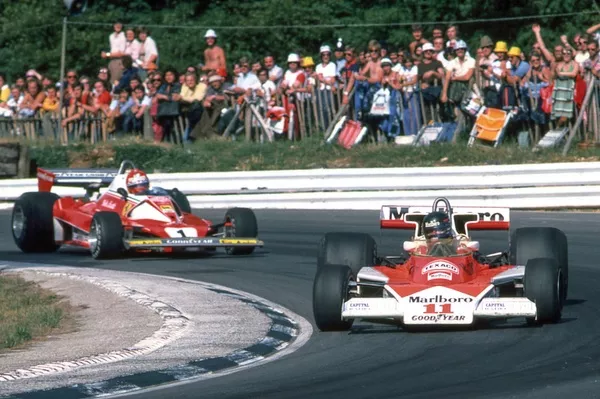
Top 10 F1 cars of the 1970s
Formula 1
By Kevin Turner
Top 10 F1 cars of the 1970s

Subscribe and access Motorsport.com with your ad-blocker.
From Formula 1 to MotoGP we report straight from the paddock because we love our sport, just like you. In order to keep delivering our expert journalism, our website uses advertising. Still, we want to give you the opportunity to enjoy an ad-free and tracker-free website and to continue using your adblocker.
You have 2 options:
- Become a subscriber.
- Disable your adblocker.
Subscribe now Already subscribed? Sign in here
Already disabled your adblocker?
Reload page
Manage Alerts
Subscribe