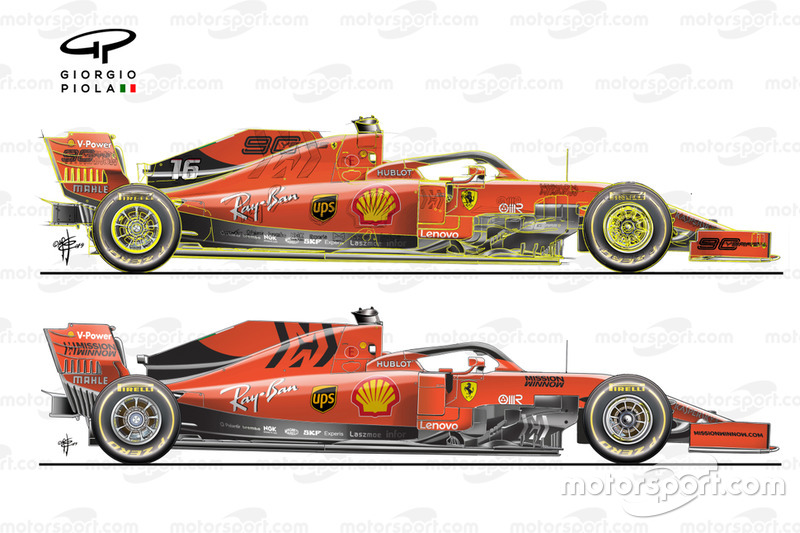
Using the Ferrari SF90 that raced last year as a yardstick with Giorgio Piola’s latest sketches of the SF1000 overlaid, let’s dive in and unlock the differences between these two machines...
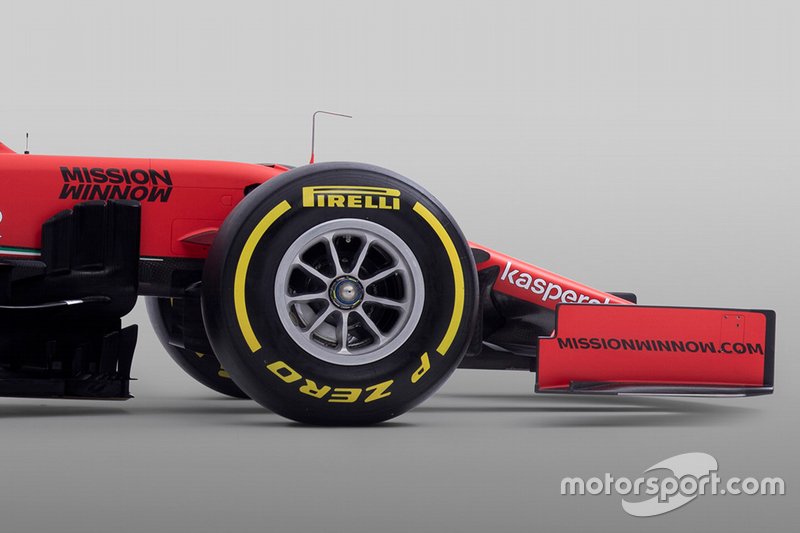
1. The nose utilises a similar cape solution to the design introduced by Ferrari in Singapore last season, with changes made to the nose tip shape in order to optimise its performance.
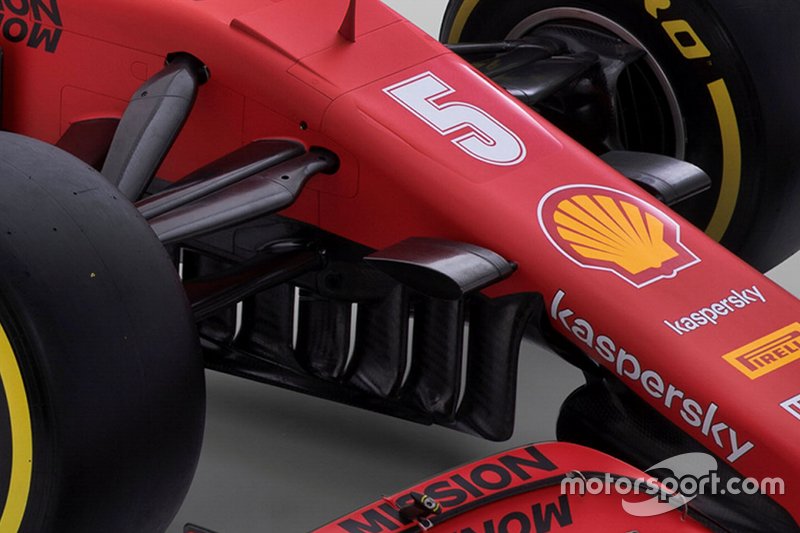
2. The turning vanes have been brought forward and are more complex than last year, with seven elements now hung beneath the nose and chassis.
3. The wheels have been redesigned with their partner O.Z. and feature longer spokes due to the central hub being reduced in diameter. This will allow more air to be passed through the brake duct assembly and out through the wheel face, a technique preferred by others last season given the prohibition of the blown axle solution.
Ferrari SF1000 front wing detail
Photo by: Ferrari
Ferrari SF1000 detail
Photo by: Ferrari
Ferrari SF1000 front wing detail
Photo by: Ferrari
4. The bargeboards have been carefully redesigned to maximise flow to the sidepods and their inlets behind, with the forwardmost section divided into three and made even taller than last year. Meanwhile, a twin boomerang solution has been deployed with a slimmer one mounted at the front end of the assembly and a larger one at the rear.
5. The innovative sidepod solution introduced in 2017, that placed the upper side impact spar at a lower and more forward locale has been retained but improved upon. It has clearly taken inspiration from Red Bull in this regard, with two winged sections above and ahead of the main cooling inlet allowing it to be much smaller, whilst also serving their own aerodynamic purposes. These changes have also led to a more aerodynamically beneficial wing mirror design, with both stalks serving as flow conditioning devices as well as supports for the actual mirror.
6. The airbox retains its narrow trapezoidal shape, a feature that’s enabled the designers to install ‘horns’ either side, serving as flow conditioners that should improve flow to the rear wing. This is not a new solution, just one that has been reinterpreted for the prevailing regulations, with McLaren using a similar design back in 2005, something that other teams duly copied thereafter.
Ferrari SF1000 sidepods detail
Photo by: Ferrari
Ferrari SF1000 sidepods detail
Photo by: Ferrari
Ferrari SF1000 detail
Photo by: Ferrari
7. The engine cover is dramatically slimmer and carries a much lower line thanks to work done by the powertrain department to repackage the power unit and ancillaries. This extends to the sidepods too, where we can see just how much tighter the packaging is when compared with its predecessor.
8. An all-new gearbox, which has the same volume but is much narrower, permits much narrower bodywork at the rear of the car, improving flow into the coke bottle region.
9. The T-wing is not dramatically new when compared with their opposition but does feature some novelties compared with last year's car. The double swan-neck rear wing supports have also been retained, as has the single element wastegate pipework, although work done at the tail end of last season could see them switch to a double wastegate arrangement at a later date.
Ferrari SF1000 rear detail
Photo by: Ferrari
Ferrari SF1000 halo detail
Photo by: Ferrari
Ferrari SF1000 rear detail
Photo by: Ferrari
10. The endplate of the rear wing has been optimised for 2020, with care taken over the number and design of the strakes placed on the wider section of the wing. As usual, we’d expect to see a number of rear wing configurations throughout the season in order to cater for the demands of the specific circuit that they’ll be visiting.
Ferrari SF90 and Ferrari SF1000 comparison
Photo by: Giorgio Piola
How did Ferrari get to this point? Here are the key elements of 2019's SF90 contender...
The cape solution introduced by Ferrari in Singapore last season
The underside of the cape solution introduced by Ferrari in Singapore last season
The turning vanes used by Ferrari in 2019 started a little further back down the car
The blown axle (inset) had been banned for 2019 and so Ferrari looked for ways to recover some of the aerodynamic benefits it’s lost
Ferrari repeatedly made improvements to its bargeboards throughout 2019 but none of the solutions used last year hold a candle to the complexity of the ones presented so far in 2020
Ferrari was first to use the almost universally-adopted sidepod design back in 2017 but that hasn’t stopped them refining it ever since. Here in 2019 we can see how far the design had come, but for 2020 the team seem to have progressed yet one step further
McLaren introduced these ‘Viking horns’ back in 2005, a feature that’s been repurposed by Ferrari for the prevailing regulations
The engine cover and surrounding bodywork was already pretty slim last year, as evidenced here. But, the SF1000 takes things to an entirely different level
The bodywork at the rear of the SF90, seen here, already tapered in significantly but now seems bloated when compared with this year’s challenger
Subscribe and access Motorsport.com with your ad-blocker.
From Formula 1 to MotoGP we report straight from the paddock because we love our sport, just like you. In order to keep delivering our expert journalism, our website uses advertising. Still, we want to give you the opportunity to enjoy an ad-free and tracker-free website and to continue using your adblocker.






Top Comments