Analysis
Formula 1
Why F1 is going to be ‘very aggressive’ on new engine rules
Formula 1 has made no secret of the fact that it did not get its current engine rules right.

Jonathan Noble
Edited: Feb 14, 2021, 11:49 AM
Copy link
Share on Viber
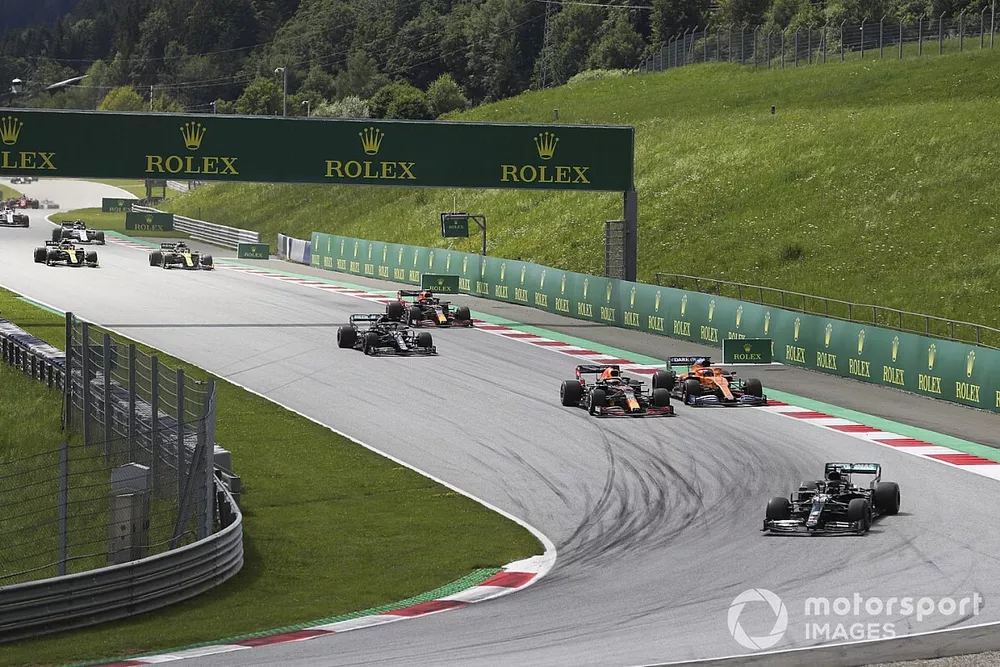
While the move to turbo hybrids in 2014 was the right thing to do for sustainability reasons and keeping manufacturers interested, mistakes were made in how the power unit rules were framed.
When pulling the new regulations together, engineers had run rampant in leading the charge about the exciting technologies that could be incorporated in the 1.4-litre turbos and their energy recovery systems.
The result were overtly complex power units that proved hugely expensive to understand and develop.
The combination of the MGU-H and MGU-K, plus a lot of design freedom in the overall concept, meant the complexity become an expensive challenge for manufacturers – and prompted a number of headaches in the early years.
Honda’s experience of getting it so wrong on its F1 return acted as a deterrent for other manufacturers – and the costs the Japanese manufacturer faced in hauling its way to the front ultimately proved a factor in it pulling out of the sport.
The engines were not just bad for those designing and running them though.
For fans, the biggest downside was that they robbed the sport of much of the emotion of the old screaming V10s and V8s.
The lack of noise was a big gripe, and the impact of drivers having to save fuel left many of the sport’s followers unhappy that grands prix had been turned into economy runs.
Mistakes were also made in how F1 failed to market some of the positive messages of the power units.
That the sport was unleashing the most powerful engines in grand prix history – and ones that were the most efficient racing engines ever created – got lost amid the other criticisms.
Read Also:
- The hurdles F1 needs to overcome on sprint race trials
- F1 sprint race decision due before 2021 season start
- F1 targets "powerful, emotive" engines for 2025
As thoughts have turned to future power unit regulations, it is clear that F1’s chiefs are not going to make the same mistakes again.
During discussions at Thursday’s F1 Commission meeting, one of the key decisions made was a framing of the progress of the move towards new engines rules.
These had originally been planned to come into force for 2026, but teams agreed to bring that forward one year on the back of a unanimous decision to go for an engine freeze from 2022.
A working group has now been set up to sort out what the new hybrid F1 engines should be like – with input from both current and potentially interested manufacturers.
Its stated aims have been agreed. They are: environmental sustainability and social and automotive relevance; fully sustainable fuel; creating a powerful and emotive power unit; significant cost reduction and attractiveness to new power unit manufacturers
Achieving all those targets will not be the work of the moment, but what is different this time around compared to when the 2014 engines were framed is that F1’s chiefs are fully aligned on where things need to go.
Back when the original turbo hybrid rules were laid out, they were not helped by FIA president Jean Todt pushing hard for them, and then F1 supremo Bernie Ecclestone being resistant and criticising them at every turn.
Ecclestone famously lambasted the lack of noise to the media when the hybrids ran for the first time in testing – even though he was nearly 1500 miles away back at his London offices as the cars were running in Jerez.
Now though not only is the FIA behind the push, but so too is F1 CEO Stefano Domenicali – whose approach to the new rules comes against the backdrop of his understanding of the needs of F1 (through being a former Ferrari team boss) and that of manufacturers (from being a former Lamborghini CEO).
He is convinced that power unit rules can be framed that can keep both manufacturers and fans happy – as well as attract car makers not currently involved in F1.
But getting the rules settled in the right way is not going to be straightforward – which is why he has vowed not to sit back and let the mistakes of the past get repeated.
Speaking recently about his mindset for the rules discussions, Domenicali made clear where the battle lines were drawn.
“Despite the technology that has to be very relevant, we need to start from the cost and investment that are fundamental to make it attractive for any other OEM to either produce an engine or to be part of an engine plus chassis production,” he said.
“So engine and cost will be the big equation on which we need to start the discussion. We need to be very aggressive.
“But I am positive to say that we are attacking the right points, which will be fundamental to keep the interest on our platform, also from the technological point of view.”
While the discussions over the next months will inevitably hit some road blocks, the fact they are starting with some clear and agreed targets in mind – that F1 is determined are hit – bodes well for what ends up being unleashed at the start of 2025.
We want your opinion!
What would you like to see on Motorsport.com?
Take our 5 minute survey.
- The Motorsport.com Team
Read and post comments
Read also :
Share Or Save This Story
Copy link
Share on Viber
Previous article Mercedes admits it has "some issues" with 2021 F1 engine
Next article How Ferrari’s F1 fire-up video revealed clues to key design changes
Top Comments
There are no comments at the moment. Would you like to write one?
View More & Comment

More from
Jonathan Noble
Brundle awarded OBE in King’s New Year’s honours
Formula 1
Formula 1 Dec 31, 2024
Brundle awarded OBE in King’s New Year’s honours
The new rules dilemma that will define the 2025 F1 season
Formula 1
Formula 1 Dec 31, 2024
The new rules dilemma that will define the 2025 F1 season
Verstappen issues Red Bull title warning in push for RB21 progress
Formula 1
Formula 1
Australian GP
Dec 28, 2024
Verstappen issues Red Bull title warning in push for RB21 progress
Latest news
Joe Gibbs Racing plans to push back on Denny Hamlin retirement timeline
NASCAR Cup
NAS NASCAR Cup 3 h
Joe Gibbs Racing plans to push back on Denny Hamlin retirement timeline
Retaining Liam Lawson isn't enough – Red Bull must stop treating him like a failure
Formula 1
F1 Formula 1 9 h
Retaining Liam Lawson isn't enough – Red Bull must stop treating him like a failure
Yamaha may not be competitive immediately in MotoGP's 850cc era, says Pramac
MotoGP
MGP MotoGP
Qatar GP
12 h
Yamaha may not be competitive immediately in MotoGP's 850cc era, says Pramac
Feature
Discover prime content

Subscribe and access Motorsport.com with your ad-blocker.
From Formula 1 to MotoGP we report straight from the paddock because we love our sport, just like you. In order to keep delivering our expert journalism, our website uses advertising. Still, we want to give you the opportunity to enjoy an ad-free and tracker-free website and to continue using your adblocker.
You have 2 options:
- Become a subscriber.
- Disable your adblocker.
Subscribe now Already subscribed? Sign in here
Already disabled your adblocker?
Reload page
Manage Alerts
Subscribe