Will NASCAR's recent splitter strut rules affect The Chase?
The conventional wisdom was that Toyota had made gains before the change


Ryan Blaney, Team Penske Ford, Denny Hamlin, Joe Gibbs Racing Toyota
Photo by: Jared C. Tilton / Getty Images
It’s an open question to how impactful it will prove to be, but NASCAR’s recent rule changes to the front splitter assembly could play a factor in deciding the results of the Chase for the Championship that starts in September.
In mid-July, right before the race weekend at North Wilkesboro Speedway, competition officials mandated teams add struts to the front splitter, which has been widely described as a benefit for Ford and Chevrolet teams against an advantage found by Toyota teams.
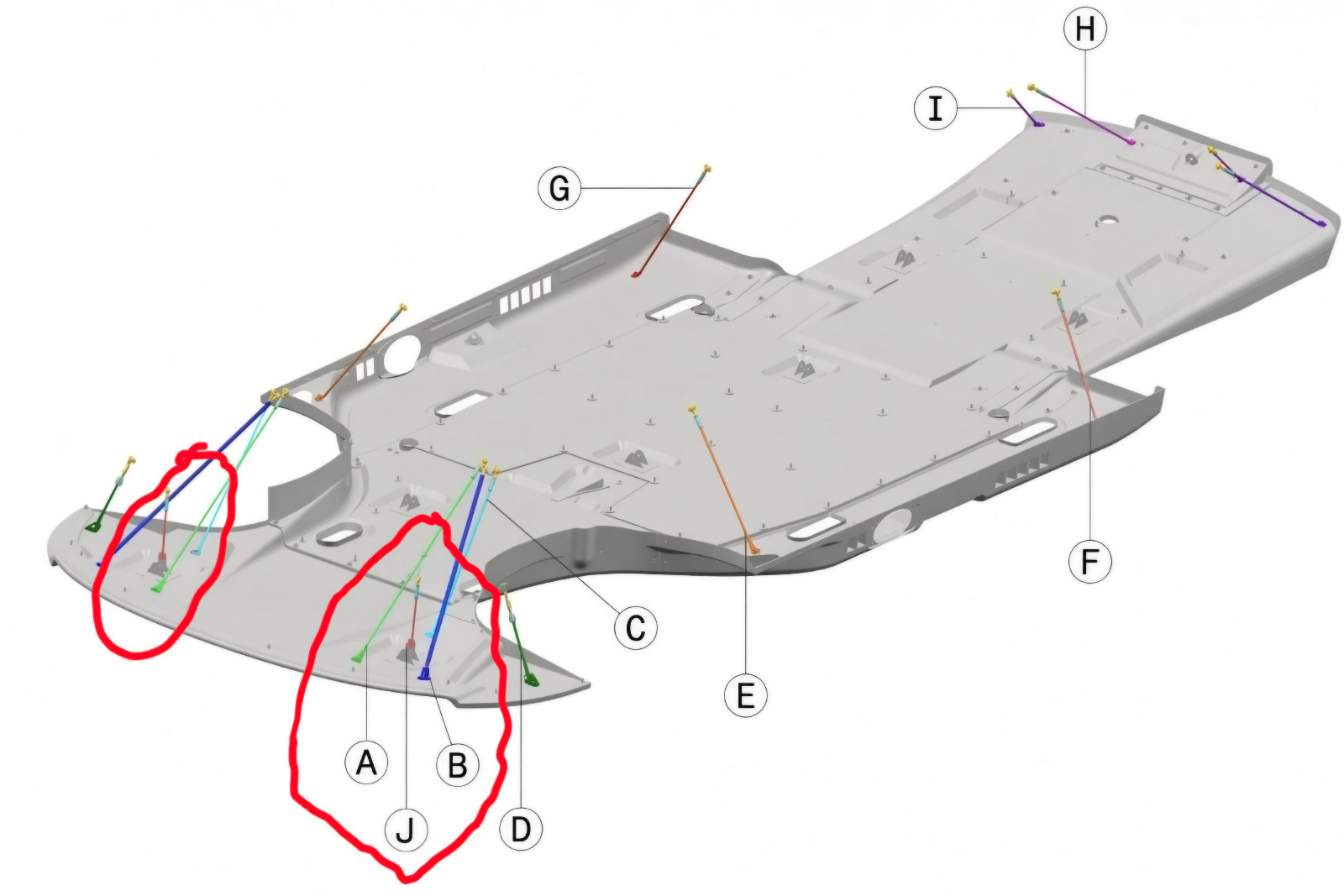
To be clear, no rules were broken and NASCAR only made the changes to level competition, but the rule was designed to prevent the splitter from moving or deforming at speed. Over the weekend, Joey Logano said this was just a matter of creating a consistent application of a rule across every team and manufacturer.
“I don’t know if it was designed just to help others. I think it was just to bring the field to where everyone was doing the same thing,” said Logano on Saturday during a press conference. “There were cars that were more aggressive with that rule than others. I’m just telling you how it is. Some teams feel more comfortable pushing things past the edge a little bit and getting their hand slapped or worse, and other teams are a little bit more conservative.
“That was something that was obviously a decent sized needle mover for some teams. Kudos to NASCAR for finding a way to enforce it. It’s not an easy rule to enforce, obviously, so they’ve found a way to do it, so kudos to them.”
Denny Hamlin said he isn’t sure how big of a difference this is, but expressed frustration that rules could be changed mid-season simply because someone may have found a legal advantage.
“We live in a garage where if a team's not running well, they'll just go to NASCAR and complain about something and try to get the rules of it changed,” Hamlin told Motorsport.com after the race on Sunday. “But NASCAR's been doing that for many years. Back when I was watching NASCAR in the '90s, they would be like, "Okay, we're going to add half inch spoiler to the Pontiacs," or something like that. So it's been going on for a long time, but certainly any advantage we had had been earned.”
To his point, anyone in the garage in the 90s knew how vocal of a political advocate Jack Roush or Ray Evernham could be in the tech inspection line or behind closed doors with the Sanctioning Body. This isn’t new.
However, these changes will seemingly most affect the intermediate track races where Hamlin and his JGR and 23XI peers seemed to have the best cars all season.
Jonathan Hassler, crew chief of the race winning Penske No. 12, says has been some help there for the Ford.
“I definitely think they work in our favor,” Hassler told Motorsport.com. “Just the shape of our nose is a little bit different and that definitely helps level the playing field a little bit in our opinion. Is it small a lot of these on the short track package? Sure. But it's a stacking pennies too, and it definitely hasn't hurt us. I certainly hope that it makes us a bit more competitive on the intermediate tracks. But I know we've done some other things too aside from that, that are going to make us more competitive. So I'm excited for the opportunity we have with those tracks.”
Hamlin and Blaney will start the Chase for the Championship as the first and second seeds and are the presumptive championship favorites. Hamlin will start the final 10 races with a 25-point advantage over Blaney starting with the Southern 500.
Again, the rules will most impact the high speed and downforce intermediate tracks but Hassler conceded Ford’s turnaround started with that rule change.
“The rule, the additional splitter stays have been on every track since North Wilkesboro, so it's definitely, if you look at the results of the Fords, we've certainly been better,” Hassler said. “I think if you look at the way Joey (Logano), the speed he had at Indianapolis, you certainly got to feel like it's going to help our intermediate program too.
“I think with what we know, it certainly should help our intermediate program on the 12 team as well.”
How do Toyota teams like the No. 20 with Christopher Bell led by Adam Stevens feel?
“It’s hard to say,” Stevens said. “We haven’t really been to an intermediate, right?”
The Ford teams have been excellent on short tracks ever since the advent of the NextGen car so Stevens isn’t sure there’s anything to read into the races at Wilkesboro, Iowa, Richmond and New Hampshire.
“I think we finished seventh here last year and needed a little bit,” Stevens said of Bell. “And we finished fourth here this year and needed a little bit. It doesn't feel a whole lot different. Feel like we made progress, but we didn't close the gap. I think we have to get to Vegas and Kansas and those other tracks and see if it looks any different than it did earlier in the year. It doesn't feel a lot different to me right now.”
Charles Denike, crew crew chief for Bubba Wallace and the 23XI No. 23 team didn’t bite much, and simply said it’s a rule change that applies to everyone and everyone has to work to understand how that changes their cars.
Cliff Daniels, crew chief for Kyle Larson and the Hendrick Motorsports No. 5, said he didn’t entirely agree that the rule change was about anything Toyota had found.
“I don't know that I'm going to make that claim, honestly,” Daniels said. “I'm not going to say from what I've seen, it's had a humongous impact. For us, I think part of it is we just had to get a little bad luck away from us. We've been building forward on things that we were deficient in, period, from the start of the season where the Toyota certainly started on a strong note.
“They've had their body for a while, and they've had their notebook for a while, and we kind of had to start again at ground zero. So part of that is just the logical and natural progression of building ourselves to a better spot. As far as that change specifically, I don't know that I can pinpoint one thing specifically that I feel like has brought the field closer together. Penske cars have always been great at short tracks. They've dominated the short tracks from Wilkesboro to Richmond to here.”
Share Or Save This Story


Kyle Larson takes firm command of NASCAR Cup Chase with four to go

Denny Hamlin's pursuit of Kyle Larson is one race at a time

Keselowski still tight-lipped on RFK exit; appreciating the process of free agency

Brennan Poole to leave Alpha Prime Racing; team owners 'disappointed' to see him go

Oscar Piastri on his Singapore puncture: “Ironically, it probably helped”

Winners and losers from NASCAR Cup at Charlotte after dramatic finish

Charles Leclerc admits he missed a chance against Max Verstappen – but not the obvious one
Subscribe and access Motorsport.com with your ad-blocker.
From Formula 1 to MotoGP we report straight from the paddock because we love our sport, just like you. In order to keep delivering our expert journalism, our website uses advertising. Still, we want to give you the opportunity to enjoy an ad-free and tracker-free website and to continue using your adblocker.


Top Comments