Formula 1
Is Norris' openness on mental health a weakness or a superpower?
Helmut Marko's comments over Lando Norris have re-ignited the debate of mental health versus mental performance in motorsport

Filip Cleeren
Edited: Oct 24, 2024, 9:38 AM
Copy link
Share on Viber

Lando Norris, McLaren F1 Team, on the grid with his engineer
Photo by: Steven Tee / Motorsport Images
In the margin of the US Grand Prix weekend Red Bull's Helmut Marko caught flak for pointing out what he called Lando Norris' "mental weaknesses" as he weighed up the title chances of the McLaren driver against those of Max Verstappen in a recent interview.
"We know Norris has some mental weaknesses. I've read about some of the rituals he needs to do to perform well on race day," Marko said, referring to Norris' admission of feeling nervous and anxious on race weekends, with the pressure making him struggle to eat or drink before a race.
Marko was countered by McLaren CEO Zak Brown and team boss Andrea Stella, who said it was "like you destroy in a comment the work of 20 years. Max was addressed for swearing. For me, this is much more severe in terms of what a member of the F1 community has said rather than one bad word in the wrong place.”
While it is not Marko's first comment that some would categorise as jurassic, it is debatable whether or not the Austrian was engaging in mind games or just being the straight shooter that he is. That attribute has made the 81-year-old a popular sounding board for F1's media corps. Ask Marko a question and you get an honest answer, with little regard of how it is received or whether it is adhering to PR lines.
At times that honesty can be refreshing, but by dismissing Norris' pre-race experiences as mentally weak, Marko has unknowingly still crossed a red line according to experts working in the field. Simon Fitchett, a mental coach and psychotherapist who was a former trainer in F1 for the likes of Sergio Perez, David Coulthard, Jerome D'Ambrosio, thought Marko's comments were potentially harmful. Not to Norris, who likely brushed them off, but to other people facing mental health struggles around the world and aren't as far in their journey to mitigate or overcome them.
"If we look at what Helmut Marko said, it's disappointing when you hear that, especially when mental health is a massive issue worldwide at the moment with so many external factors going on," Fitchett tells Motorsport.com.
"I thought those comments were below the belt. Sometimes when people try and pull someone or something else down, it's often to pull themselves up, that's a very common analogy. If you look across all sports, people take these little cheap shots at each other to try and destabilise or create a reaction or a distraction."
Simon Fitchett working with Sergio Perez in 2012
To be fair to Red Bull at large, team principal Christian Horner applauded his Mercedes rival Toto Wolff for speaking up about mental issues in the past. Verstappen has also made contributions by participating in popular motorsport streamer Jimmy Broadbent's Race for Mental Health, which is raising funds for Mind, the UK's leading mental health charity that works with Mercedes and was previously partnered with McLaren.
Whatever Marko's intentions, it has to be stressed that appraising a driver's mental strengths and weaknesses in general is not the same thing as poking fun of someone's mental health.
"Depression and anxiety and relating behavioural symptoms come under mental health," says Fitchett, who now coaches a range of young drivers. "In terms of mental performance, yes, of course, anxiety, depression, panic attacks and inability to eat, they can impact your mental performance, absolutely. But what we're looking at here is someone who's being aware of certain weaknesses, happy to share it, and someone having a bit of a pop at it to see if he can get a reaction."
But while McLaren and Red Bull continue to generate talking points as they duke it out on and off the track, what seems more interesting and relevant to the whole conversation is whether this mental weakness that Marko brought up is really that, or whether Norris' refreshing openness about his mental health could be actually become a strength over time.
Lewis Hamilton - the most successful driver of all time - has also been vocal about his own battles against depression, and Wolff called it a "superpower" once he addressed his own issues with hundreds of hours of therapy. "I've been in dark places quite a few times and it doesn't last a day or a week, it can go on for months," Wolff explained. "But that will make you so much stronger because there was so much introspection, so much analysis about your life. This sensitivity that is being given to you, that felt like a burden, can actually be a superpower."
In a sport where the pressure of being responsible for the results of a 1000-strong team is enormous, where races are decided by the finest margins and lives are at stake, drivers are athletes who have to be finely tuned both physically and mentally to thrive. Just like young drivers being subjected to Formula 1's G-forces for the first time might have to head back to the gym to beef up their neck muscles, identifying and acknowledging a mental "weakness" is the first step towards addressing it.
Lando Norris, McLaren
Photo by: Steven Tee / Motorsport Images
As a public figure Norris' on-going openness over his mental health has undoubtedly helped numerous people going through struggles of their own. And while his admission of feeling sick and nervous before every grand prix was revealing because of how rare it is to hear a driver say it out loud, he argues it has actually become a tool that helps him perform, sitting in his toolbox alongside his trademark extreme self-criticism that has also been ridiculed.
"It's just about how you turn that into a positive thing. How do you not let it affect you in a bad way, and how can you actually use it in a good way, to help you focus on the correct things," he said.
"Because I struggled quite a bit with it in the past, I feel like I'm able to deal with it in a much better way now, and therefore it doesn't have much of an effect. I'm comfortable that I just have to go out and drive and that's all I can do, not think about these external things. In the place I am now, fighting for wins and fighting in the championship, honestly, I feel like it's another weekend."
Speaking from his experience working with countless drivers, Fitchett agreed the way Norris has addressed his struggles is a strength rather than a weakness. "Absolutely, for me it's a sign of strength that he's comfortable with saying that," he explained. "If he wasn't, he wouldn't say it. He deserves huge respect for that because so many remain silent.
"The last couple of years Lando wasn't in a race winning car and he's now been thrust into this position where he's expected to win races, and that is a massive pressure for anyone. Having had the privilege of working with some of the drivers during my seven years in F1, I often saw those moments where they were struggling. If you learn how to manage it, it is a game changer. For me, it is the difference between winning and losing.
He added: "But none of us are bulletproof and obviously you're going to see some little wobbles, but if you look at Norris now compared to five or six races ago he's evolved a lot. If you look at Lewis now compared to when he came in, he is an absolute role model for youngsters coming up and every season he just went from strength to strength.
"You really have to learn how to build up a resilience to these external distractions or things that can destabilise you, but I have huge respect for Lando for being open about it. For me, that shows a strength, because he's actually acknowledged: 'I know I'm not great at this, this and this'. But I'll tell you what, give him another year or so and he'll have developed huge resilience in those areas."
Max Verstappen, Red Bull Racing, 1st position, Lando Norris, McLaren F1 Team, 3rd position, chat in Parc Ferme
Photo by: Simon Galloway / Motorsport Images
Nevertheless, F1 has long been an environment in which showing any sort of vulnerability is considered a cardinal sin. So has Norris handed his rivals an opening to be mercilessly exploited or has he already disarmed them by beating them to the punch? If it's already out in the open, what is left to exploit?
"A good example of this comes from the world of boxing," says Fitchett. "There was a fight a number of years ago between world champion Carl Froch and George Groves, who really got in his head. After their first fight Froch took on a sports psychologist and Groves was goading him about it. But Froch's whole behaviour and reaction was completely different, he said absolutely nothing. You could see Carl won the second fight mentally before they even got into the ring. Groves didn't know what to do, he wasn't getting the reactions from Froch he was getting before.
"And because there is this stigma - and it definitely exists in motorsports - that if someone is seen to have been working with a psychologist, they think it's because they've got a weakness. Well, none of us are infallible. We all have strengths and weaknesses, and we're all different to each other. Froch said the reason he took on a psychologist was because he just didn't want to leave any stone unturned, and in doing that he identified his weakness and he made himself even stronger. He said he wished he'd done it years ago.
"There are a number of F1 drivers currently working with psychologists, but they do like to keep that quiet. And of course you have to respect that, but at the same time it does highlight a lack of wanting to disclose that information, maybe because of what other people think.
"Self-awareness is one of the most important attributes in anything we do in life, be it elite sport or in the corporate world. Because once you understand who you are and what your strengths and weaknesses are, you can then actually understand others very quickly. And that really is a superpower."
Read Also:
Formula 1Lawson's "mega" Austin return to push Tsunoda to higher level – RB
Formula 1Is the Red Bull bib controversy a storm on a 'tea-tray' or a brewing scandal?
Formula 1Why F1’s 2026 rules will shake off ride-height nightmare of current cars
We want your opinion!
What would you like to see on Motorsport.com?
Take our 5 minute survey.
- The Motorsport.com Team
Read and post comments
Read also :
Share Or Save This Story
Copy link
Share on Viber
Previous article McLaren boss Stella accuses rivals of "psychological warfare" over rear wing furore
Next article Mercedes thinks Austin F1 troubles caused by pushing its luck too much
Top Comments
There are no comments at the moment. Would you like to write one?
View More & Comment

More from
Filip Cleeren
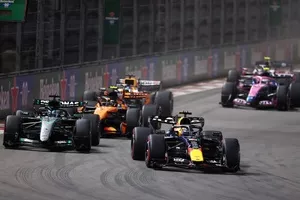
F1 set to reduce customer teams as key 2030 details emerge
Formula 1
Formula 1
Las Vegas GP
5 h
F1 set to reduce customer teams as key 2030 details emerge
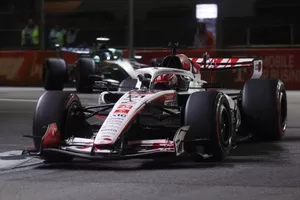
Haas keeps Rafael Camara in F1, ending his 2026 F2 title bid
Formula 1
Formula 1
Las Vegas GP
7 h
Haas keeps Rafael Camara in F1, ending his 2026 F2 title bid

Latest news
F1 set to reduce customer teams as key 2030 details emerge
Formula 1
F1 Formula 1
Las Vegas GP
5 h
F1 set to reduce customer teams as key 2030 details emerge
Haas keeps Rafael Camara in F1, ending his 2026 F2 title bid
Formula 1
F1 Formula 1
Las Vegas GP
7 h
Haas keeps Rafael Camara in F1, ending his 2026 F2 title bid

Laurin Heinrich "deeply disappointed but not surprised" by Raffaele Marciello after Macau clash
GT
GT GT 8 h
Laurin Heinrich "deeply disappointed but not surprised" by Raffaele Marciello after Macau clash

"I actually liked it" – McLaren boss defends Piastri's four-letter outburst in Las Vegas GP
Formula 1
F1 Formula 1
Las Vegas GP
8 h
"I actually liked it" – McLaren boss defends Piastri's four-letter outburst in Las Vegas GP
Feature
Discover prime content



Subscribe and access Motorsport.com with your ad-blocker.
From Formula 1 to MotoGP we report straight from the paddock because we love our sport, just like you. In order to keep delivering our expert journalism, our website uses advertising. Still, we want to give you the opportunity to enjoy an ad-free and tracker-free website and to continue using your adblocker.
You have 2 options:
- Become a subscriber.
- Disable your adblocker.
Subscribe now Already subscribed? Sign in here
Already disabled your adblocker?
Reload page
Manage Alerts
Subscribe