Special feature
MotoGP
The key MotoGP change that has gone under the radar in 2024
Lap times haven’t suffered from MotoGP’s adoption of sustainable fuels, meaning it has gone largely under the radar. But the transition is nonetheless significant as the series embarks on its first steps towards 100% non-fossil origin fuel in 2024.

Lewis Duncan
Edited: Mar 20, 2024, 10:23 AM
Copy link
Share on Viber

By the time you read this feature, a little bit of motorsport history will have been made. The 2024 MotoGP Qatar Grand Prix was the first in the series’ history to have been completed by a grid using fuels of part-non-fossil origin. As MotoGP celebrates its 75th anniversary, it’s a milestone moment a far cry from the first premier class grand prix completed on the Isle of Man back in 1949 by Harold Daniell on a 500cc Norton.
The world is swaying into a crisis point, as global warming is fast reaching a catastrophic point for humanity. That poses an ethical question for motorsport. As the director of technology at Dorna Sports – MotoGP’s commercial rights holder – Corrado Cecchinelli tells Autosport, “it’s clear that if the goal was simply reducing racing carbon footprint, then the maximum impact on event sustainability is to not hold the event at all”.
It’s the truth, but thinking it’s as simple as that is to have an idealised view of the world. It’s a capitalist society and we all have bills to pay; not staging things for the good of the planet simply isn’t an option. And nor would it actually help to address the problem.
If you remove motorsport, there are still well over 1.5 billion vehicles in use around the planet. Some racing events not taking place on the weekends is a drop in the ocean compared to that. Motorsport has a major role to play in the world getting greener at the cost of the event’s footprint. Formula 1 is on course to introduce 100% sustainable fuels in 2026. MotoGP is targeting 2027 to have its grid powered by fuels of 100% non-fossil origin. The fuels will be created in a laboratory, using components sourced from a carbon capture scheme, or derived from municipal waste or non-food biomass.
But that’s the end goal. Right now, MotoGP is racing with fuels of 40% non-fossil origin. This, Cecchinelli explains, was something first discussed about three years ago. While the motoring industry is focusing more on hybrid and electric power routes, these “were soon easily discarded because nobody currently racing was convinced these were the way to go for two wheels”.
The demands for car and motorcycle manufacturers are, of course, different. And the bike industry has always generally lagged behind in this realm. As such, Cecchinelli says, a hybrid or electric future for MotoGP was “not that practical in the fallout of actual production”. And so we end up at sustainable fuels.
MotoGP pioneering this advancement comes with a balance. It has to move in a direction that is beneficial to the manufacturers – in this case Honda, Yamaha, KTM, Aprilia, Ducati – involved in the series while also ensuring the championship’s needs are met in terms of providing a product worth buying into.
Repsol is one big name buying into MotoGP's sustainable future
Photo by: Gold and Goose / Motorsport Images
“The general answer is it’s very difficult,” Cecchinelli responds when asked how hard it is to balance MotoGP’s sustainability goals without compromising its show. “It’s an interesting question because it’s not at all clear to the public that this sort of compromise is influencing literally any decision we are taking.
“It seems to me there are always people who live in another world and say something like, ‘How stupid they are, why don’t they just say everything is free [open regulations]’. OK, if we say that, the business is over because it’s like committing [business] suicide.”
There are some fundamentals that Dorna believes cannot be compromised on, such as MotoGP remaining a prototype championship. But within that framework, there are changes that can be made for the betterment of the show without compromising the series’ integrity. One such example is the move to a standard ECU in 2016. It was initially resisted by some manufacturers but they were persuaded and the championship ultimately benefited with a closer field and the removal of a big entry barrier.
For fans, sustainability is sometimes seen as a bit of a dirty word. But times change and motorsport has to move with them
The move to sustainable fuels will not present such a radical shift for MotoGP as that did, but it is a necessary one. Road relevance may not be “the primary goal” for Dorna, but Cecchinelli notes it is “an important factor”. “Road relevance means that the racing budget that every manufacturer allocates to MotoGP has a return on investment,” he says.
Put simply: the more technology return you are seeing for your efforts, the bigger your profits. That’s true for the manufacturer all the way down to its smallest sponsor. Environmental sustainability is one thing, but it does have to go hand in hand with economic sustainability.
That’s why this move to sustainable fuels was never considered to come under the banner of a single supplier. MotoGP has several big-name fuel companies working with manufacturers, from Repsol to BP, while a number of different brands act as sponsorship partners with various satellite teams. This new fuel regulation ultimately has a practical application for those firms, and in turn could invite other fuel makers to invest in MotoGP.
So why, you may be asking, delay introduction of 100% non-fossil origin to 2027?
MotoGP will go to 100% non-fossil fuels in 2027 to allow for development time
Photo by: Gold and Goose / Motorsport Images
“When we were considering the non-fossil fuels, we realised that 100% non-fossil fuel may bring some issues that may need a longer time to handle. Something on the engine may need to be done,” Cecchinelli explains, “even just for the materials, the seals, the rubbers and everything.
“Possibly the deadline was going to be 2027 anyway even with no intermediate step. So, we think this is a smoother process which helps everyone to get familiar with these new fuels without too many troubles all at one time. It looked like a more reasonable path.”
In terms of the integration, the teams have found a “smooth transition” because the new fuel is what is known as a ‘drop-in’ – which is exactly what it sounds like: fuel that goes straight into the tank and away you go, minus some small tweaks to fuel mapping. For the suppliers it’s a new challenge to make a fuel that works seamlessly with current engine technologies, but it’s one that they accept willingly, with some able to draw on their experiences developing similar fuels for cars.
For fans, sustainability is sometimes seen as a bit of a dirty word. When F1 went to its turbo-hybrid formula in 2014, it was derided because of its underwhelming noise. Formula E gets a hard time just for being all-electric. But times change and motorsport has to move with them. MotoGP understands this, but the sustainable fuels won’t offer any noticeable difference for fans at home and at the track.
Lap records in both pre-season tests in February were smashed. So, MotoGP is going faster than ever before and being kinder to the environment. What more can you ask for?
Of course, the 2027 shift to 100% non-fossil origin fuels will also coincide with a major technical regulation shake-up. Chief among this is a proposed downsizing of engines. The exact rules framework for 2027 is yet to be laid out publicly, but all manufacturers asked about it so far have generally spoken favourably about the shift. And while the next few years will be spent ironing out the kinks of 100% non-fossil fuels, when they arrive in 2027 they will merely be powering the grid – not noticeably depleting performance.
As well as MotoGP, its feeder Moto2 and Moto3 categories are moving in the same direction and operating under the same fuel framework as the premier class. This will be provided by Malaysian oil giant Petronas.
While it may not seem like much, sustainable fuels are a step to safeguarding MotoGP’s future and helping make a difference in the wider world.
MotoGP's other sustainability initiatives
MotoGP's small change will have a big impact
Photo by: Gold and Goose / Motorsport Images
For over 10 years, MotoGP has been championing the KISS environmental initiative – which stands for Keep It Shiny and Sustainable.
This has included making the paddock paperless, reducing the amount of single-use plastics available and even donating food surplus from team hospitality units at the end of each weekend.
This all has a small impact on the sustainability of each grand prix event, but it’s an impact that won’t be felt outside of the bubble universe that each MotoGP weekend ultimately is.
On track, as an aside to its push towards fully sustainable fuels, MotoGP has worked with tyre supplier Michelin to increase the amount of recyclable material each unit is constructed from.
Dorna’s Cecchinelli concedes this is “0.000-whatever-you-want-percent of the problem”, but “we pioneer technology so we can experiment and prove that you cannot only make tyres with recyclable materials, but you can do that to the extent of making racing tyres”.
What this proves is that every element of motorsport can have a practical application to the real world, which will combine to have a much larger impact on environmental sustainability.
We want your opinion!
What would you like to see on Motorsport.com?
Take our 5 minute survey.
- The Motorsport.com Team
Read and post comments
Read also :
Share Or Save This Story
Copy link
Share on Viber
Previous article Bezzecchi details “frustrating” time on 2023 Ducati MotoGP bike
Next article Podcast: Looking ahead to MotoGP's round-two reset in Portugal
Top Comments
There are no comments at the moment. Would you like to write one?
View More & Comment

More from
Lewis Duncan

MotoGP 2025: Full rider line-up revealed
MotoGP
MotoGP Sep 19, 2024
MotoGP 2025: Full rider line-up revealed
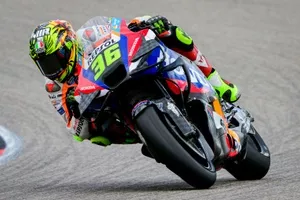
A year on from Marquez’s Germany MotoGP meltdown, has Honda improved?
MotoGP
MotoGP
German GP
Jul 5, 2024
A year on from Marquez’s Germany MotoGP meltdown, has Honda improved?

What’s behind MotoGP’s right-hander chaos in Germany practice?
MotoGP
MotoGP
German GP
Jul 5, 2024
What’s behind MotoGP’s right-hander chaos in Germany practice?
Latest news
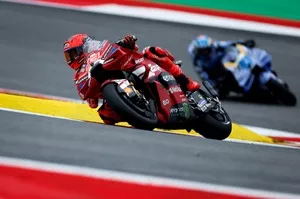
Live: MotoGP Portuguese GP as it happens
MotoGP
MGP MotoGP
Portuguese GP
1 h
Live: MotoGP Portuguese GP as it happens
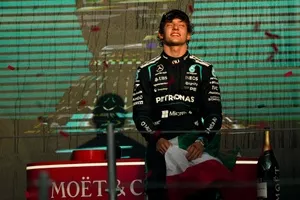
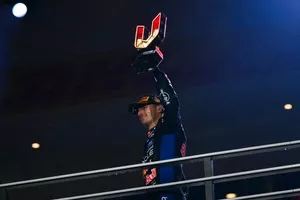
The one aspect of Max Verstappen "outsmarting" Mercedes that left Red Bull speechless
Formula 1
F1 Formula 1
Las Vegas GP
1 h
The one aspect of Max Verstappen "outsmarting" Mercedes that left Red Bull speechless
Lewis Hamilton: ‘Charles Leclerc’s frame of mind cost us a lot of points today’
Formula 1
F1 Formula 1
Las Vegas GP
2 h
Lewis Hamilton: ‘Charles Leclerc’s frame of mind cost us a lot of points today’
Feature
Discover prime content


Subscribe and access Motorsport.com with your ad-blocker.
From Formula 1 to MotoGP we report straight from the paddock because we love our sport, just like you. In order to keep delivering our expert journalism, our website uses advertising. Still, we want to give you the opportunity to enjoy an ad-free and tracker-free website and to continue using your adblocker.
You have 2 options:
- Become a subscriber.
- Disable your adblocker.
Subscribe now Already subscribed? Sign in here
Already disabled your adblocker?
Reload page
Manage Alerts
Subscribe