IndyCar
“Why are we doing this?”: Bob Varsha recalls the doomed 1996 U.S. 500
The famed American announcer remembers one of the strangest moments in U.S. motorsports history: when a rival race went wheel-to-wheel with the Indy 500.
Gregory Leporati
Published: May 25, 2024, 11:00 AM
Copy link
Share on Viber
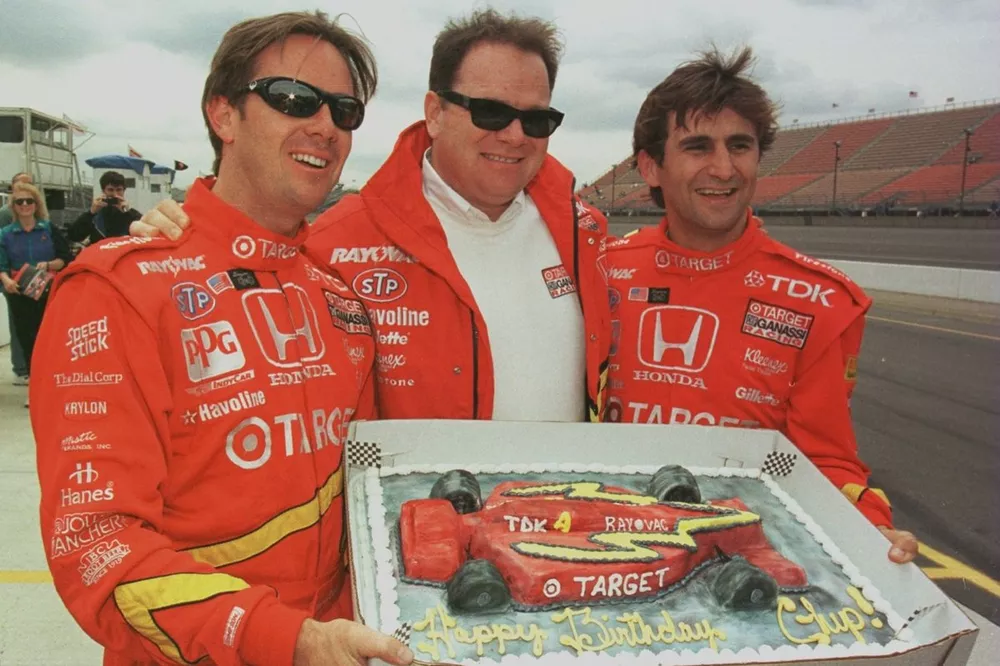
Once upon a time, open-wheel racing dominated the American motorsports scene. The CART (Championship Auto Racing Teams) IndyCar series was enormously successful, even poaching reigning Formula 1 world champion Nigel Mansell in 1993.
“What we know today as IndyCar was probably at the height of its popularity then,” recalls Bob Varsha, longtime ESPN motorsports journalist and announcer who frequently covered the series.
But a great schism happened in the mid-’90s, with Tony George—the then-president of Indianapolis Motor Speedway and the Indy 500—creating a rival series known as Indy Racing League (IRL) to compete against CART. The reasons for the split centered on a variety of issues, with George hoping to re-emphasize American oval racing, whereas CART had begun competing across multiple continents on a growing number of road and city courses.
“All the head-knocking among the car owners and the speedway under Tony George—it was a complex, deep, and fraught argument,” says Varsha. “There were a lot of reasons why people felt the way they did, and egos got involved.”
The result was something of a mess: In 1996, CART teams—including racing luminaries such as Roger Penske and Chip Ganassi—boycotted the Indy 500, opting instead to run a CART-specific race known as the U.S. 500 at Michigan International Speedway on the same day and nearly same time.
Meanwhile, back at the Indy 500, the race ran as scheduled, but with a field of mostly unknown drivers and teams.
“There was a lot of disappointment that it had to be this way,” says Varsha, who wound up covering the U.S. 500 for ESPN that bizarre day. And the energy in Michigan, he notes, was strange from the outset.
“A lot of pure disappointment,” Varsha adds. “Why are we doing this? It’s Indy weekend—why aren’t we there?”
That disappointment was buoyed by a good deal of optimism that the U.S. 500 could deliver a solid product, with a field consisting of some of open-wheel racing’s biggest names, including Emerson Fittipaldi, Michael Andretti, Alex Zanardi, and Al Unser, Jr.
“People thought: We’ll prove we have the best cars and drivers, put on a better show [than the Indy 500], and let the public vote with their wallets,” Varsha says.
The show didn't go as hoped. Officials at the U.S. 500 decided to start their race three wide—just like Indy—even though the track was not built for it.
“Indy is basically flat, whereas Michigan is a high-banked speedway,” Varsha notes. “As the field came around in Michigan—before they even took the green flag—there was a collision across the front row, causing a massive red flag.”
The ensuing delay lasted over an hour, and the entire race looked amateurish before it had even begun. Hours later, Jimmy Vasser wound up in the records books as winning the U.S. 500 in what turned out to be a fairly tense and exciting race. And the only U.S. 500 ever run. Buddy Lazier, meanwhile, won an Indy 500 that saw a record 17 rookies in its field.
The split between CART and IRL would continue for years, causing considerable damage to open-wheel racing in the U.S.
“People got tired of this schism,” Varsha says. “They weren’t seeing all their favorite drivers in one place, and you don’t tune in to an event like this to hear about politics, lawsuits, and all that nonsense. You want excitement, fun, and aspiration.”
Things got even dicier when Formula 1 came to Indianapolis a few years later, hosting its U.S. Grand Prix there in 2000. Varsha recalls that suddenly, the (at the time) Euro-centric global racing series had begun drawing more interest than the fractured Indy 500, causing the powers-that-be at IRL and CART to soften their stances.
“As a group, they suddenly realized that they were playing with fire,” he says. “When those die-hard, longtime fans of the Brickyard...even they don’t know who’s in the race, Indy loses its luster. It led to a whole raft of problems.”
By 2008, the two rival leagues finally reunited to form the IndyCar series we have today. By then, NASCAR had ascended as the most-watched motorsport in the States.
“Just think of all the great drivers from around the world who had come here,” Varsha says, recalling the glory days of CART. “We’re beginning to see that now, again, as IndyCar continues its inch-by-inch, race-by-race attempt at a return to prominence.”
As much as the 1996 U.S. 500 represented a fractured, bizarre day in motorsports history, Varsha remembers at least one silver lining: A lot of broadcasters earned a check that day, with ABC running Indy while ESPN covered the U.S. 500 in Michigan.
“On the TV side, we were all kind of tickled pink,” he laughs. “A whole lot of people were working that weekend—we were all going to be making some money!”
We want your opinion!
What would you like to see on Motorsport.com?
Take our 5 minute survey.
- The Motorsport.com Team
Read and post comments
Read also :
Share Or Save This Story
Copy link
Share on Viber
Previous article IndyCar provides update to dashed white line and penalties for Indy 500
Next article Dixon: Honda “seems more level” with Chevy in Indy 500 race trim
Top Comments
There are no comments at the moment. Would you like to write one?
View More & Comment
More from
Gregory Leporati
How F1 Academy champion Abbi Pulling trains to keep calm and carry on
F1 Academy
F1 Academy
Losail
Dec 4, 2024
How F1 Academy champion Abbi Pulling trains to keep calm and carry on
Insane heat and hard turns: Eddie Cheever on the 1982 Caesars Palace Grand Prix
Formula 1
Formula 1 Nov 22, 2024
Insane heat and hard turns: Eddie Cheever on the 1982 Caesars Palace Grand Prix
NASCAR's William Byron stopped eating Pop Tarts, and now he's in the Playoffs
Culture
Culture Nov 9, 2024
NASCAR's William Byron stopped eating Pop Tarts, and now he's in the Playoffs
Latest news
“A bit of a message” – McLaren’s theory on Mercedes’ frightening pace in Qatar
Formula 1
F1 Formula 1
Qatar GP
4 h
“A bit of a message” – McLaren’s theory on Mercedes’ frightening pace in Qatar
Ferrari floored by poor Qatar GP pace: "We're closer to Racing Bulls than to Red Bull"
Formula 1
F1 Formula 1
Qatar GP
8 h
Ferrari floored by poor Qatar GP pace: "We're closer to Racing Bulls than to Red Bull"
F1 2026 qualifying head-to-head: Qatar GP
Formula 1
F1 Formula 1
Qatar GP
8 h
F1 2026 qualifying head-to-head: Qatar GP
Max Verstappen pinpoints Mercedes’ key strength in Qatar: “If I try that, I’ll spin straight away!”
Formula 1
F1 Formula 1
Qatar GP
9 h
Max Verstappen pinpoints Mercedes’ key strength in Qatar: “If I try that, I’ll spin straight away!”
Feature
Discover prime content

How Spanish engineering and Alex Palou brought IndyCar to Barcelona
Feature
IndyCar
Feature
IndyCar 30 d
By Joey Barnes
How Spanish engineering and Alex Palou brought IndyCar to Barcelona

Inside AJ Foyt Racing’s transition: Hauger’s arrival, Ferrucci’s future, and the Pierson waiting game
Feature
IndyCar
Feature
IndyCar 2 mo
By Joey Barnes
Inside AJ Foyt Racing’s transition: Hauger’s arrival, Ferrucci’s future, and the Pierson waiting game
You Ask The Questions: David Malukas
IndyCar
By Joey Barnes
You Ask The Questions: David Malukas


Subscribe and access Motorsport.com with your ad-blocker.
From Formula 1 to MotoGP we report straight from the paddock because we love our sport, just like you. In order to keep delivering our expert journalism, our website uses advertising. Still, we want to give you the opportunity to enjoy an ad-free and tracker-free website and to continue using your adblocker.
You have 2 options:
- Become a subscriber.
- Disable your adblocker.
Subscribe now Already subscribed? Sign in here
Already disabled your adblocker?
Reload page
Manage Alerts
Subscribe