Commentary
IndyCar
Aero kit conundrum: Is it being dealt with correctly?
INDYCAR has announced changes to the superspeedway aero kits ahead of this weekend's race at Texas Motor Speedway.
Anne Proffit
Edited: Jun 2, 2015, 10:31 PM
Copy link
Share on Viber


Silly me. All along I thought the idea of manufacturer aero kits was the Verizon IndyCar Series’ idea of innovation, of allowing each manufacturer to address aerodynamic needs in their own manner. Obviously I was wrong. When three of Chevrolet’s cars lifted from the tarmac during practice for the 99th Indianapolis 500 at Indianapolis Motor Speedway last month, INDYCAR, the series’ sanctioning body was quick to make adjustments.
Honda's dilemma
They effected added downforce on both Chevrolet and Honda aero kits - despite the latter’s cars exhibiting none of the difficulties of the former’s cars - and, for qualifying (because the third flying exhibition occurred just prior to initial time trials and to a car in appropriate trim for qualifying) boost on the 2.2-liter V-6 engines was reduced to racing trim, from 1.4 to 1.3 kPa boost. On the road courses, the cars are allowed to use 1.5 kPa.
The problems with these decrees is that they were given first to Chevrolet and then, later, announced to Honda. While none of the Honda cars flew during the Indy 500 race meeting, there were two accidents with that manufacturer’s entries, one of them an acknowledged driver error (Pippa Mann’s incident on the front straight that hobbled her and set prep work back at Dale Coyne Racing). James Hinchcliffe’s accident was due to a fatigued suspension piece - or so we’ve been told.
Closure panels added
As the Indy cars prepare for their second oval race of this abbreviated and rushed season, one that takes place on the banked, 1.5-mile Texas Motors Speedway oval on Saturday night, INDYCAR has once again revised the two aero kits in its continuing attempts to keep cars on the ground. The series announced that it is implementing closure panels to the superspeedway aero kits.
These closure panels are mounted to the rear wing guards of both the Chevrolet and Honda superspeedway aero kits and were developed by both manufacturers. They’ll also be used at Auto Club Speedway the end of June and at Pocono Raceway later in the season, the other two 500-mile contests on the 2015 docket.
All Verizon IndyCar Series entries will run this race with a rear wheel angle between (-6) and (-10.5) degrees, which results in an increase of overall downforce, at least as compared with the 2014 Texas Motor Speedway contest.
HPD comes out on the losing end of a Chevy problem
When the new strictures were announced for Indianapolis, Art St Cyr, president of Honda Performance Development (HPD) had a tough time hiding his disappointment in the sanctioning body. “I think the biggest unfortunate thing is we spent a lot of time working on the aero kits, especially the speedway aero kit. We feel that we were affected more than we expected to be affected by the rule change that happened.”
Much of HPD’s development came through its sports car experience, in the American Le Mans Series, European Le Mans Series, 24 Hours of Le Mans and World Endurance Championship, where stability is key, particularly on long straights at European venues. While St Cyr obviously understands that open wheel cars and closed wheel cars react in differing ways to aerodynamic changes, utilizing extensive computational fluid dynamics (CFD) modeling has been an asset to both its sports car and Indy car programs.
St Cyr, like many others didn’t expect INDYCAR to come down so heavily on HPD’s program, wishing the group had worked to help Chevrolet solve its issues while allowing Honda to run the aero kit they brought to the dance. After all, it’s an axiom that you take care of your old friends first while making new friends, isn’t it?
Unfortunately, INDYCAR has forgotten that without Honda and its HPD engine program, they might not have had a series from 2006-2011 as both Toyota and GM departed, leaving only Honda as the engine supplier. It was a very successful technical and marketing partnership, but Honda kept insisting it wanted competition. Little did they realize that once that competition arrived, HPD would become a second cousin once removed.
We want your opinion!
What would you like to see on Motorsport.com?
Take our 5 minute survey.
- The Motorsport.com Team
Read and post comments
Read also :
Share Or Save This Story
Copy link
Share on Viber
Previous article Bourdais prevails in wild second race on streets of Detroit
Next article IndyCar adjusts Texas aero kits to prevent airborne crashes
Top Comments
There are no comments at the moment. Would you like to write one?
View More & Comment
More from
Anne Proffit
NHRA update: Virginia joins schedule, top teams make lineup changes
NHRA
NHRA Jan 30, 2018
NHRA update: Virginia joins schedule, top teams make lineup changes

Englishtown shuts down drag racing operations with immediate effect
NHRA
NHRA Jan 17, 2018
Englishtown shuts down drag racing operations with immediate effect
John Force gains honorary doctorate from UNOH
NHRA
NHRA Jan 10, 2018
John Force gains honorary doctorate from UNOH
Latest news
Mercedes boss Toto Wolff reveals why rival F1 teams never try to hire him
Formula 1
F1 Formula 1
Las Vegas GP
2 h
Mercedes boss Toto Wolff reveals why rival F1 teams never try to hire him
Jack Miller to revive unraced Australian GP livery for MotoGP farewell
MotoGP
MGP MotoGP
Valencia GP
5 h
Jack Miller to revive unraced Australian GP livery for MotoGP farewell
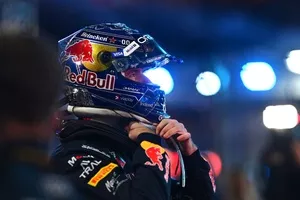
Max Verstappen without Gianpiero Lambiase at Qatar GP as Tom Hart steps in
Formula 1
F1 Formula 1
Qatar GP
6 h
Max Verstappen without Gianpiero Lambiase at Qatar GP as Tom Hart steps in
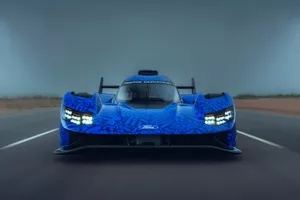
Ford reveals name for 2027 WEC LMDh challenger
WEC
WEC WEC 8 h
Ford reveals name for 2027 WEC LMDh challenger
Feature
Discover prime content

How Spanish engineering and Alex Palou brought IndyCar to Barcelona
Feature
IndyCar
Feature
IndyCar 28 d
By Joey Barnes
How Spanish engineering and Alex Palou brought IndyCar to Barcelona

Inside AJ Foyt Racing’s transition: Hauger’s arrival, Ferrucci’s future, and the Pierson waiting game
Feature
IndyCar
Feature
IndyCar 2 mo
By Joey Barnes
Inside AJ Foyt Racing’s transition: Hauger’s arrival, Ferrucci’s future, and the Pierson waiting game
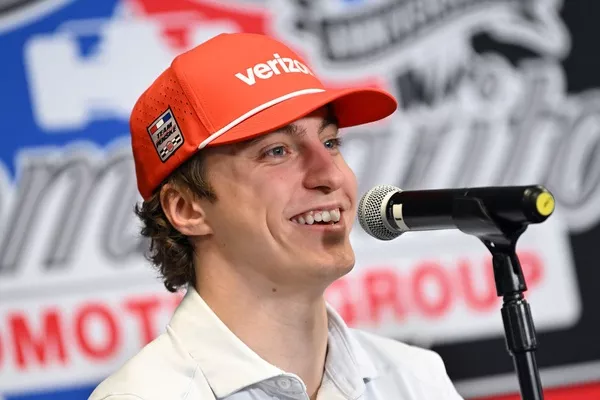
You Ask The Questions: David Malukas
IndyCar
By Joey Barnes
You Ask The Questions: David Malukas


Subscribe and access Motorsport.com with your ad-blocker.
From Formula 1 to MotoGP we report straight from the paddock because we love our sport, just like you. In order to keep delivering our expert journalism, our website uses advertising. Still, we want to give you the opportunity to enjoy an ad-free and tracker-free website and to continue using your adblocker.
You have 2 options:
- Become a subscriber.
- Disable your adblocker.
Subscribe now Already subscribed? Sign in here
Already disabled your adblocker?
Reload page
Manage Alerts
Subscribe