Breaking news
IndyCar
2018 IndyCar will require a tire rethink on some tracks
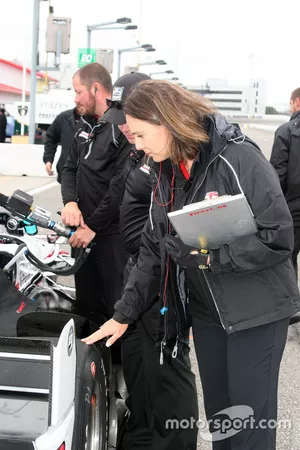
Firestone Racing’s chief engineer and manager of race tire development, Cara Adams, says that the new universal aerokit will require modified tire choices on certain tracks.

David Malsher-Lopez
Edited: Sep 25, 2017, 10:02 AM
Copy link
Share on Viber

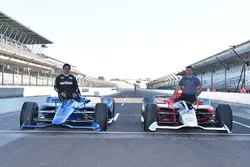




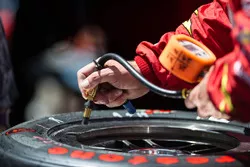

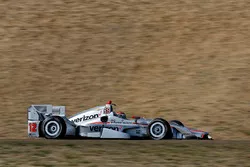
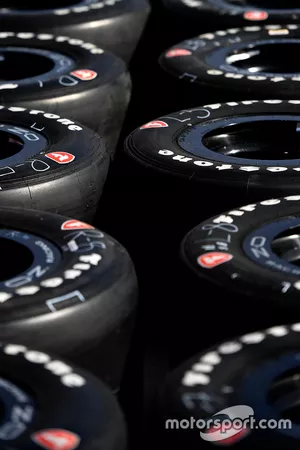
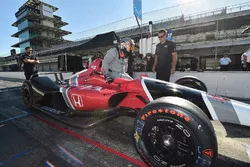

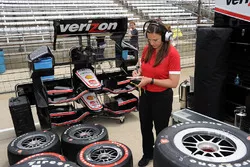

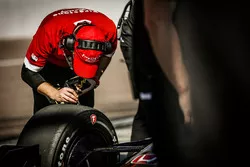


From 2015-’17 the heavy downforce levels of the manufacturer aerokits have demanded a harder tire, as Honda’s 2018 car tester Oriol Servia highlighted earlier this week.
With next year’s universal aerokit introducing reduced downforce overall and a more forward weight distribution, Adams says there will be changes necessary on some (but not all) tracks on the IndyCar schedule.
“There is a lot of crossover between what we’ve been using this year and what we’ll use next year,” Adams told Motorsport.com.
“The feedback from Juan Pablo Montoya and Oriol Servia during the 2018 aerokit tests suggests that as far as they’ve been pushed so far, the current tire specs seem to react well on the new car.
“At Indianapolis Motor Speedway, the cars were very good on this year’s tires, but we’ll still make small changes in reaction to the weight distribution changes. With more forward weight, you see more of a load on the right front and less on the right rear on the ovals.
“On short ovals, we’re working with IndyCar as they figure out what the downforce configuration is so that might change our tire choice. If we go to a much lower downforce level [as Montoya and Servia recommended after the 2018 cars’ Iowa test], we will have to look at bringing a different tire.”
However, Adams said the other effect of the reduced downforce has to be considered as well.
“On some tracks, yes, the 2018 car will have a reduced load when it’s at the same speed as the 2017 car. But because of the reduction in downforce and drag, the new car will go faster and so you end up getting pretty similar maximum loads.”
Rather than considering just rubber compound changes, Adams said the new rules may require Firestone to go back to basics.
“The new aero package gives us the opportunity to look at new types of tire,” she said. “Maybe we’ll need a new shape of front tire or a new construction altogether, perhaps stiffer or less stiff. They’re all things we’re looking at because the forward weight distribution will affect the front tires a lot.
“That’s why it’s been important that not only IndyCar but also Dallara have been helping us with simulation data so they can help us understand the loads that we’ll be seeing on the new car even on tracks where we haven’t yet tested the new car.
"Using the simulations, you work around the middle ground of what we expect drivers to want downforce-wise. Race engineers then extrapolate that data to assess what effect it will have on the tires for their driver."
Red/black tire debate still not settled
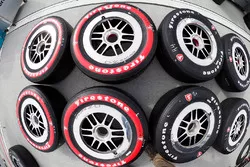
Adams said that discussions over how big a gap there should be between the harder-compound, black-sidewalled primary tires and the softer-compound, red-sidewalled alternate tires is continuing. Some drivers – those good at preserving their tires for a whole stint – have wanted to see the reds become softer and more difficult to manage over a stint, but therefore also offer a bigger grip advantage over the primaries in qualifying.
Said Adams: “We’re always working both with the teams and IndyCar to figure out how big that gap should be [between reds and blacks]. I want to see a little bigger gap than we saw at, say, Watkins Glen. You can make it more interesting and challenging and that’s something we look at after each race.
“In the test at Mid-Ohio with the 2018 car, the day after the race there, we tested using this year’s race primary, then a tire that was slightly harder-compound and a tire that was slightly softer-compound. That helped us understand the effect of the new aerokit on the gap between the primary and alternate tires on road courses.
“It was useful getting the feedback from the drivers, too, because we wanted to see how the car would actually feel using these compounds. As you know, switching between primary and alternate tires can significantly change the handling balance of the car.
“But we haven’t finished our assessments yet. We’ve got the final IndyCar-run test at Sebring next Tuesday, the manufacturers will be getting another aerokit each and will begin their testing. And we’re going to be supporting all those tests, and some tests are going to be specifically testing tires, too.”
Red tires in FP2 – good or bad?
For 2017, IndyCar started allowing the teams to try the softer alternate compound tires in second practice on Friday afternoons at road and street courses. This was seen as a way to help rookies learn the compounds that they otherwise wouldn’t experience until they hit the track for qualifying on Saturday afternoons.
However, it has been a mildly contentious issue, since many race engineers and experienced drivers feel that having this 'preview' took away the challenge of immediately preparing for and adapting to the reds in Q1. Objective observers have also felt this reduced the chance of seeing a slightly mixed up field, should one of the smaller teams adapt well and/or one of the bigger teams take a misstep in set-up.
Said Adams: “I think it’s useful to us to get alternate-compound data early and let teams know what we see. We test the tires beforehand indoors, of course, but seeing them on the racetrack in the temperatures and track conditions of practice gives us more useful real-time data.
“And I understand IndyCar’s perspective. Rookies get a chance to see what it’s like to run on a different tire and feel what the difference is between the primary and alternate before they get into qualifying. So that’s good.
“But, yes, it takes out some mystery, because the teams have a chance to zero in on their set-ups before qualifying. So we’ll consult with IndyCar about the best plan going forward.”
Allowing teams to try reds during tests, or allowing just the rookie drivers to test on reds, is not necessarily a like-for-like solution, as Adams pointed out.
“I think we’ve had that conversation with IndyCar before and certainly we’re not against it,” she said.
“But the differences between alternates and primaries varies from track to track, so what a rookie learned about the grip difference between the two compounds in one test wouldn’t necessarily apply in his or her next qualifying session.
"So it wouldn’t be as useful to a rookie as trying out the reds in second practice during a race weekend.”
We want your opinion!
What would you like to see on Motorsport.com?
Take our 5 minute survey.
- The Motorsport.com Team
Read and post comments
Read also :
Share Or Save This Story
Copy link
Share on Viber
Previous article Captain’s Corner: Interview with IndyCar champion Josef Newgarden
Next article Carlin: “The right moment is approaching” to join IndyCar
Top Comments
There are no comments at the moment. Would you like to write one?
View More & Comment

More from
David Malsher-Lopez

Alex Zanardi: The man whose name is a synonym for “hero”
IndyCar
IndyCar 6 mo
Alex Zanardi: The man whose name is a synonym for “hero”
Remembering Michele Alboreto: F1 ace, Le Mans winner and a good man
Formula 1
Formula 1 7 mo
Remembering Michele Alboreto: F1 ace, Le Mans winner and a good man

IMSA Laguna Seca: Ganassi Cadillac holds off Porsche for victory
IMSA
IMSA
Laguna Seca
May 14, 2023
IMSA Laguna Seca: Ganassi Cadillac holds off Porsche for victory
Latest news
Who will replace Marc Marquez at Ducati?
MotoGP
MGP MotoGP
Valencia GP
24 min
Who will replace Marc Marquez at Ducati?
A retirement in true Marc Marquez style
MotoGP
MGP MotoGP
Valencia GP
29 min
A retirement in true Marc Marquez style
LIVE: F1 Qatar GP updates - FP1 underway in Lusail twilight
Formula 1
F1 Formula 1
Qatar GP
49 min
LIVE: F1 Qatar GP updates - FP1 underway in Lusail twilight
Marc Marquez explains decision behind shock MotoGP retirement
MotoGP
MGP MotoGP
Valencia GP
1 h
Marc Marquez explains decision behind shock MotoGP retirement
Feature
Discover prime content

How Spanish engineering and Alex Palou brought IndyCar to Barcelona
Feature
IndyCar
Feature
IndyCar 28 d
By Joey Barnes
How Spanish engineering and Alex Palou brought IndyCar to Barcelona

Inside AJ Foyt Racing’s transition: Hauger’s arrival, Ferrucci’s future, and the Pierson waiting game
Feature
IndyCar
Feature
IndyCar 2 mo
By Joey Barnes
Inside AJ Foyt Racing’s transition: Hauger’s arrival, Ferrucci’s future, and the Pierson waiting game
You Ask The Questions: David Malukas
IndyCar
By Joey Barnes
You Ask The Questions: David Malukas


Subscribe and access Motorsport.com with your ad-blocker.
From Formula 1 to MotoGP we report straight from the paddock because we love our sport, just like you. In order to keep delivering our expert journalism, our website uses advertising. Still, we want to give you the opportunity to enjoy an ad-free and tracker-free website and to continue using your adblocker.
You have 2 options:
- Become a subscriber.
- Disable your adblocker.
Subscribe now Already subscribed? Sign in here
Already disabled your adblocker?
Reload page
Manage Alerts
Subscribe