General
F1 in the future - The Cars
F1 cars have been essentially the same shape for sixty years - petrol engined single seaters with uncovered wheels - apart from the Mercedes cars o...
Edited: Dec 26, 2009, 1:20 PM
Copy link
Share on Viber

Motorsport Blog
Motorsport Blog
F1 cars have been essentially the same shape for sixty years - petrol engined single seaters with uncovered wheels - apart from the Mercedes cars of 1954.
But does it have to stay that way? If technology allows cars to race very close together - or cluster racing - but safely, then the wheels would need to be covered up and the shape would change completely.
An engineer will say that to answer the question of what the cars will look like in the future you need to know what the rules will say in 2050.
It’s an obvious point, but the rules dictate what the cars will look like and what technical features they will be allowed to have. For example in the 1970s and 1980s the rules were fairly relaxed and the engineers came up with some amazing cars - we had six wheeler cars, ground effect cars, a fan car, a car with two chassis and so on.
The rules may have been relaxed, but the resources the teams had to exploit them were limited. Since the advent of massive TV income to the sport, the situation has been reversed and now the rules are very restrictive and yet the budgets are enormous, so engineers spend thousands of hours and millions of pounds testing out tiny modifications which will give a fraction of a second improvement to lap time. At the 2008 Brazilian Grand Prix, McLaren are alleged to have spent round £4 million to develop a new front wing for Lewis Hamilton’s car which gave 1/10th of a second improvement in lap time. This is something the sport is trying to get on top of now with the resource restriction agreement.
So in what major ways might the rules change in future? The technical advisers and researchers under Max Mosley's FIA regime were focussed on trying to restrict the areas in which the teams are allowed to compete against each other. This was said to be in the interests of cost control, to get the budgets down. So engines and gearboxes, for example, are basically all the same, the specification is frozen until 2012, there is no scope for improving them and thus hundreds of millions of pounds are saved on unnecessary development.
Suspensions, brakes, wheels and hubs are another area, where the public is not aware of the differences between the designs and yet millions used to be spent on refining brake ducts. This has been stopped, as has tyre technology, where a single tyre manufacturer supplies identical tyres to every driver.
But Mosley's regime wanted F1 to innovate in some key areas, like KERS, and fuel economy, which would benefit the motor industry and society more generally. That is likely to continue under new FIA president Jean Todt, but he may choose to go about it in a different way. Also the influence of the manufacturers is greatly diminished; now most of the teams are privateers who do not have road cars to think about.
As tyres are one of the most effective ways of controlling the cornering speeds in F1, a perpetual problem, it is likely that control tyres will still be used in future. The harder the tyres, the less grip and therefore the slower the car goes around the corner. We will not be at the point where cars hover above the ground, like Star Wars. Four tyres will still be the only contact points between the car and the road. And the absence of competition between tyre makers in F1 will mean that the pace of development of racing tyre technology will be relatively slow. That said, engineers say a set of tyres will be able to last an entire race weekend, practice, qualifying and race if the sport wants it that way.
It is not possible to know what the rules will allow 20 years from now, but Tony Purnell, the FIA’s former technical consultant says, “Society will dictate the rules.” He believes that F1 is an entertainment and the public, as the customers, will dictate what is and is not acceptable according to the mood of the times. “Forty years ago it was inconceivable that fox hunting would be banned, and yet banned it was. Today you could say the same about F1 racing and it’s our job to make sure it stays acceptable to the public and in tune with the times.”
Therefore the emphasis will be on sustainability; the engines will be incredibly efficient. Today’s 2.4 litre V8 F1 engines produce around 750 horsepower and burn approximately 2.5 kilos of fuel to cover a three mile lap. In 20 years the engines will have to be many times more efficient than that, as road cars will probably be returning figures of around 100 miles per gallon by then.
Tomorrow we will look a little more closely at the engines.
We want your opinion!
What would you like to see on Motorsport.com?
Take our 5 minute survey.
- The Motorsport.com Team
Read and post comments
Read also :
Share Or Save This Story
Copy link
Share on Viber
Previous article JA on F1 Christmas interactive series - F1 in the Future
Next article F1 in the Future - The Engines
Top Comments
There are no comments at the moment. Would you like to write one?
View More & Comment
Latest news
F1 Mexico GP fallout was “taken out of proportion” - Charles Leclerc
Formula 1
F1 Formula 1
Las Vegas GP
23 min
F1 Mexico GP fallout was “taken out of proportion” - Charles Leclerc
Honda reveals key F1 power unit change for 2027
Formula 1
F1 Formula 1
Las Vegas GP
1 h
Honda reveals key F1 power unit change for 2027

Max Verstappen on F1's WHOOP plan: "It's nobody's business, I don't even know my heart rate"
Formula 1
F1 Formula 1
Las Vegas GP
2 h
Max Verstappen on F1's WHOOP plan: "It's nobody's business, I don't even know my heart rate"
Kimi Antonelli: Yo-yo racing to return at F1 Las Vegas GP
Formula 1
F1 Formula 1
Las Vegas GP
3 h
Kimi Antonelli: Yo-yo racing to return at F1 Las Vegas GP
Feature
Discover prime content
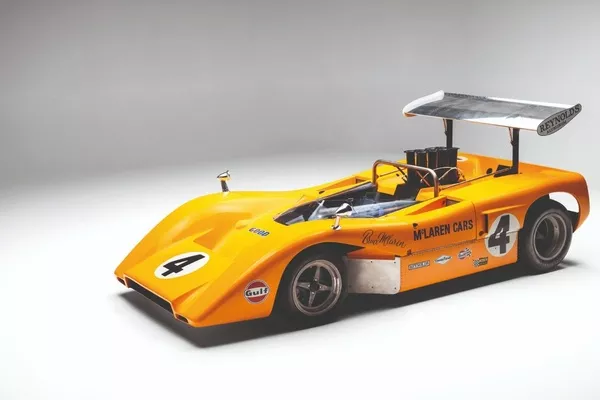
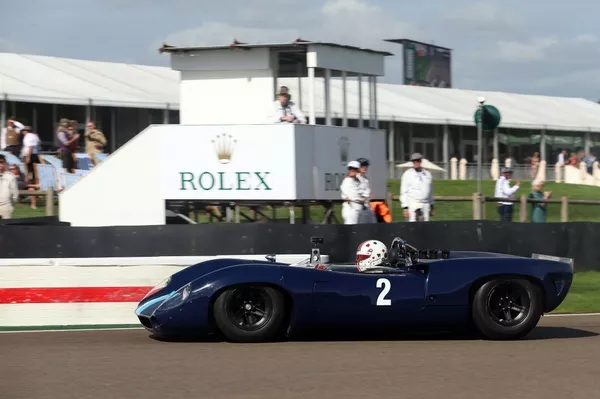

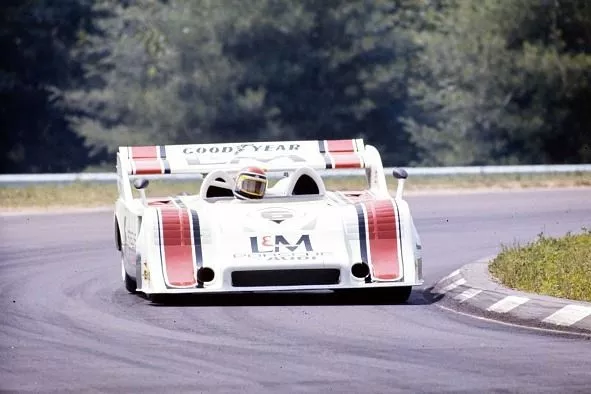
Top 10 Can-Am drivers
General
By Kevin Turner
Top 10 Can-Am drivers
Subscribe and access Motorsport.com with your ad-blocker.
From Formula 1 to MotoGP we report straight from the paddock because we love our sport, just like you. In order to keep delivering our expert journalism, our website uses advertising. Still, we want to give you the opportunity to enjoy an ad-free and tracker-free website and to continue using your adblocker.
You have 2 options:
- Become a subscriber.
- Disable your adblocker.
Subscribe now Already subscribed? Sign in here
Already disabled your adblocker?
Reload page
Manage Alerts
Subscribe