Feature
Formula 1 Austrian GP
Opinion
Why similar Williams and Aston Martin failures are oddly reassuring
Formula 1's complex 2026 regulations have caught out two of its most ambitious teams, which is not necessarily a bad thing for the series

Filip Cleeren
Published: Jul 1, 2026, 4:22 PM
Copy link

Share on Viber
When a man as smart and as storied as Adrian Newey speaks, one tends to listen, even if access to the design guru is now coming through a tightly scripted interview on the Aston Martin website.
That is an unfortunate development for the press, but not entirely surprising given Newey's pair of eyebrow-raising media outings in Australia, in which the team's new engine partner Honda caught a few strays at their very first - albeit disastrous - competitive outing.
But while trying to regain control of Aston Martin's 2026 narrative, the interview does offer a few candid admissions and underlying reasons behind the team's failure thus far. That failure certainly isn't Honda's alone, as was already clear from the team's pre-season delays and which subsequent races have made painfully obvious.
The Newey Q&A wisely focuses on what the Silverstone squad has under its own control, and there's more than enough to take ownership of before pointing fingers to external suppliers.
"We were relying on tools and processes that had been patched and bodged for years – you could trace some of them right back to the very early days of the Jordan team that was based here in Silverstone, long before Aston Martin returned to the grid," Newey explained. "At some point, a system that's just patch‑on‑patch stops being fit for purpose. That's where we had got to. The result was a very frustrating car build. Parts weren't being ordered at the right time – not because people weren't doing their jobs, but because the underlying system was failing them."
If that sounds familiar, then that's because it is. Williams team principal James Vowles performed a similar 'mea culpa' after the squad missed the pre-season shakedown in Barcelona with a car that came together late and overweight.
"The car we've built this year is about three times more complicated than anything we have put through our business beforehand, so it means the amount of load going through our system is about three times what it used to be. We started falling a little bit behind and late on parts and there's compromises you can make as a result of it," Vowles explained at the time. We have to acknowledge that we were trying to push more throughput through the system than we were able to achieve. I didn't scale the business in the right way to achieve the output."
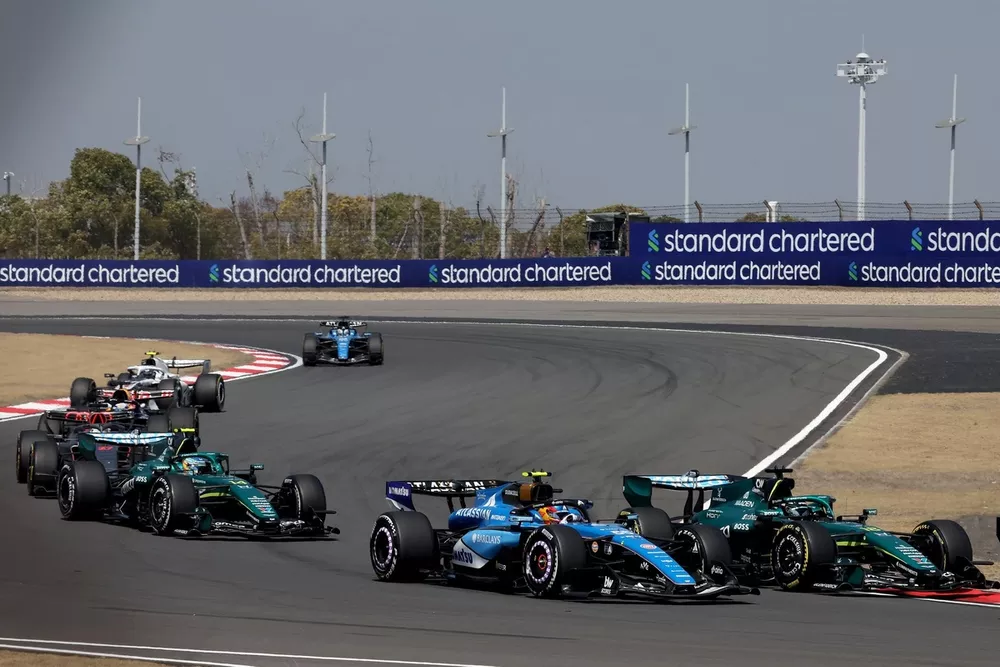
Vowles has taken the heat for Williams' poor start to 2026
Photo by: Alastair Staley / LAT Images via Getty Images
In a hyper-competitive environment like F1, development or production processes falling behind weeks is a problem. Falling behind months, as Aston Martin has done, is an unrecoverable disaster. Excessive chassis weight is one of the first side-effects of a rushed process, as both teams have demonstrated.
It means Williams and Aston Martin are now Q1 fodder until they are able to bring significant upgrades in Baku and Budapest respectively. In Williams' case, that could see it make a jump towards the upper half of the midfield, while in Aston's case it will also need a step from Honda to make significant progress.
Read Also:
Meanwhile, the two teams are split by newcomer Cadillac, which has performed admirably in terms of lap times and the sheer quantity of aerodynamic upgrades the squad has already been able to produce. But there are significant operational and quality control issues that the team has had to try and get a handle on, some internal and some from external suppliers. Disappearing from the Austrian Grand Prix with burning brakes after just a couple of laps is just the latest and most visible example that shows Cadillac isn't quite up to standard just yet as an operation. But given the challenge the US-owned start-up outfit has taken on, it deserves a grace period.
The new regulations have made the brightest minds in F1 look fallible. Isn't that what the pinnacle of motor racing should be?
This will be zero consolation to the teams involved, but following years of nearly bulletproof reliability and teams all covered within a second per lap, there is something oddly reassuring about big, bold F1 organisations screwing the pooch, to quote Tom Wolfe.
Porpoising aside, over the previous rules cycle teams were almost made designing and running an F1 car look easy. As teams converged to similar aerodynamic concepts, while running tried and tested power units which had largely been frozen and optimised for reliability, it was getting ever harder for F1's best run organisations to truly shine.
There were also fewer potential pitfalls to demonstrate how hard the pinnacle of motor racing really is. Teams were getting hammered in public for being a few tenths off their rivals, which on a tight grid instantly catapulted them to the back of the grid, but there were no "bad" teams in 2024 or 2025, at least not that we could possibly tell.
Cadillac have started life in F1 admirably, but has big improvements to find in parts quality control
Photo by: Anni Graf - Formula 1 via Getty Images
The reason why Williams and Aston Martin were both so brutally exposed this year is because of the sheer amount of change and complexity that came with the 2026 regulations and pushed all 11 teams to the brink, which in the case of Aston Martin also included a change of power unit supplier, and a move to in-house gearboxes.
The budget cap has required outfits to be tuned for maximum efficiency and focus on quality over quantity. Quality of people, quality of ideas, quality of leadership. Money and ambition can buy a lot of things, but not every ingredient required to be a successful F1 team. Those seeds have to be planted and carefully cultivated over time, whether it's tools, procedures, or a cohesive no-blame culture that strikes the right, innovative balance between robust fundamentals and a healthy amount of risk taking.
Read Also:
The above is not to say Aston Martin's state-of-the-art headquarters across the road from Silverstone is a Potemkin village, an antiquated team dressed in an impressive, new facade. But Lawrence Stroll opening his hefty chequebook to populate it with big-name tech bods poached from the likes of Red Bull, Mercedes and Ferrari isn't enough.
In Williams's case, its fifth place in the constructors' championship last year has been both a blessing and a curse, a false dawn that lifted expectations beyond what the team was actually able to handle yet. It was almost too good for where the team was really at in its transformation into a modern F1 organisation.
Vowles is now having to demonstrate to his frustrated driver pairing Carlos Sainz and Alex Albon that it is just a sizeable bump in the road, lest they start looking elsewhere as everyone awaits Max Verstappen's next move to get the silly season rolling. In Fernando Alonso's case, Aston coming through on its promises could literally extend the 44-year-old's F1 career, or end it.
Ferrari isn't the finished article yet, but Fred Vasseur has certainly enabled his squad to take those risks without fear of repercussions, spawning interesting innovations which have swiftly been copied by the rest of the grid. When was the last time we've been able to say that about Maranello?
What Aston Martin delivers in its big upgrade package could play a major role in Alonso's future
Photo by: Andy Hone/ LAT Images via Getty Images
McLaren's flat hierarchy and people-first culture paid dividends in recent years, but even F1's best team of the past two seasons has found the rules shift harder to digest than expected and is "three months behind" on aero development, says team principal Andrea Stella.
The new regulations have made the brightest minds in F1 look fallible. Isn't that what the pinnacle of motor racing and technology should be in the first place?
Can Williams and Aston Martin are catch up to the frontrunners?
Photo by: Andy Hone/ LAT Images via Getty Images
We want to hear from you!
Let us know what you would like to see from us in the future.
Take our survey
- The Autosport.com Team
Read and post comments
Read also :

Author Filip Cleeren
After concluding his journalism studies Filip decided to jump in at the deep end and become a freelance motorsports writer, which took him on a nomadic 50-country journey from Indianapolis to Le Mans and from Melbourne's Albert Park to the Dakar in Argentina. Born and raised in Belgium and now settled in sunny Barcelona, Spain, Filip first joined Motorsport.com in 2015 to help establish the Dutch edition before transitioning to the English-language team. In 2023 he became one of Motorsport Network's main F1 correspondents, with the 2026 season his fourth year on the ground at the majority of grands prix. Being Flemish, when he's not covering F1, he can likely be found watching the cycling instead, and he also has a soft spot for Southampton FC and the Toronto Blue Jays. Don't ask!
Read more
Previous article McLaren still to investigate why it's losing to Mercedes on the straights, despite same PU
Next article Vote: Autosport Best of the Month for June 2026
Top Comments
There are no comments at the moment. Would you like to write one?
View More & Comment
More from Filip Cleeren
F1 plans two-team engine supply limit under 2030 V8 rules
Formula 1
F1 Formula 1
Las Vegas GP
1 d
F1 plans two-team engine supply limit under 2030 V8 rules
Camara to finish F1 season with Haas, ending F2 title bid
Formula 1
F1 Formula 1
Las Vegas GP
1 d
Camara to finish F1 season with Haas, ending F2 title bid
Vasseur furious with "unprofessional" Ferrari clash and demands fresh talks after Las Vegas GP
Formula 1
F1 Formula 1
Las Vegas GP
2 d
Vasseur furious with "unprofessional" Ferrari clash and demands fresh talks after Las Vegas GP
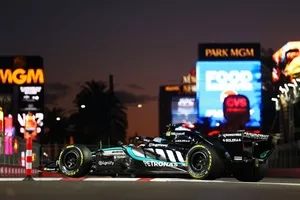
F1 Las Vegas GP: Russell fastest in final practice after Verstappen collision
Formula 1
F1 Formula 1
Las Vegas GP
3 d
F1 Las Vegas GP: Russell fastest in final practice after Verstappen collision
F1 set for V8 return from 2030
Formula 1
F1 Formula 1
Las Vegas GP
3 d
F1 set for V8 return from 2030
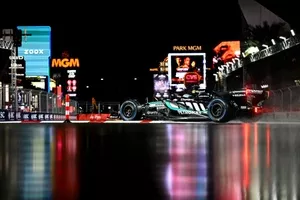
F1 Las Vegas GP: Rain drowns out FP1
Formula 1
F1 Formula 1
Las Vegas GP
4 d
F1 Las Vegas GP: Rain drowns out FP1

Nike joins F1 as apparel partner
Formula 1
F1 Formula 1
Las Vegas GP
4 d
Nike joins F1 as apparel partner
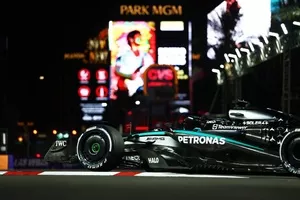
How Las Vegas navigated a rocky start to become an F1 mainstay
Formula 1
F1 Formula 1
Las Vegas GP
4 d
How Las Vegas navigated a rocky start to become an F1 mainstay
Latest news
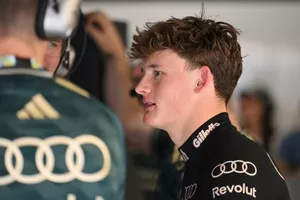
Slater to replace Camara for rest of F2 season as Tsolov becomes title favourite
FIA F2
F2 FIA F2
Lusail
48 min
Slater to replace Camara for rest of F2 season as Tsolov becomes title favourite
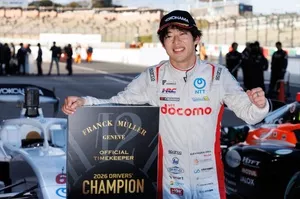
New Super Formula champion eyes dream IndyCar move to "demonstrate" Japan's quality
Super Formula
SF Super Formula
Suzuka II
1 h
New Super Formula champion eyes dream IndyCar move to "demonstrate" Japan's quality
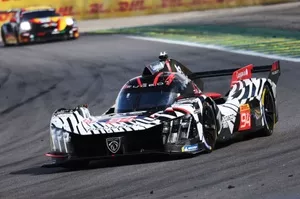
The reasons behind Peugeot's WEC Hypercar exit
WEC
WEC WEC 2 h
The reasons behind Peugeot's WEC Hypercar exit
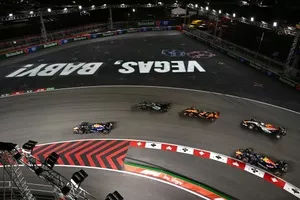
F1's Las Vegas 'oval-style' racing was not entirely power unit-related
Formula 1
F1 Formula 1
Las Vegas GP
3 h
F1's Las Vegas 'oval-style' racing was not entirely power unit-related
Subscribe and access Autosport.com with your ad-blocker.
From Formula 1 to MotoGP we report straight from the paddock because we love our sport, just like you. In order to keep delivering our expert journalism, our website uses advertising. Still, we want to give you the opportunity to enjoy an ad-free and tracker-free website and to continue using your adblocker.
You have 2 options:
- Become a subscriber.
- Disable your adblocker.
Subscribe now Already subscribed? Sign in here
Already disabled your adblocker?
Reload page
Manage Alerts
Subscribe