Formula 1 Bahrain Pre-Season 1
Why race starts get so complicated in F1 2026
Formula 1’s new power units are making race starts trickier, which teams and drivers believe could be a recipe for disaster

Gianluca D'Alessandro
Edited: Feb 15, 2026, 4:37 PM
Copy link

Share on Viber
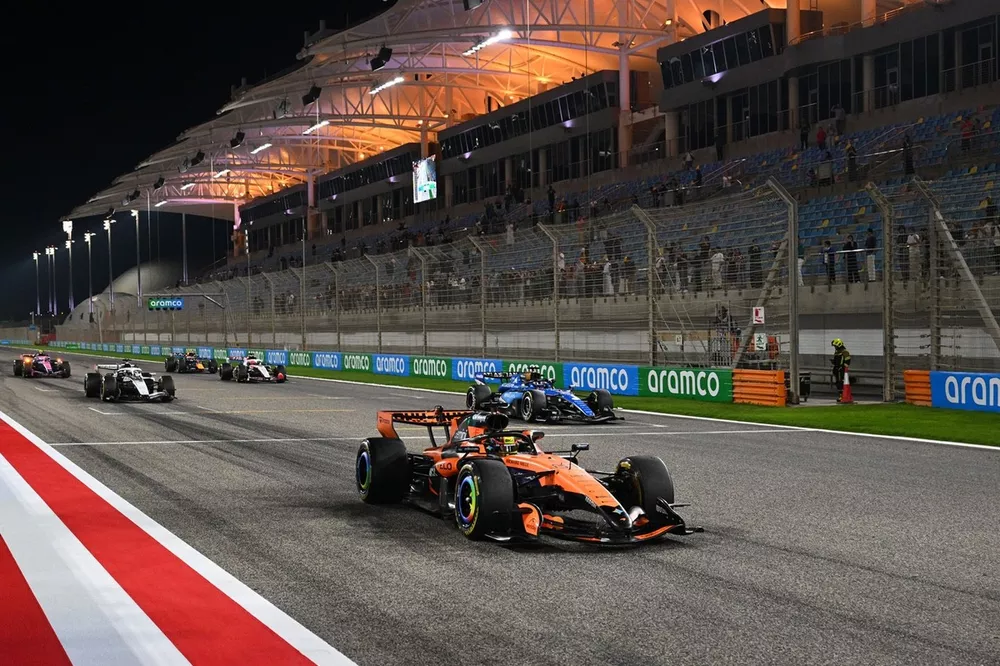
Oscar Piastri, McLaren, Alexander Albon, Williams
Photo by: Mark Sutton / Formula 1 via Getty Images
Autosport Explains
Our experts decode the most important stories in motorsport.
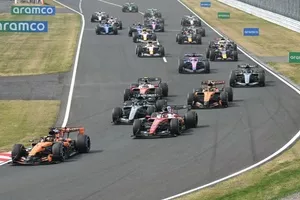
Formula 1’s first Bahrain test has highlighted a topic that will be discussed in the F1 Commission’s next meeting: race starts. The new power units are making those more difficult, as engines need to rev very high for an extended period of time in order to get the turbo in the right window.
The issue has reached a point where teams are requesting regulatory intervention ahead of the season-opening Australian Grand Prix.
In the past, as drivers prepared for the race start, the MGU-H assisted the turbo in quickly reaching the necessary pressure for a good acceleration. It played a threefold role – helping the turbo enter its operating window, reducing the required time to do so and, above all, doing so without burdening the internal combustion engine.
Without the MGU-H, there no longer is an external generator to provide energy to accelerate the turbo, which falls to the internal combustion engine. The latter must now run at much higher revs, for longer, to reach the required parameters for a decent getaway.
Foto di: Mark Sutton / Formula 1 via Getty Images
During practice starts in Bahrain, drivers were seen revving during up to 10 seconds, sometimes more, before the actual launch. This is a common trend, though it will depend on the experiments teams are conducting to fine-tune procedures. Significant variations were observed between practice starts from the same drivers, with engineers attempting to understand how much revving is ideal to help the turbo – which clearly is suboptimal for the internal combustion engine.
Looking at the data from Sakhir, peaks of over 13,000rpm were recorded, as in Andrea Kimi Antonelli’s final practice start at the end of day three. This is an extreme case, but cars tend to stabilize just above 12,000rpm on average. For reference, these are values that the previous power units only reached during moments of maximum effort – certainly not at the start.
In past years, thanks to the MGU-H, the values were significantly lower: the average fluctuated between 9,000rpm and 10,000rpm depending on engine manufacturers. For this reason, a pre-established interval is being proposed among other ideas.
Andrea Kimi Antonelli, Mercedes telemetry
Photo by: Gianluca D'Alessandro
This topic rarely arose in the past, precisely due to the hybrid element’s support. The current technical regulations prohibit using the MGU-K to release energy when the car is stationary on the grid, except for specific reliability reasons. The electric motor cannot be used below 50km/h, which makes the preparation as well as the launch even trickier.
One option would be allowing the MGU-K to be used during the start, but that precious energy would then be wasted on supporting the turbo and lead to struggles on the first few straights.
“The difference between a good and bad start last year was you got a bit of wheelspin or you had a bad reaction time, whereas this year it could be effectively like an F2 race where you almost go into anti-stall or something,” McLaren’s Oscar Piastri explained. “You're not just losing five metres or so, you could be losing six or seven spots if it goes wrong.”
Oscar Piastri, McLaren
Foto di: Guido De Bortoli / LAT Images via Getty Images
For now, teams are working within their pre-established windows, but the system will need to be ready when the lights actually go out.
“At the moment, we're just sort of going through our procedure, and I'm only doing my launch when I'm in a given window,” Mercedes’ George Russell added. “But we are very conscious that for a race start, you go when the lights are out, you don't go when your specific turbo is in the right window.”
Furthermore, gear ratios will change this year, with drivers having to use shorter gears through corners to recharge the battery while reducing turbo lag, even if it leads to higher fuel consumption. In Bahrain, very different approaches were seen among the engine manufacturers.
Read Also:
Russell has suggested that Ferrari may use a small turbo than its rivals, which would require less time to reach its operating window at low revs and therefore could offer an advantage at the start.
Red Bull has adopted a very aggressive approach to gear ratios, shifting down into lower gears to recharge the battery and maximize energy at the end of the straights, but Ferrari seems to have adopted a less extreme philosophy, using first gear less frequently in Bahrain.
“I don't know what it's like for the other manufacturers,” Russell added. “I think Ferrari seem to be able to run higher gears than other manufacturers, which probably suggests they've got a smaller turbo than other manufacturers. So maybe they're in a slightly easier position for their race starts. But as long as there's not a safety concern – there probably was in Barcelona, but as I said, we have made big progress since Barcelona in that specific regard.”
We want to hear from you!
Let us know what you would like to see from us in the future.
Take our survey
- The Autosport.com Team
Read and post comments
Read also :
Share Or Save This Story
Copy link
Share on Viber
Previous article Why Mercedes’ praise of Red Bull’s F1 engine may not tell the full story
Next article Alonso: Newey hasn't forgotten how to design an F1 car
Top Comments
There are no comments at the moment. Would you like to write one?
View More & Comment

More from
Gianluca D'Alessandro
Much of Formula E's future hinges on Gen4 being a success
Formula E
Formula E
Jarama November testing
5 d
Much of Formula E's future hinges on Gen4 being a success
Formula E’s plan to win over skeptics as Gen4 hits the track
Formula E
Formula E 5 d
Formula E’s plan to win over skeptics as Gen4 hits the track
How Mercedes has worked to solve its F1 weakness
Formula 1
Formula 1
Canadian GP
5 mo
How Mercedes has worked to solve its F1 weakness
Latest news

Max Verstappen considering 2027 Daytona 24 Hours entry
Formula 1
F1 Formula 1
Las Vegas GP
7 h
Max Verstappen considering 2027 Daytona 24 Hours entry
F1 2027 grid: Who will be racing and where?
Formula 1
F1 Formula 1 8 h
F1 2027 grid: Who will be racing and where?

Autosport Business Awards open nominations to recognise excellence across global motorsport industry
Autosport Awards
AWD Autosport Awards 9 h
Autosport Business Awards open nominations to recognise excellence across global motorsport industry

Peugeot quits WEC, Citroen and Opel to wind down Formula E programmes
WEC
WEC WEC 10 h
Peugeot quits WEC, Citroen and Opel to wind down Formula E programmes
Subscribe and access Autosport.com with your ad-blocker.
From Formula 1 to MotoGP we report straight from the paddock because we love our sport, just like you. In order to keep delivering our expert journalism, our website uses advertising. Still, we want to give you the opportunity to enjoy an ad-free and tracker-free website and to continue using your adblocker.
You have 2 options:
- Become a subscriber.
- Disable your adblocker.
Subscribe now Already subscribed? Sign in here
Already disabled your adblocker?
Reload page
Manage Alerts
Subscribe