Feature
Formula 1
Opinion
Why everyone suddenly wants a piece of Alpine
Just over a decade ago F1 was still saying goodbye to manufacturers as grid numbers dwindled in the economic crash fallout, but today teams are so valuable investors are seeking stakes rather than ownership. This creates a dilemma of multiple-team involvement for the championship’s bosses
Jennifer Frisinger
Edited: Jun 28, 2026, 8:35 AM
Copy link

Share on Viber
Autosport Business
Covering industry news and insight into the business of motorsport
Formula 1 spent years trying to keep teams on the grid. Now it has to decide who owns them.
Between 2008 and 2016, Formula 1 lost BMW, Toyota and Honda as manufacturers, HRT disappeared altogether, while Caterham and Marussia went bankrupt. F1 spent years worrying about who might leave next, but in 2026 the series faces the opposite problem.
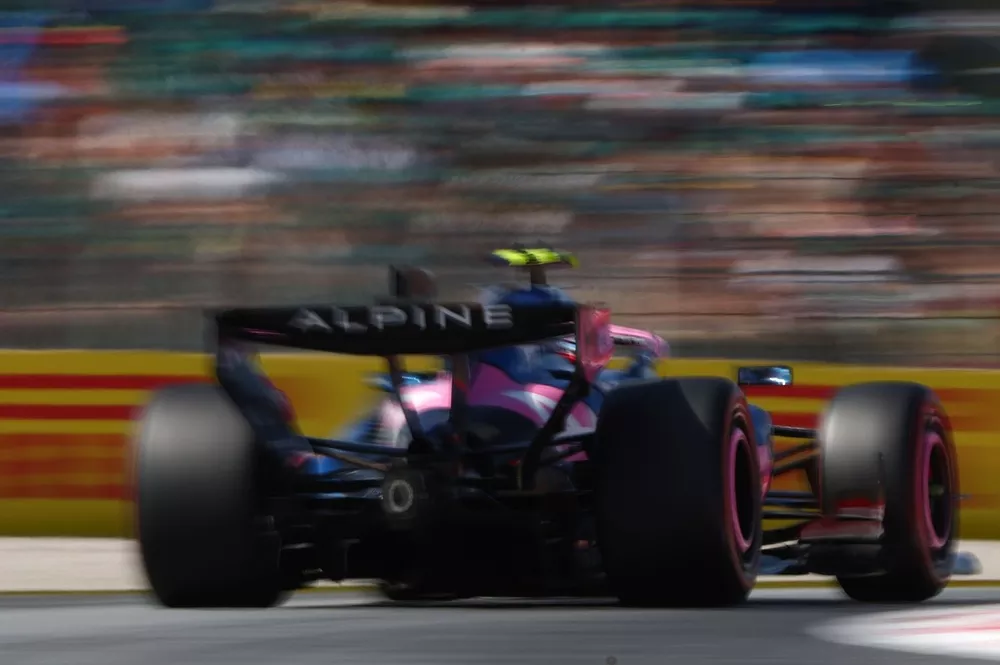
Mercedes recently explored the possibility of acquiring a minority stake in Alpine and not so long ago that would have sounded strange. Mercedes is Mercedes and Alpine is Alpine, the two teams are competitors. Yet the discussions were serious enough that Alpine executive adviser Flavio Briatore publicly confirmed them, explaining that talks had taken place with Mercedes over the sale of a stake in the team.
Read Also:
The fact that the conversation happened at all says something about F1's transformation. Buying a team outright is no longer the obvious way in – nor is setting up one from scratch, as Michael Andretti found out in his bid to join the grid with the project that morphed into the Cadillac F1 team.
As team valuations climb into the billions, buying an entire operation is proving to be a bigger hurdle than ever and the growing demand raises a very awkward question. What happens when F1 becomes so valuable that investors can no longer afford to buy entire teams? The obvious answer is: buy a minority stake.
Now the debate stops being about valuation and starts becoming a question of governance. Why would F1 allow one competitor to buy a piece of another? The surprise is that the rulebook does not appear to contain anything to prohibit this.
Briatore was open Mercedes was in talks with its parent company over a minority stake in Alpine
Photo by: Sam Bagnall / Sutton Images via Getty Images
If Toto Wolff had pursued a stake in Alpine, with Mercedes since withdrawing from talks, there is no obvious regulation that immediately ends the conversation. In fact, the existence of Red Bull and Racing Bulls suggests that F1's governance framework was never built around outright ownership bans in the first place.
Instead, F1 has traditionally focused on a different objective: preserving the independence of competitors.
The FIA's concern has historically been less about ownership than information. While design trends naturally converge as any given ruleset matures, a substantial proportion of each team's car has to be drawn in-house. The whole point of restricting how much teams can share — data, designs, personnel moving back and forth — is to stop one team from becoming an engineering branch office of another.
The challenge is no longer attracting capital. It is deciding how much of the grid that capital should be allowed to own
That approach made sense when the biggest governance concern involved technical cooperation between teams. A manufacturer buying a stake in a rival team presents a different challenge. So does a private-equity firm investing across multiple competitors. The question is no longer simply whether teams are sharing information. It is whether ownership creates problems that the current rules were never written to solve.
The grey area exists because F1's rules were written to govern how teams compete, not who can invest in them. While restrictions on technical cooperation and intellectual property are imposed, there is nothing governing who can buy stakes in whom.
Not everyone is convinced that distinction still works.
When speculation first emerged about Mercedes wanting a stake in Alpine, Briatore dismissed suggestions that such an arrangement would create governance problems. Former Audi F1 boss Jonathan Wheatley has similarly argued that Formula 1 already has the mechanisms to protect competitive independence.
Brown wrote to the FIA to highlight concerns about multiple-team ownership in F1
Photo by: Kym Illman / Getty Images
But others are less convinced. McLaren chief executive Zak Brown has become one of the most outspoken critics of multi-team ownership and cross-team alliances. Brown has argued that F 1 cannot afford even the appearance of competitors pulling in the same direction - that ownership structures can create doubts the rules were never designed to address. Brown's criticism has often been directed at the relationship between Red Bull and Racing Bulls, but the Alpine discussions suggest the issue may be broader and more complex.
Read Also:
The unanswered question is what F1 actually does about it.
If F1 eventually decides ownership itself is the problem, the simplest solution would be to ban competitors from owning stakes in one another. The trouble is F1 already contains that exact arrangement; Red Bull and Racing Bulls have spent years operating under common ownership and any attempt to draw a hard line would force F1 to decide whether existing structures get a pass or whether everybody plays by the new rules – which would effectively mean the wider Red Bull company would have to unload one of its teams.
The alternative is to leave ownership alone and keep policing behaviour. F1 already spends a great deal of time worrying about who shares what with whom, so it could tighten those safeguards without telling investors where they can put their money.
A third options is it could simply decide the current system is working and wait until somebody gives it a reason to intervene.
The challenge is no longer attracting capital. It is deciding how much of the grid that capital should be allowed to own.
With F1 bosses step in over multiple-team ownership?
Photo by: Sam Bloxham / LAT Images via Getty Images
We want to hear from you!
Let us know what you would like to see from us in the future.
Take our survey
- The Autosport.com Team
Read and post comments
Read also :
Previous article What we learned from Friday practice at the 2026 Austrian GP
Next article Road vs race track: Why the 2031 engine debate remains a complicated puzzle
Top Comments
There are no comments at the moment. Would you like to write one?
View More & Comment
More from Jennifer Frisinger
Three Circuits, Three Strategies: How promoters are pricing F1's sprint expansion
Formula 1
F1 Formula 1
Singapore GP
1 mo
Three Circuits, Three Strategies: How promoters are pricing F1's sprint expansion
How F1 learned to grow without growing
Formula 1
F1 Formula 1 3 mo
How F1 learned to grow without growing
Why F1 still owns only one grand prix
Formula 1
F1 Formula 1 3 mo
Why F1 still owns only one grand prix
How the F1 cost cap has put extra emphasis on the upgrade debate
Formula 1
F1 Formula 1
British GP
4 mo
How the F1 cost cap has put extra emphasis on the upgrade debate
What the Bahrain and Saudi cancellations reveal about how F1's money works
Formula 1
F1 Formula 1
Bahrain GP in Malaysia
7 mo
What the Bahrain and Saudi cancellations reveal about how F1's money works
How the cost of a slow start is felt financially in F1
Formula 1
F1 Formula 1
Japanese GP
7 mo
How the cost of a slow start is felt financially in F1
Why under the F1 cost cap regulatory mistakes carry compound interest
Formula 1
F1 Formula 1
Bahrain Pre-Season 2
9 mo
Why under the F1 cost cap regulatory mistakes carry compound interest
The Cadillac calculus F1 has made that weighs up $450m today vs billions tomorrow
Formula 1
F1 Formula 1 9 mo
The Cadillac calculus F1 has made that weighs up $450m today vs billions tomorrow
Latest news
Las Vegas Grand Prix Driver Ratings 2026
Formula 1
F1 Formula 1
Las Vegas GP
15 min
Las Vegas Grand Prix Driver Ratings 2026
War of the words: What will Verstappen and Russell do for an encore?
Formula 1
F1 Formula 1
Las Vegas GP
1 h
War of the words: What will Verstappen and Russell do for an encore?
F1 plans two-team engine supply limit under 2030 V8 rules
Formula 1
F1 Formula 1
Las Vegas GP
12 h
F1 plans two-team engine supply limit under 2030 V8 rules
Camara to finish F1 season with Haas, ending F2 title bid
Formula 1
F1 Formula 1
Las Vegas GP
14 h
Camara to finish F1 season with Haas, ending F2 title bid
Subscribe and access Autosport.com with your ad-blocker.
From Formula 1 to MotoGP we report straight from the paddock because we love our sport, just like you. In order to keep delivering our expert journalism, our website uses advertising. Still, we want to give you the opportunity to enjoy an ad-free and tracker-free website and to continue using your adblocker.
You have 2 options:
- Become a subscriber.
- Disable your adblocker.
Subscribe now Already subscribed? Sign in here
Already disabled your adblocker?
Reload page
Manage Alerts
Subscribe