Formula 1
How will F1’s new overtake mode work – and why are its rules still not finished?
Not every aspect of the 2026 regulations are set in stone yet, and the FIA has several ways to react after F1 testing in Barcelona - if the on-track picture requires it

Ronald Vording
Edited: Jan 8, 2026, 8:30 PM
Copy link
Share on Viber
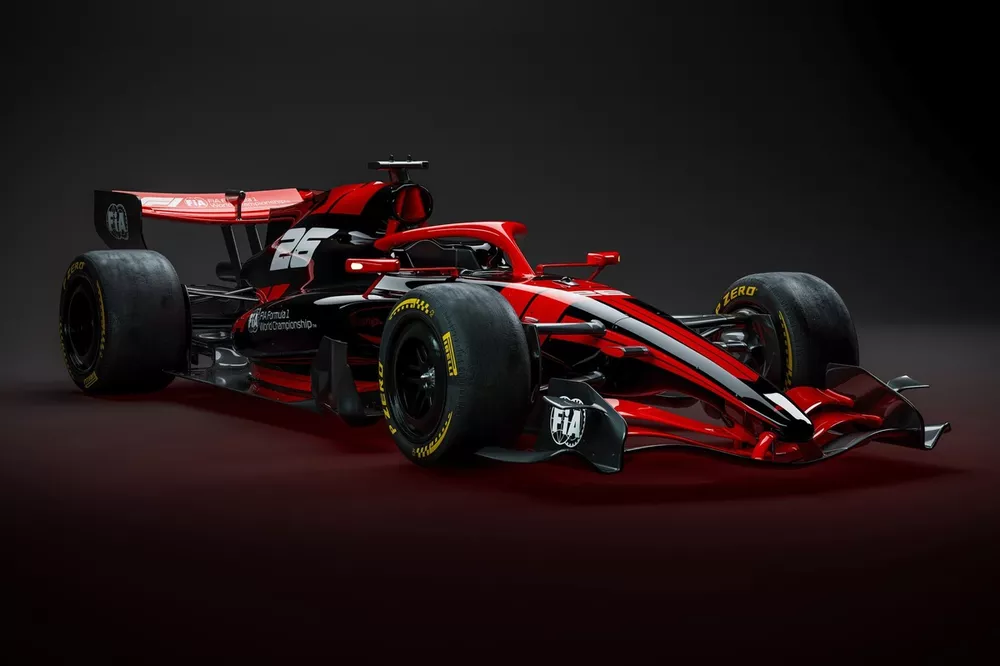
The Power Shift
The Power Shift explores the forces reshaping motorsports: new rules, new stars, new teams, new technology, and a new generation of fans redefining the future of racing.
At the end of this month, the first collective test with 2026 machinery will take place in Barcelona. Logically, much of the 2026 rulebook has been finalised, but the FIA has deliberately left several aspects somewhat open. According to the FIA’s single-seater director Nikolas Tombazis, those are the “levers” that the governing body can play with if the on-track picture is unsatisfactory in any way.
One of the elements that are still a work in progress concerns overtaking. DRS has disappeared because every driver will be able to use active aerodynamics on every straight, both at the front and the rear of the car. It has led to the introduction of overtake mode, which bears some resemblance to a push-to-pass system.
Read Also:
How is overtake mode supposed to work in F1?
In practice, its operation is twofold, Tombazis explains to select media – including Motorsport.com.
“It is something that will permit the cars within one second of the car ahead to a) recover more energy around the lap, about half a megajoule more energy, and b) deploy more of that energy, as there's a curve that defines the energy that is available to the cars. That’s the power that is available as a function of speed, and they're getting higher power than the car in front. So they have a) more energy and b) more power when they are one second behind, so the equivalent of DRS.”
In the technical regulations, the ERS deployment is indeed linked to a curve, the so-called rampdown rate. Without overtake mode, that curve gradually slopes down until the deployment reaches zero at a speed of 345km/h. In overtake mode, the curve remains flat for longer (with more ERS deployment), before dropping steeply to zero at a speed of 355km/h. It means that the chasing car is allowed to use more electrical power – and at higher speeds – than the car ahead.
In order to do so without running into problems with the amount of energy, the permitted harvesting per lap is slightly higher as well. This is specified in Article C5.2.10 iii of the technical regulations: “Up to 0.5MJ additional energy may be harvested in each lap subject to the conditions specified in Article B7.2,” which relates to overtake mode.
However, other aspects have not yet been finalised, such as the exact length of the activation zones. This is still a work in progress, as the FIA wants to find the right balance: overtaking should not be too difficult, but it should still remain a challenge.
Nikolas Tombazis, FIA Single Seater Director
Photo by: Andy Hone / Motorsport Images
“We are still fine-tuning that, meaning that as we are getting more and more final simulations, we have levers that we can adjust from a regulatory point of view. We have levers to make it a bit easier, or if we find it too easy, we have levers to make it a bit more challenging. We don't want overtaking to be in a narrow window.
“We don't want guys just driving past each other and not having a fight. We always want to have this fight. But we also don't want it to be impossible, so that after lap 1 you know how [they'll] get to the finish. We have ways to go in both directions. When we get all the initial running and the final simulations and so on, we may need to do some small adjustments.”
It means that the FIA will look closely at all data from winter testing in Barcelona, allowing the governing body to compare on-track numbers with earlier simulations.
Bigger speed differences due to energy management?
In addition to overtake mode, there is another key factor. Energy management by the driver will become much more important than before, meaning that differences between cars can arise at certain points of the track. If one driver is deploying more energy while another is harvesting, it could theoretically lead to larger speed differences.
It’s exactly why some team principals have predicted overtaking at ‘unusual places’, although it remains to be seen whether that actually happens. It is more likely that all teams will converge on more or less the same strategy for a given track, as Tombazis predicts.
“Differences in energy [management] can create a situation where one car is maybe not able to defend the position as well. But we believe that as the teams and drivers get used to operating in a certain way, they will make sure that they are not completely vulnerable to a particular situation.
“If we suddenly took these 22 cars and threw them on the grid now to start racing today, I'm sure we would find situations where what you're saying is happening, because people are not fully optimised yet. But I think once people know how to use them, they will be able to make sure they're not a sitting duck on the straight.”
Charles Leclerc, Ferrari leads at the start
Photo by: Mark Thompson / Getty Images
Is there a risk of political games in F1?
Finally, even after winter testing the FIA can adjust certain figures on a circuit-by-circuit basis to ensure that cars do not run out of electrical power too early.
“There will be some circuit specific parameters that we can adjust, for example, the maximum power or the maximum energy that can be recovered,” Tombazis added. “Because we have been striving to make sure that the velocity profile of the cars is what we consider to be natural. We don't want the cars to start lifting off in the middle of the straight and so on.”
Once again, the first week of winter testing will be an important benchmark for the FIA.
“There's a degree of wanting to see in winter testing how the cars behave, to see whether we push some additional parameters and make another step, both simpler and less dependent on energy management. We have certain scenarios in our pocket, but we've got to a good place with the PU manufacturers. We believe it's probably okay, but once we see where we are in the winter testing and if we need to have some further discussions, we have ideas in the pocket.”
It does lead to the question whether adjusting certain numbers can cause political discussions, given everything in F1 is political. After all, those with a strong power unit may be less inclined to changes than those who are behind. Tombazis acknowledges this risk, but emphasises that the FIA’s role is precisely to act in the best interests of the series.
“You mean the various PU manufacturers may not be on the same page? Yes, of course, that is a challenge - because, as I've said various times, we as the FIA care about the health of the sport,” he said. “They also care about the health of the sport but also whether they win races or not, and that complicates things a bit.
“And when you go to the engineering level, they care about the health of the sport, whether they win races and in addition whether they have an interesting job. So that makes it even more complicated because they may not always support the solution that is best for the health of the sport. So that makes the decision making a bit more complicated but that's part of our job.”
Watch: 2026 Formula 1 Technical Regulations Explained
We want your opinion!
What would you like to see on Motorsport.com?
Take our 5 minute survey.
- The Motorsport.com Team
Read and post comments
Read also :
Share Or Save This Story
Copy link
Share on Viber
Previous article David Coulthard points to clues that Lewis Hamilton is not at his peak anymore
Next article Cadillac F1 announces official technology partner ahead of 2026 debut
Top Comments
There are no comments at the moment. Would you like to write one?
View More & Comment

More from
Ronald Vording
Max Verstappen reveals he is considering 2027 Daytona 24 Hours entry
Formula 1
Formula 1
Las Vegas GP
2 d
Max Verstappen reveals he is considering 2027 Daytona 24 Hours entry
Max Verstappen "would rather stay home" but trusts F1's safety guarantees for Middle East races
Formula 1
Formula 1
Las Vegas GP
2 d
Max Verstappen "would rather stay home" but trusts F1's safety guarantees for Middle East races
Latest news
The unexpected riding shift that took Marc Marquez to a 10th world title
MotoGP
MGP MotoGP 10 min
The unexpected riding shift that took Marc Marquez to a 10th world title
F1 2027 grid: Who will be racing and where? The full line-up
Formula 1
F1 Formula 1 12 min
F1 2027 grid: Who will be racing and where? The full line-up
Fernando Alonso to miss Qatar F1 media day with viral illness
Formula 1
F1 Formula 1
Qatar GP
1 h
Fernando Alonso to miss Qatar F1 media day with viral illness
Fernando Alonso: ‘I will quit F1 when I feel slow, not at a specific age’
Formula 1
F1 Formula 1
Las Vegas GP
1 h
Fernando Alonso: ‘I will quit F1 when I feel slow, not at a specific age’
Feature
Discover prime content
Top 10 F1 cars of the 1990s
Formula 1
By Kevin Turner
Top 10 F1 cars of the 1990s

Subscribe and access Motorsport.com with your ad-blocker.
From Formula 1 to MotoGP we report straight from the paddock because we love our sport, just like you. In order to keep delivering our expert journalism, our website uses advertising. Still, we want to give you the opportunity to enjoy an ad-free and tracker-free website and to continue using your adblocker.
You have 2 options:
- Become a subscriber.
- Disable your adblocker.
Subscribe now Already subscribed? Sign in here
Already disabled your adblocker?
Reload page
Manage Alerts
Subscribe