Analysis
Formula 1
What was behind F1's new exhaust limit
While much of the focus of Formula 1's new regulations package has been about radical changes like the cost cap reduction and the aero development handicap system, there were some interesting detail changes too that could have an impact on the intra-team battle.

Matt Somerfield
Edited: Jun 7, 2020, 12:48 PM
Copy link
Share on Viber
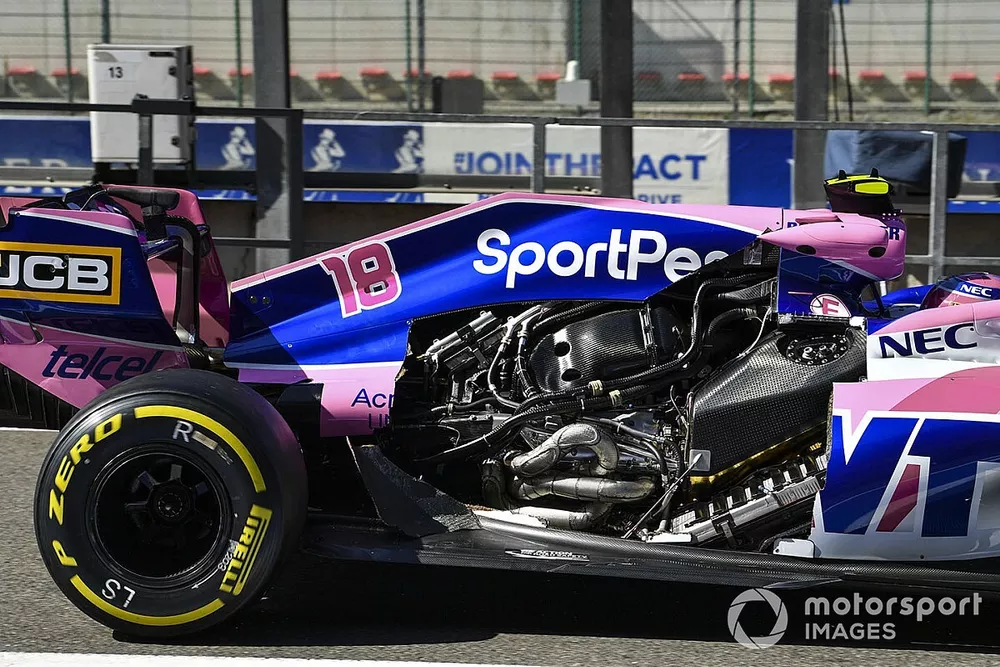
Sometimes such detail changes offer a fascinating insight in to the games teams have been playing, and the hidden areas where extra performance (however small) was being sought for potential big costs.
Part of the fun of deciphering a new set of regulations has been taken away in the last few years as the FIA now marks out what has been changed. However, that's not to say there isn't a valuable lesson in being able to read between the lines.
The change in the car's minimum weight from 643kg to 649kg and the power unit from 145kg to 150kg is one that requires little explanation: as they stop teams spending a fortune trying to save tiny amounts of weight.
We've also already covered the changes made to the floor, which will be changing in 2021 in a bid to limit each team's ability to increase downforce – and therefore ease concerns that F1's tyres could be pushed beyond their limit.
But one less obvious change is that teams and the FIA have now moved to better define what constitutes an exhaust system in the technical regulations, altering several articles within to do so.
On the face of it, this doesn't seem like much until you get to Article 23.3 in the Sporting Regulations which tells us that teams will only be able to use eight exhaust systems per season from 2021, bringing them in-line with the rules and penalty system that governs the power unit.
This was a change originally coming in with the 'new' 2021 rules package that has been delayed until 2022, but it seems teams have been eager to ensure it stays fast-tracked for next season rather than gets put back.
Exhausts have up until this point been excluded when it comes to being classified as part of the power unit. This has allowed teams to design and supply their own, independent of their deal with each given power unit supplier.
However, what this has done is open the door for teams to use materials that are more performance or weight orientated – and with that comes increased costs.
This not only brings added expenditure through research and development, but there are added parts cost too, through more expensive materials and the fact that exhaust systems were being replaced at a higher frequency than the limited power unit components.
Read Also:
- F1 power unit rules too complex for new entrants - Richards
- How F1's new aero handicap system will work
In fact, in typical F1 fashion, it's more than likely that teams have been replacing their exhaust system at every race, as up until this rule change coming through there was nothing to prevent them doing so.
In 2019, McLaren even went one step further and replaced the exhaust systems on both cars between qualifying and the race at three consecutive races - Bahrain, China and Baku.
Under parc ferme regulations, these were like-for-like replacements, but they suggest that exhausts were getting damaged very early in their life.
Whether or not there were performance gains to be had from running exhausts right at the limit in terms of their expected mileage we can only guess, but the facts teams have pushed hard to stamp out the practice shows there was definitely a lot of focus being put on that specific area.
We want your opinion!
What would you like to see on Motorsport.com?
Take our 5 minute survey.
- The Motorsport.com Team
Read and post comments
Read also :
Share Or Save This Story
Copy link
Share on Viber
Previous article Aero handicap not “a baseball bat” move, says Wolff
Next article Pirelli confident 2019 F1 tyres can last two more years
Top Comments
There are no comments at the moment. Would you like to write one?
View More & Comment

More from
Matt Somerfield

Gallery: How F1 tech evolved during the 2024 season
Formula 1
Formula 1 Dec 31, 2024
Gallery: How F1 tech evolved during the 2024 season
How McLaren’s rear wing push changed the game in F1
Formula 1
Formula 1 Dec 20, 2024
How McLaren’s rear wing push changed the game in F1
How 2026 F1 rules will help avoid identikit designs
Formula 1
Formula 1 Dec 16, 2024
How 2026 F1 rules will help avoid identikit designs
Latest news

Max Verstappen reveals he is considering 2027 Daytona 24 Hours entry
Formula 1
F1 Formula 1
Las Vegas GP
1 h
Max Verstappen reveals he is considering 2027 Daytona 24 Hours entry
Tsunami RT announces 2027 IMSA Michelin Endurance Cup entry in GTD
IMSA
IMSA IMSA 2 h
Tsunami RT announces 2027 IMSA Michelin Endurance Cup entry in GTD

MotoGP riders pay tribute to Marc Marquez, label him the GOAT
MotoGP
MGP MotoGP
Portuguese GP
2 h
MotoGP riders pay tribute to Marc Marquez, label him the GOAT

F1 Qatar GP 2026: start time, schedule and how to watch
Formula 1
F1 Formula 1
Qatar GP
2 h
F1 Qatar GP 2026: start time, schedule and how to watch
Feature
Discover prime content



Subscribe and access Motorsport.com with your ad-blocker.
From Formula 1 to MotoGP we report straight from the paddock because we love our sport, just like you. In order to keep delivering our expert journalism, our website uses advertising. Still, we want to give you the opportunity to enjoy an ad-free and tracker-free website and to continue using your adblocker.
You have 2 options:
- Become a subscriber.
- Disable your adblocker.
Subscribe now Already subscribed? Sign in here
Already disabled your adblocker?
Reload page
Manage Alerts
Subscribe