Analysis
Formula 1
The 'four pillars' that committed Mercedes to F1
Mercedes may have faced season-long speculation that it could pull the plug on Formula 1, but there is no doubt it is ending 2020 more committed than ever.

Jonathan Noble
Edited: Dec 22, 2020, 10:12 AM
Copy link
Share on Viber

Its recent tie-up with INEOS, which has resulted in a shareholding reshuffle, has created what team boss Toto Wolff has called a 'joint powerhouse' to keep pushing on in F1.
Yet the complications in sorting out the INEOS buy-in, and a neat three-way ownership split of the team, allied to sorting out a fresh team principal contract for Wolff, explains why it took so long to go public with the plans.
But what is clear speaking to Mercedes chiefs now is that, rather than there being any intense debate this year about if F1 fitted well with the road car company's future amid changing times for automotive manufacturers, the sport actually easily ticked all the boxes it needed to for the German car maker.
For Mercedes chairman Ola Kallenius, when it came to discussions about whether or not to commit to F1 for the new Concorde Agreement period from 2021, it was important that the decision was based on rational reasons – and not just on the emotions of enjoying the racing.
Read Also:
- Wolff feels "committed for life" to Mercedes’ Formula 1 team
- Hamilton "proud" Wolff will remain Mercedes team principal
- INEOS becomes Mercedes shareholder as Wolff extends deal
And, as Kallenius explains, there were in the end four key 'pillars' that the sport had to fulfil for Mercedes to be completely convinced that F1 was the right place to be.
"I know there was some speculation in the press, but we never seriously considered pulling out because it's such a strong part of our heritage," explained Kallenius, when asked by Motorsport.com about the company's future in F1.
"We have a brand that was literally born on the racetrack. But we did ask ourselves in the board, what are the pillars that make up Formula 1, beyond the emotional connection to the sport? How do you look at this from a rational point of view? We came up with four pillars that you need to answer in our view with a yes."
Those four key areas were the show, the environment, the finances and future profitability.
Here Kallenius explains why they were each so important for Mercedes.
The show
While F1 does occasionally throw up some dull races, the 2020 F1 season has shown how the sport actually delivers more often than not a pretty exciting spectacle.
Liberty Media's push to increase social media exposure, and get behind Esports, has also played a part in boosting the younger audience – something Mercedes is especially happy with.
Kallenius explained: "The number one is: how is the show, is the show good? And what about the fan base?
"What we have particularly seen in the latest year, through social media, is really an explosion in the reach. And the best news is that the younger fans are coming, so the 15-to-30-year-olds through Esports, through social media, and through a great show.
"I don't know a motorsport spectacle that is better than Formula 1. That was question number one. It's answered with yes."
The environment
While F1's move to turbo hybrid engines was a step change for the sport in addressing the environmental needs of car manufacturers, it has ramped up its environmental efforts significantly in the past two years.
As well as F1 committing to become carbon neutral by 2030, the sport is looking towards a future where grand prix racing is a battleground for sustainable fuel technology.
And although the continued use of hybrids may not directly fall in line with manufacturers who are focusing on all-electric futures, Kallenius says F1 is doing the right thing.
"We have made a very clear commitment for Daimler and for Mercedes to go into a CO2 neutral future, with 'Ambition 2039' for passenger cars," he said, in reference to his company's CO2 neutral target.
"We want to achieve a CO2 neutral position in three product life cycles inside 20 years. There has to be a credible path towards sustainable motorsport as well.
"I've also spoken to Greg Maffei [Liberty president] about this at FOM, who very much agrees with it. And we put out a manifesto for the team earlier this year, on how we're going to take the Mercedes F1 team towards CO2 neutrality.
"Technology is an important part of that. It's a hybrid formula already today and I can see the electrical part of it increasing. I can see it being a testing ground for lower carbon or no carbon fuels, which will play some role in the world going carbon neutral eventually.
"So that second [pillar], can you credibly make the sport more sustainable? I believe yes. And we're certainly committed to it."
Lewis Hamilton, Mercedes F1 W11, in the pit lane
Photo by: Andy Hone / Motorsport Images
The finances
F1 costs have risen dramatically in recent years, with successful teams spending hundreds of millions of pounds each year in their efforts to win.
The rampant acceleration of expenditure was unsustainable and risked even successful car makers pulling out of F1 if they could no longer justify the spending to their company's boards.
F1's imposition of a budget cap from 2021, allied to changes in the way the sport is financed to make it more equitable for everybody, are factors that have made staying in F1 a no-brainer for Mercedes.
"The third thing [for us] was financial sustainability," added Kallenius. "The cost cost cap helps. We were an advocate for it. It makes the economic proposition better, so I think we're ticking that box as well.
Future profitability
What the changes in F1's costs have also done is perhaps change the business model of teams completely.
Whereas once they were nothing more than money pits for owners, now there is a chance to make the finances much more attractive – and even make a profit.
"The fourth one was, does it always have to be a cost centre, or can it be a sports franchise, like a football club or an American football club in the US?" continued Kallenius. "And we can see now that people are starting to look at this more like sports franchises.
"Getting a great and strong, professional partner, that knows professional sport, like INEOS, into the picture shows that. The fact that somebody like Jim [Ratcliffe, INEOS CEO] makes a decision to join forces with us, I think reinforces that fourth pillar.
"And with those four pillars, to me, the decision is clear. We're in."
We want your opinion!
What would you like to see on Motorsport.com?
Take our 5 minute survey.
- The Motorsport.com Team
Read and post comments
Read also :
Share Or Save This Story
Copy link
Share on Viber
Previous article Grosjean's single-lap pace "phenomenal" - Magnussen
Next article Ferrari setting up Haas F1 hub in Maranello
Top Comments
There are no comments at the moment. Would you like to write one?
View More & Comment

More from
Jonathan Noble

Brundle awarded OBE in King’s New Year’s honours
Formula 1
Formula 1 Dec 31, 2024
Brundle awarded OBE in King’s New Year’s honours
The new rules dilemma that will define the 2025 F1 season
Formula 1
Formula 1 Dec 31, 2024
The new rules dilemma that will define the 2025 F1 season
Verstappen issues Red Bull title warning in push for RB21 progress
Formula 1
Formula 1
Australian GP
Dec 28, 2024
Verstappen issues Red Bull title warning in push for RB21 progress

More from
Mercedes
Kimi Antonelli: Yo-yo racing to return at F1 Las Vegas GP
Formula 1
Formula 1
Las Vegas GP
11 h
Kimi Antonelli: Yo-yo racing to return at F1 Las Vegas GP
The Kimi Antonelli you don't know, told by those closest to him
Formula 1
Formula 1
Mexican GP
1 d
The Kimi Antonelli you don't know, told by those closest to him
Latest news
Marc Marquez fails to deny MotoGP retirement rumours
MotoGP
MGP MotoGP
Portuguese GP
33 min
Marc Marquez fails to deny MotoGP retirement rumours
IndyCar 2026 season review: Andretti Global
IndyCar
Indy IndyCar 38 min
IndyCar 2026 season review: Andretti Global
Wright Motorsports adds second Porsche for 2027 Michelin Endurance Cup
IMSA
IMSA IMSA 1 h
Wright Motorsports adds second Porsche for 2027 Michelin Endurance Cup

Is Peugeot ending its WEC Hypercar programme with immediate effect?
WEC
WEC WEC 1 h
Is Peugeot ending its WEC Hypercar programme with immediate effect?
Feature
Discover prime content
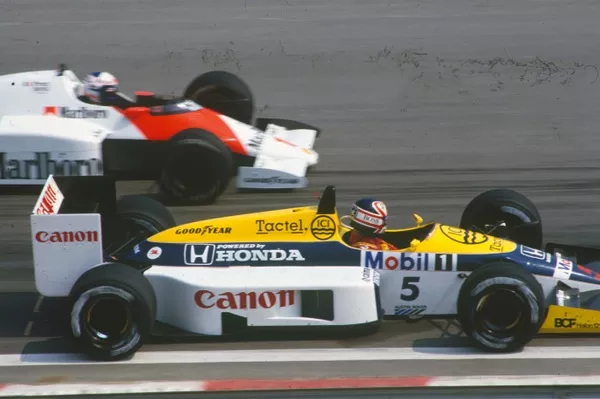
Top 10 F1 cars of the 1980s
Formula 1
By Kevin Turner
Top 10 F1 cars of the 1980s

Subscribe and access Motorsport.com with your ad-blocker.
From Formula 1 to MotoGP we report straight from the paddock because we love our sport, just like you. In order to keep delivering our expert journalism, our website uses advertising. Still, we want to give you the opportunity to enjoy an ad-free and tracker-free website and to continue using your adblocker.
You have 2 options:
- Become a subscriber.
- Disable your adblocker.
Subscribe now Already subscribed? Sign in here
Already disabled your adblocker?
Reload page
Manage Alerts
Subscribe