Analysis
Formula 1 Bahrain GP
How Williams tackles Bahrain cooling
The Bahrain Grand Prix is one of the hottest races of the year, and Williams, like all Formula 1 teams, must make changes to ensure the cars run reliably.

Gary Anderson
Edited: Apr 8, 2018, 2:51 PM
Copy link
Share on Viber
Giorgio Piola's F1 technical analysis
Giorgio Piola is the preeminent Formula 1 technical journalist. View our full selection of Giorgio's technical illustrative content
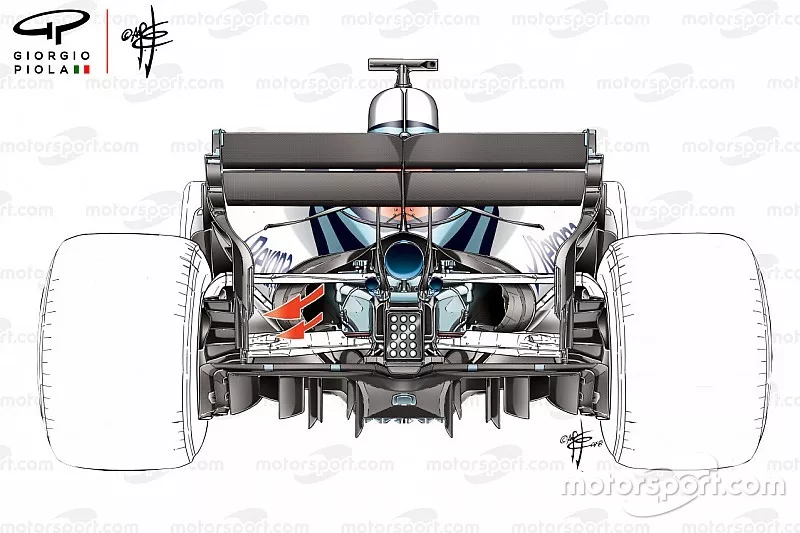
The Williams FW41 features flared exits at the rear of the sidepods, which are significantly wider than what we have seen in testing or during the Australian Grand Prix weekend.
Adequate cooling is one of the first requirements of the Formula 1 car concept when you are putting it together.
If you are not honest with yourself in the early stages of the design, then you will have to suffer the pain in the later stages.
It's a lot easier to blank off excess cooling than it is to find more cooling performance from an already tightly packaged concept, and looking at the Williams it is suffering the consequences of designing its car for a cold day at Silverstone rather than a hot day in Bahrain.
The engine's heat rejection gives you the radiator core area that is required. This, in turn, gives you the radiator inlet size, which is normally about 20 percent of the radiator core area.
With an outlet area of 30 percent, you will get a reasonable pressure drop across the radiator core. These areas need to expand uniformly to and from the radiator as they go past all the other restrictions.
After that, you can start to play around. This is what teams call 'uniform body airflow' and it is actually as important, if not more important, than what happens on the outside surfaces.
On the Williams, it seems it has opened up the last bit of the exit area and that further inside the exit duct the clearances on the gearbox etc get smaller.
This will not really do much good for the cooling, and can actually be worse because you can get reverse airflow very easily.
Basically, the airflow at the rear of the car turns inside the duct, actually making cooling worse and the overall car performance very inconsistent.
Williams chief technical officer Paddy Lowe confirmed that the team always planned to run this configuration in Bahrain and that it wasn't a reaction to any unexpected cooling demands.
"We are running more cooling at this circuit because it needs it," said Lowe when asked by Motorsport.com about the cooling configuration of the cars.
"The steps we had here we didn't have in Melbourne, we brought them for here but we didn't need them in Australia.
"We're on maximum cooling on one car, but not on the other. Different drivers have different driving styles and it tends to drive different temperatures."

Williams FW41 cooling
Photo by: Giorgio Piola
We want your opinion!
What would you like to see on Motorsport.com?
Take our 5 minute survey.
- The Motorsport.com Team
Read and post comments
Read also :
Share Or Save This Story
Copy link
Share on Viber
Previous article Force India won't race new front wing in Bahrain
Next article Bahrain GP: Vettel holds off Bottas to win, disaster for Red Bull
Top Comments
There are no comments at the moment. Would you like to write one?
View More & Comment

More from
Gary Anderson

The details of McLaren's nose-led tech push
Formula 1
Formula 1 May 16, 2018
The details of McLaren's nose-led tech push

How Force India is pushing to recover from sub-par start
Formula 1
Formula 1 Apr 18, 2018
How Force India is pushing to recover from sub-par start
How Mercedes gains from its unique rear suspension
Formula 1
Formula 1 Apr 7, 2018
How Mercedes gains from its unique rear suspension

More from
Williams
Top 10 F1 cars of the 1980s
Formula 1
Top 10 F1 cars of the 1980s
What is left to fight for in F1 2026?
Formula 1
Formula 1
Las Vegas GP
2 d
What is left to fight for in F1 2026?
"It's horribly painful" - Williams drops 2026 car upgrades to benefit 2027
Formula 1
Formula 1
Sao Paulo GP
5 d
"It's horribly painful" - Williams drops 2026 car upgrades to benefit 2027
Latest news
Alex Palou to carry expanded full-season OpenAI primary sponsorship with Chip Ganassi Racing in 2027
IndyCar
Indy IndyCar 1 min
Alex Palou to carry expanded full-season OpenAI primary sponsorship with Chip Ganassi Racing in 2027
Five things to watch out for at the F1 Las Vegas GP
Formula 1
F1 Formula 1
Las Vegas GP
31 min
Five things to watch out for at the F1 Las Vegas GP
NASCAR reveals invites for Daytona Clash, qualifying package to exceed 200 mph
NASCAR Cup
NAS NASCAR Cup 40 min
NASCAR reveals invites for Daytona Clash, qualifying package to exceed 200 mph
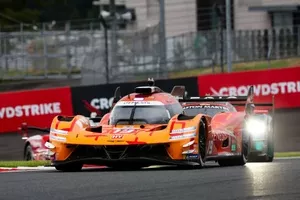
Why results don’t do justice to Genesis’ “rocketship” pace in WEC
WEC
WEC WEC 1 h
Why results don’t do justice to Genesis’ “rocketship” pace in WEC
Feature
Discover prime content
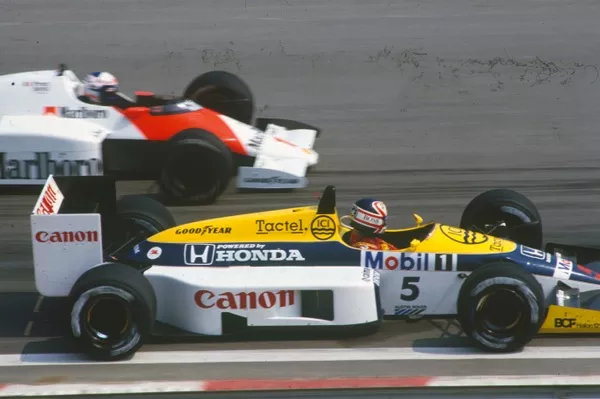
Top 10 F1 cars of the 1980s
Formula 1
By Kevin Turner
Top 10 F1 cars of the 1980s


Subscribe and access Motorsport.com with your ad-blocker.
From Formula 1 to MotoGP we report straight from the paddock because we love our sport, just like you. In order to keep delivering our expert journalism, our website uses advertising. Still, we want to give you the opportunity to enjoy an ad-free and tracker-free website and to continue using your adblocker.
You have 2 options:
- Become a subscriber.
- Disable your adblocker.
Subscribe now Already subscribed? Sign in here
Already disabled your adblocker?
Reload page
Manage Alerts
Subscribe