Analysis
Formula 1
How F1's level playing field rules have impacted computer chip choices
Formula 1 chiefs have made a huge effort in recent years to introduce rules that help level the playing field among all teams.

Jonathan Noble
Edited: Jun 4, 2022, 10:26 AM
Copy link
Share on Viber

Where once those outfits with the most money could simply write a big fat cheque to spend their way to bigger and better developments, now that is no longer the case.
Primarily, the arrival of a cost cap in F1 means that teams are strictly limited in what they can spend. For top manufacturer outfits, it is a battle to keep within the current $140 million spending limit that has been imposed.
But, on top of the financial ceiling, another key change has been the introduction of aerodynamic testing restrictions.
Teams have been limited on how much they can run wind tunnels, and how much CFD work they can do, to try to ensure that all teams have similar opportunities.
Beyond that, there is also a sliding scale handicap system in place, where the more successful you are in the world championship then the more restricted you are in what you can do in the windtunnel or with your computer simulations.
The combined impact of all these rules should deliver opportunity to the smaller outfits who have been outspent in recent years, but they have also prompted the need for a completely different approach from the top teams.
Now it is not a question of throwing money at a problem to try to solve it; it is about seeking out the biggest bang for buck possible.
Lewis Hamilton, Mercedes W13
Photo by: Carl Bingham / Motorsport Images
This impact is mostly noticeable to fans in the way that teams are limiting their car upgrades this year. Everyone is being more strategic in how and when they bring developments, rather than bolting on everything new they find.
But digging deeper into areas where teams have made some changes in a bid to drive up performance amid the constraints of the cost cap and the aero testing restrictions, it has been fascinating to learn how it has even triggered a deep analysis among teams about their computer chips.
A report published today has shown that a change to AMD computer processors at Mercedes at the start of 2020 has helped it deliver since then an impressive 20% performance improvement on the CFD that was used to model and test aerodynamic flow on its F1 car.
That resulted in the team being able to cut its CFD workload in half, and was a much bigger gain than the standard one or two percent improvements usually seen with each chip evolution.
It came as the result of a move to AMD's second generation EPYC processors, which is felt delivered a better price/performance balance than the systems it had used for the previous three-and-a-half years.
The swap to the new processors was triggered as the result of both the looming cost cap and a change for 2021 in a way that the FIA limited what teams could do for aerodynamic testing.
Simon Williams, head of aero development software at Mercedes, said that the inclusion of teams' CFD within the cost cap meant some big decisions had to be made, which is why it went for the second generation EPYC processors.
"We had new regulations coming in and were refreshing our systems," he said. "Performance was the key driver of the decision making.
"We looked at AMD and the competitors. The CFD solve was the critical factor when running benchmarks. We needed to get this right, because we're going to be on this hardware for three years.
"The other element was that we have the hardware on premises, and if it takes up the whole data centre then that wasn't going to be an option. EPYC was the front runner in delivering the performance and space saving we needed."
Williams says the push was partly motivated by the way that the FIA opened up an avenue for teams to lift their CFD game from 2021.
"Wind tunnel hours and computational fluid dynamics were previously both regulated to a common number, so you could bias towards wind tunnel or CFD," he explained.
"The FIA decoupled that for 2021. The next thing they did was provide an uplift on the amount of compute we could have.
"The third thing was prorating it based on where your performance is in the championship, so there's a sliding scale that biases the capacity you have to develop aerodynamics.
"We're trying to make the most of that, as well as just the raw compute. There's also a regulation of how many geometries we can run in a certain period, which usually spans eight weeks. We're trying to maximize everything we can do in that period to get the most out of our CFD."
AMD EPYC 7003 Series Processor
Photo by: AMD
With around 1800 new geometry simulations allowed per eight-week period in 2021, Mercedes needed to know that its processors were making the most of each run.
"It's about trying to maximize the work that the CFD solve can do per clock cycle," he added.
Read Also:
- Why Volkswagen's rivals want guarantees on 2026 F1 engine plans
- Leclerc: Ferrari boosted by "jump" in understanding F1 weaknesses
- Understanding the true scale of Mercedes' F1 turnaround task
Williams says the 20% performance gain has been impressive, but equally the lack of downtime has been an important element too.
"The new system is allowing us to focus our effort on aerodynamic performance," he adds. "Reliability has been great too. If we miss even a few hours that puts us on the back foot, so it's important that these systems are robust and reliable. This is something that EPYC has delivered.
"The time scales are so short from initial idea, to CFD, to testing in the tunnel, and then into the car. It could be measured in weeks. The fact that we've been able to deliver consistently over the year has been key."
We want your opinion!
What would you like to see on Motorsport.com?
Take our 5 minute survey.
- The Motorsport.com Team
Read and post comments
Read also :
Share Or Save This Story
Copy link
Share on Viber
Previous article Leclerc: Ferrari has made "jump" in understanding F1 weaknesses
Next article Mazepin questions 'values' in F1 amid Haas/Uralkali sponsorship dispute
Top Comments
There are no comments at the moment. Would you like to write one?
View More & Comment

More from
Jonathan Noble

Brundle awarded OBE in King’s New Year’s honours
Formula 1
Formula 1 Dec 31, 2024
Brundle awarded OBE in King’s New Year’s honours
The new rules dilemma that will define the 2025 F1 season
Formula 1
Formula 1 Dec 31, 2024
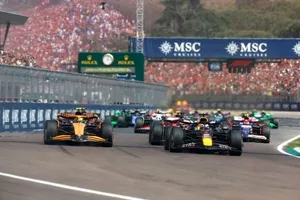
The new rules dilemma that will define the 2025 F1 season
Verstappen issues Red Bull title warning in push for RB21 progress
Formula 1
Formula 1
Australian GP
Dec 28, 2024
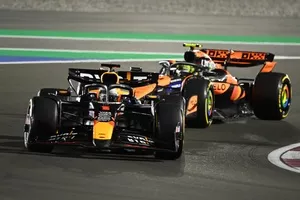
Verstappen issues Red Bull title warning in push for RB21 progress
Latest news
Joe Gibbs Racing plans to push back on Denny Hamlin retirement timeline
NASCAR Cup
NAS NASCAR Cup 8 h
Joe Gibbs Racing plans to push back on Denny Hamlin retirement timeline
Retaining Liam Lawson isn't enough – Red Bull must stop treating him like a failure
Formula 1
F1 Formula 1 13 h
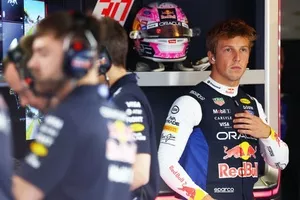
Retaining Liam Lawson isn't enough – Red Bull must stop treating him like a failure
Yamaha may not be competitive immediately in MotoGP's 850cc era, says Pramac
MotoGP
MGP MotoGP
Qatar GP
17 h
Yamaha may not be competitive immediately in MotoGP's 850cc era, says Pramac

Feature
Discover prime content


Subscribe and access Motorsport.com with your ad-blocker.
From Formula 1 to MotoGP we report straight from the paddock because we love our sport, just like you. In order to keep delivering our expert journalism, our website uses advertising. Still, we want to give you the opportunity to enjoy an ad-free and tracker-free website and to continue using your adblocker.
You have 2 options:
- Become a subscriber.
- Disable your adblocker.
Subscribe now Already subscribed? Sign in here
Already disabled your adblocker?
Reload page
Manage Alerts
Subscribe