Opinion
Formula 1
How F1's impending engine revamp puts new emphasis on electrical power
OPINION: A move to synthetic fuels and increasing the electrical power contribution for 2026 has generated great interest, but the new rules provide an indication of F1’s priorities
Lucas di Grassi
Edited: Nov 28, 2023, 3:42 PM
Copy link
Share on Viber
Engineering
Our experts' guide on how you can become a better racing driver
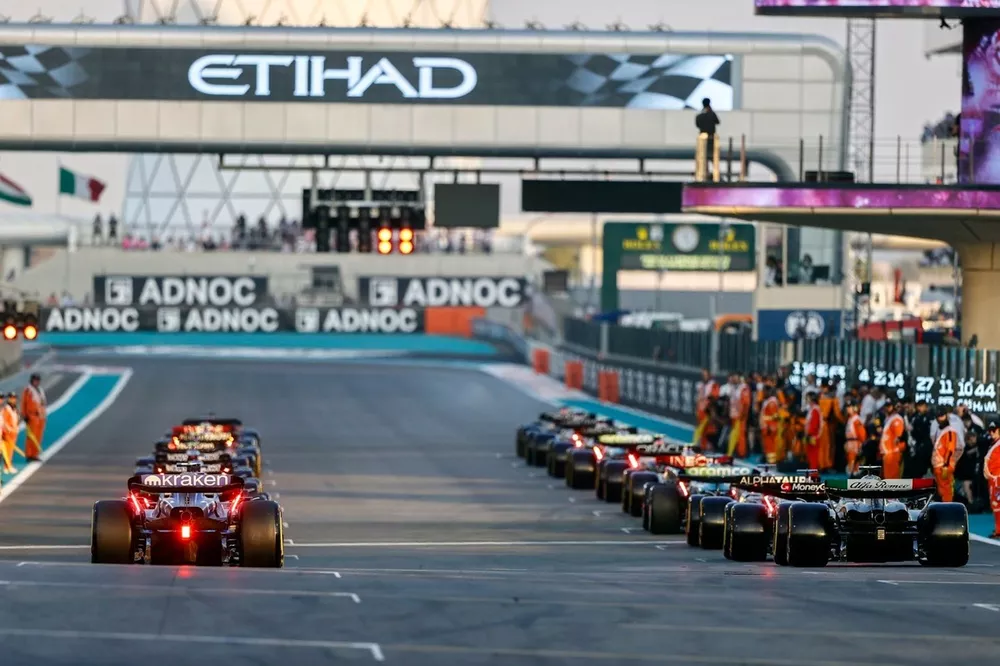
With a freeze on power units until new rules arrive in 2026 and its emphasis on aerodynamics, Formula 1 is almost the exact inverse of the electric series I’ve raced in for the past decade.
Formula E is all about powertrain efficiency, optimising a spec chassis with standard aerodynamics and none of the underfloor black arts. It’s not perfect, but Formula E has shown that investing in powertrains rather than aerodynamics can result in exciting racing and be attractive to manufacturers.
Many predict that the 2026 rules could turn F1 into an engine formula and reduce the emphasis on aero. It’s hard to know if that will be the case, but to me, the changes represent more of a fine-tuning than a revolution since the 1.6-litre V6s will stay.
Adopting non-fossil fuels is a no-brainer, as biofuel or e-Fuels can be implemented without major modifications to current or future engines. Carbon neutrality is key and biofuel especially is already available at a competitive price, but it’s unlikely ever to be used by passenger cars globally. Meanwhile, the electrical power output will almost triple from 120kW to 350kW. This will in turn mean using less fuel, with F1’s target for cars to use only 70kg per race.
But it should be noted that the new V6 engines will be less efficient. Chiefly this is due to the removal of the expensive and unpopular MGU-H, which performs an important dual purpose. As well as recovering energy wasted through the exhaust, it prevents turbo lag, which is likely to be an issue for the new engines.
Compensating for this will either involve burning fuel through the braking phase or mean a bigger reliance on the electric motor for acceleration. At really high-speed tracks like Monza, simulations suggest that the combustion engine will effectively work as a generator that charges the batteries for the next straight and cars may not be at their top speed by the end.
Photo by: Audi Communications Motorsport
F1's desire to appeal to manufacturers with 2026 rules has yielded commitment from Audi in partnership with Sauber
Engine efficiency is proportional to the ratio of compression in the chamber, so by also reducing this the engines will have less power – combustion output is expected to decrease by around 200kW – and efficiency too. Since combustion engines are already adapted to run biofuel, it’s not like a real technology breakthrough will result either.
Keeping the V6 and removing scope for divergence has allowed F1 to cap annual power unit spending at $130m from 2026. But it seems there is no great desire on F1’s behalf to push for more innovative combustion.
Introducing a different architecture that results in improved efficiency would be a show of ambition, but instead it appears that F1 wants the combustion side to be fairly equal so teams can spend money on finding competitive advantages in other ways, especially on the electric side. F1 is trying to stay relevant to the electrical energy transition as OEMs invest in EVs rather than producing a better or more efficient combustion engine, which for me just proves that the way forward ultimately lies away from the ICE.
Normally aspirated V10s and V8s would be less efficient on combustion, but the 2026 V6s will be lacking in this regard anyway
F1’s rules shift has contributed to Audi, Honda and Ford (in partnership with Red Bull Powertrains) coming in for 2026, but Audi isn’t justifying entering because the RS6 will have technologies developed from the F1 engine. It’s more of a brand exercise than about a link to the consumer product. As the freeze proves, the core appeal of F1 to manufacturers isn’t developing engines.
With the focus on the electric side, it would be interesting to see F1 open up to different engine configurations; heavier motors with fewer electric components and vice versa. Normally aspirated V10s and V8s would be less efficient on combustion, but the 2026 V6s will be lacking in this regard anyway.
The only engine efficiency gain will come from the increased electric power output, but the next step to improve this comes from adding even more up to the point of going fully electric. And that’s territory already occupied by Formula E.
Photo by: Simon Galloway / Motorsport Images
Pursuing greater efficiency is problematic for F1 because it can only add so much electric power before encroaching on Formula E's patch
We want your opinion!
What would you like to see on Motorsport.com?
Take our 5 minute survey.
- The Motorsport.com Team
Read and post comments
Read also :
Share Or Save This Story
Copy link
Share on Viber
Previous article Sainz: Final races put "dark patch" on 2023 F1 season
Next article Ocon tops F1's Abu Dhabi post-season test as Russell crashes
Top Comments
There are no comments at the moment. Would you like to write one?
View More & Comment
More from
Lucas di Grassi
Di Grassi: The competing demands of electric powertrain development
Formula E
Formula E Oct 29, 2024
Di Grassi: The competing demands of electric powertrain development
Why drivers aren’t exempt from harnessing AI’s advantages
Formula E
Formula E Apr 10, 2024
Why drivers aren’t exempt from harnessing AI’s advantages
The target Formula E should set for Gen4
Formula E
Formula E Jan 17, 2024
The target Formula E should set for Gen4
Latest news
Sebastien Bourdais hopes latest WEC success will remind teams of his value
WEC
WEC WEC
Monza
21 min
Sebastien Bourdais hopes latest WEC success will remind teams of his value
"It's horribly painful" - Williams drops 2026 car upgrades to benefit 2027
Formula 1
F1 Formula 1
Sao Paulo GP
1 h
"It's horribly painful" - Williams drops 2026 car upgrades to benefit 2027

Iker Lecuona felt significant differences between Ducati's GP25 and GP26
MotoGP
MGP MotoGP
Qatar GP
2 h
Iker Lecuona felt significant differences between Ducati's GP25 and GP26
Feature
Discover prime content

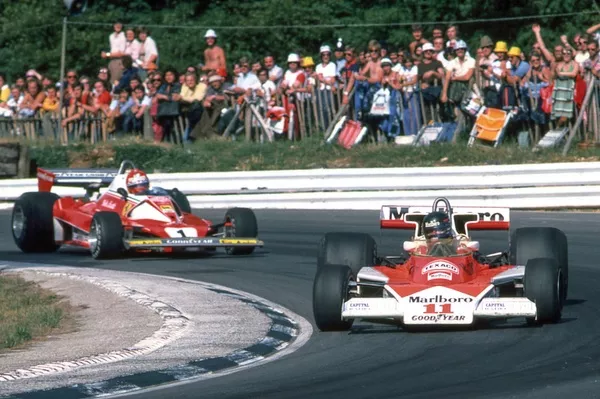
Top 10 F1 cars of the 1970s
Formula 1
By Kevin Turner
Top 10 F1 cars of the 1970s

Subscribe and access Motorsport.com with your ad-blocker.
From Formula 1 to MotoGP we report straight from the paddock because we love our sport, just like you. In order to keep delivering our expert journalism, our website uses advertising. Still, we want to give you the opportunity to enjoy an ad-free and tracker-free website and to continue using your adblocker.
You have 2 options:
- Become a subscriber.
- Disable your adblocker.
Subscribe now Already subscribed? Sign in here
Already disabled your adblocker?
Reload page
Manage Alerts
Subscribe