Formula 1
FIA explains why it feels driver criticism on F1 fines is overblown
The FIA has tried to alleviate driver concerns over where it is spending its money from Formula 1 fines

Filip Cleeren
Published: Jan 15, 2025, 8:43 AM
Copy link
Share on Viber
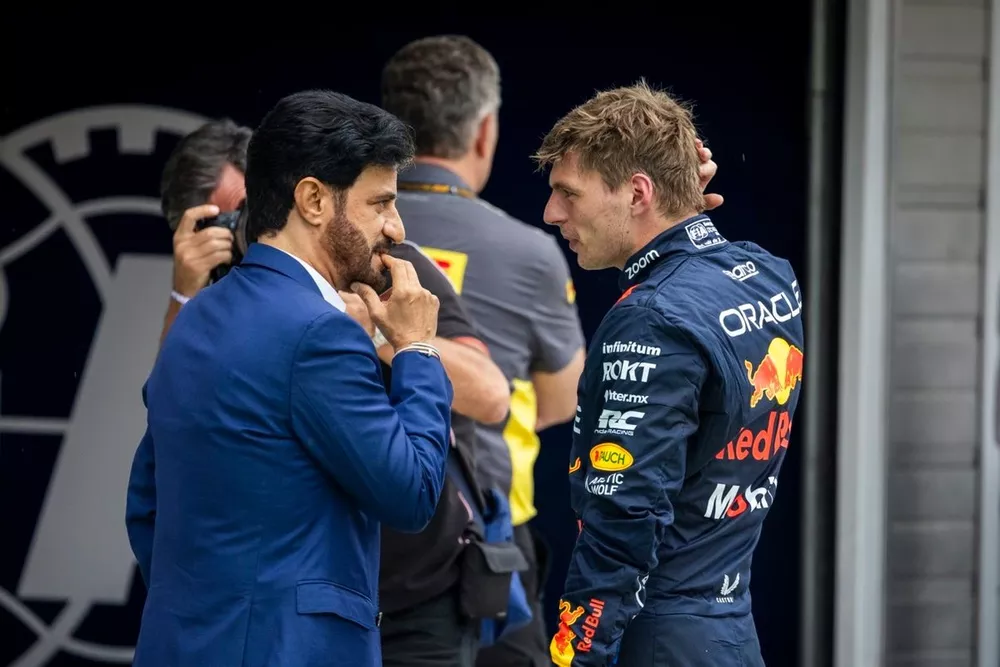
The FIA has countered criticism from Formula 1 drivers on how it spends the money generated by fines.
The situation around driver fines was one of the several topics that caused unease among F1 drivers last season as they grew increasingly frustrated at how FIA president Mohamed Ben Sulayem had been running things.
Over the 2024 season a total of around 270,000 euros - not counting suspended fines - was generated by over 50 offences, with drivers fined for infringements like pitlane speeding, impeding, driving a car in an unsafe condition, crossing a live track and swearing, the latter being the FIA's latest point of focus.
Mercedes' GPDA director George Russell was one of the several drivers questioning where the money from the fines is going, clamoring for more transparency from the governing body.
"For us when we were hearing from the FIA a couple of years ago, when they had the presidential elections, they were all about transparency," Russell said. "About where the money was going to be reinvested in terms of grassroots racing, which we are all in favour of. We just want the transparency, an understanding of what was promised from the beginning."
Speaking exclusively to Motorsport.com, the FIA's head of single-seater racing Nikolas Tombazis says all money generated by fines helps fund the FIA's grassroots projects and social initiatives, which saw investments of over 10 million euros last year.
"The FIA is not a profit-making organisation," Tombazis said. "We don't have shareholders who are looking at some numbers in the stock exchange and hoping for share price to go up or get more dividends or anything like that. So all the money is spent on what is considered to be beneficial aspects, whether it is for safety, for grassroots in motorsport, or sometimes other projects which are to do with road safety.
George Russell, Mercedes-AMG F1 Team, Mohammed Ben Sulayem, President, FIA
Photo by: Simon Galloway / Motorsport Images
"I think this question is sometimes slightly influenced by the emotions of the moment, of whatever fine is being discussed and so on. I realise that anyone who is paying a fine is always slightly annoyed about it and may feel somewhat aggrieved, but for sure there are so many different levels of projects that you can never come to the conclusion that this money is somehow spent for Christmas parties and so on.
"The amount of money spent in grassroots vastly exceeds the fines accumulated, which I think indicates that anything that goes in there will have a positive impact. You would struggle to find projects at the FIA that don't have some motorsport grassroots or social impact.
"What I can say with absolute certainty is that fines of drivers in one sport don't subsidise another sport or another category or something like that. But if you look at other initiatives, whether it is our campaigns, like the one about online abuse and all the grassroots we've been talking about before, or safety projects, I believe are noble ways of spending such money. And this money does contribute to that."
Tombazis explained the FIA's grassroots projects are instrumental in bringing on the next generation of officials and drivers as it attempts to lower the barrier to entry at lower levels like go-karting.
"There's about 10.3 million euros spent on grassroots, for many clubs, for many countries, just to promote a range of projects of early motorsport activity, and I think that is very important," he said.
"Ultimately, I think the health of Formula 1 is largely dependent on the overall appeal of motorsport. It's not just having an exciting grand prix, but it's also having more people who generally even do some relatively low level of grassroots level of motorsport in their country. I think that's going to be ultimately beneficial for Formula 1.
"The other part, of course, is in order to select drivers for the future, how drivers can grow into the ladder and have the opportunity to do so even if they're maybe not coming from a wealthy family, for example. That is what is ultimately the key aim."
Read Also:
Formula 1Russell: Ben Sulayem needs to tell F1 drivers what the FIA’s goal is
Formula 1Red Bull "didn't change car for Miami" amid speculation over 2024 swing
We want your opinion!
What would you like to see on Motorsport.com?
Take our 5 minute survey.
- The Motorsport.com Team
Read and post comments
Read also :
Share Or Save This Story
Copy link
Share on Viber
Previous article Job Interview: The man who keeps track of every single part on Max Verstappen's car
Next article Sauber F1 chief Alunni Bravi to leave team at end of January
Top Comments
There are no comments at the moment. Would you like to write one?
View More & Comment

More from
Filip Cleeren
Charles Leclerc explains Qatar GP practice spin after painfully "slow" day for Ferrari
Formula 1
Formula 1
Qatar GP
16 h
Charles Leclerc explains Qatar GP practice spin after painfully "slow" day for Ferrari
F1 Qatar GP: Kimi Antonelli leads Mercedes charge in twice red-flagged FP2
Formula 1
Formula 1
Qatar GP
19 h
F1 Qatar GP: Kimi Antonelli leads Mercedes charge in twice red-flagged FP2
Latest news
Marc Marquez unsure what he will do after MotoGP retirement
MotoGP
MGP MotoGP
Valencia GP
47 min
Marc Marquez unsure what he will do after MotoGP retirement
FIA explores DRS return alongside push-to-pass system for F1’s V8 engines
Formula 1
F1 Formula 1
Qatar GP
1 h
FIA explores DRS return alongside push-to-pass system for F1’s V8 engines
George Russell softens stance on Max Verstappen’s infamous 2024 “in the wall” threat
Formula 1
F1 Formula 1
Qatar GP
1 h
George Russell softens stance on Max Verstappen’s infamous 2024 “in the wall” threat
Supercars Adelaide: Title fight goes down to Sunday after Broc Feeney win in Race 2
Supercars
SUPC Supercars
Adelaide 500
1 h
Supercars Adelaide: Title fight goes down to Sunday after Broc Feeney win in Race 2
Feature
Discover prime content



Top 10 F1 cars of the 1990s
Formula 1
By Kevin Turner
Top 10 F1 cars of the 1990s
Subscribe and access Motorsport.com with your ad-blocker.
From Formula 1 to MotoGP we report straight from the paddock because we love our sport, just like you. In order to keep delivering our expert journalism, our website uses advertising. Still, we want to give you the opportunity to enjoy an ad-free and tracker-free website and to continue using your adblocker.
You have 2 options:
- Become a subscriber.
- Disable your adblocker.
Subscribe now Already subscribed? Sign in here
Already disabled your adblocker?
Reload page
Manage Alerts
Subscribe