Formula 1 Ferrari launch
How Ferrari has cut to the chase with its new F1 design
Ferrari has unveiled its latest challenger, the SF-24, which it hopes will build on the progress made during the backend of 2023.

Matt Somerfield
Edited: Feb 17, 2024, 6:38 PM
Copy link
Share on Viber

Giorgio Piola's F1 technical analysis
Giorgio Piola is the preeminent Formula 1 technical journalist. View our full selection of Giorgio's technical illustrative content
The stated aim is for a more manageable car, with a broader setup window, that’s easier to drive and quick across the course of an entire race weekend.
Delving into the changes made by the Scuderia, we’ll start with the sidepods. At the start of last season, Ferrari decided to hold firm and committed to its bathtub-style sidepod solution.
But that design wasn’t long for this world, with the arrangement abandoned midway through the campaign in favour of a hybrid version of the downwash ramp-style solution seen elsewhere on the grid.
It was unable to fully commit to the change, however, owing to the position of the lower side-impact spar (SIS), which remained enclosed within the sidepod, rather than being mounted lower and enclosed within the structure of the floor.
Ferrari SF-24 detail
Photo by: Ferrari
The SF-24’s design rectifies this, allowing the team to fully embrace the performance advantages that can be obtained from a much deeper undercut section, with a notable bulge in the forward section of the floor taking care of the lower SIS.
In terms of the undercut, which is further enlarged by the Scuderia’s adoption of the lower lip underbite inlet design, first championed by Red Bull, the lower chassis bypass duct has reprised its role, with the outlet positioned alongside the rear leg of the halo.
It’s here where you’ll also find an interesting piece of aerodynamic furniture, as the team have added a robust flow conditioner that sprouts out from the side of the halo and droops down to meet with the bypass duct’s outlet.
Returning to the undercut, it wraps down low and tight as the upper section of the bodywork creates a high waist that’s much wider to not only manage flow to the rear of the car but also help deal with the turbulence created by the front wheel assembly.
Ferrari SF-24
Photo by: Ferrari
Ferrari SF-24
Photo by: Ferrari
The remainder of the sidepod bodywork represents a well refined variant of the downwash ramp-style solution we’ve seen elsewhere, complete with a rearward focused waterslide gulley that draws flow down into the coke bottle region, aided by a high sided shoulder.
Meanwhile, the airbox and rollover remains faithful to its predecessor, featuring a triangular inlet but, there’s a distinct lack of aerodynamic trinkets surrounding this region for 2024, with the team having surrounded it with all manner of winglets in the last few years.
The engine cover features the now almost ubiquitous shelf-like bodywork, which leads back from the cockpit to the rear cooling outlet.
Ferrari has also opted to include a cooling gill panel that will likely be altered depending on the level of heat rejection required for each given venue.
Ferrari SF-24 nose
Photo by: Ferrari
The nose tip represents the first in a bunch of subtle changes made to improve the SF-24’s aerodynamic tendencies, as it is both wider and taller than its predecessor, which results in a different interaction with the mainplane, while the body thereafter will also merge with the upper flaps in its own way.
The front wing has also been reorganised, with the outwashing slot gap separator brackets used throughout 2023 ditched in favour of more traditional horseshoe brackets. Outwash is still on the menu though, with that focus heavily shifted to the outboard section of the wing, as the team takes inspiration from the setup seen on the Mercedes last season.
In this instance the two rearmost flaps have been all but detached from the endplate, aside from slender connecting spars, then twisted from the car’s centreline to assist in generating more outwash.
Ferrari SF-24 front wing
Photo by: Ferrari
There’s clearly some vortex generation and manipulation at play here, which is undoubtedly going to be assisted by the early curtailment of the flaps in the outboard section of each flap, as they’ll each create a shedding surface.
The camber and shape of the endplate and diveplane is of similar design lineage to how the team finished out 2023 and will work in unison with the aforementioned to deliver more outwash.
The front suspension remains push-rod on the SF-24 but the position of the elements and the shape of their fairings have been mildly adjusted to better suit the characteristics that the aerodynamicists require of them.
Unlike a slew of teams that have now made the switch to a push-rod layout at the rear of the car, Ferrari has retained its pull-rod layout.
This comes off the back of the struggles it faced with tyre performance during the opening phase of 2023, that were largely settled in the backend of the season, so it’s little wonder it has opted to fettle what has become a known quantity, rather than reset everything.
Ferrari SF-24 rear wing
Photo by: Ferrari
Charles Leclerc, Ferrari SF-23 rear wing detail
Photo by: Giorgio Piola
The rear wing features a single, centrally mounted support pillar with integrated DRS pod, a spoon-shaped mainplane and a return to barrel-style pivots for the upper flap, with the team having flirted with teardrop-shaped pivots last season.
But what’s most interesting is that Ferrari have now adopted the semi-detached tip section design first seen on the Alpine A523 at Monaco last season and which a raft of teams appropriated.
This contrasts with Ferrari’s development through 2023, whereby it followed the example set by Aston Martin, which was also looking for ways to manipulate the vortex that’s shed from the tip section. But, in that instance, it sat the tip section inboard, rather than creating another shedding surface.
Read Also:
Formula 1Ferrari pursues new rear wing approach to close down Red Bull's DRS advantage
Formula 1Red Bull's 2024 F1 car appears for first time in spy pictures
Formula 1Ferrari reveals its 2024 Formula 1 car, the SF-24
We want your opinion!
What would you like to see on Motorsport.com?
Take our 5 minute survey.
- The Motorsport.com Team
Read and post comments
Read also :
Share Or Save This Story
Copy link
Share on Viber
Previous article Vasseur: Call to Sainz with Hamilton news was one of the “most difficult”
Next article Ferrari rejected Red Bull-style F1 suspension switch for own “innovation”
Top Comments
There are no comments at the moment. Would you like to write one?
View More & Comment

More from
Matt Somerfield

Gallery: How F1 tech evolved during the 2024 season
Formula 1
Formula 1 Dec 31, 2024
Gallery: How F1 tech evolved during the 2024 season
How McLaren’s rear wing push changed the game in F1
Formula 1
Formula 1 Dec 20, 2024
How McLaren’s rear wing push changed the game in F1
How 2026 F1 rules will help avoid identikit designs
Formula 1
Formula 1 Dec 16, 2024
How 2026 F1 rules will help avoid identikit designs

More from
Ferrari
Top 10 F1 cars of the 1980s
Formula 1
Top 10 F1 cars of the 1980s

Toto Wolff is not afraid of losing Kimi Antonelli to Ferrari
Formula 1
Formula 1 1 d
Toto Wolff is not afraid of losing Kimi Antonelli to Ferrari
Latest news

Denny Hamlin content with 2027 retirement plan but keeps door open
NASCAR Cup
NAS NASCAR Cup 49 min
Denny Hamlin content with 2027 retirement plan but keeps door open

LEGO reveals Speed Champions sets for all 2026 F1 drivers and teams
Formula 1
F1 Formula 1
Las Vegas GP
1 h
LEGO reveals Speed Champions sets for all 2026 F1 drivers and teams
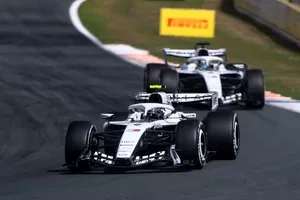
What the Valtteri Bottas contract renewal says about Cadillac's F1 future
Formula 1
F1 Formula 1
Las Vegas GP
7 h
What the Valtteri Bottas contract renewal says about Cadillac's F1 future

Valtteri Bottas beats Colton Herta to 2027 Cadillac F1 seat
Formula 1
F1 Formula 1
Las Vegas GP
7 h
Valtteri Bottas beats Colton Herta to 2027 Cadillac F1 seat
Feature
Discover prime content
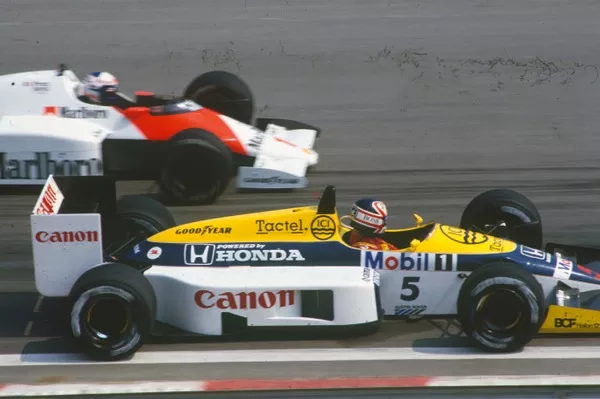
Top 10 F1 cars of the 1980s
Formula 1
By Kevin Turner
Top 10 F1 cars of the 1980s


Subscribe and access Motorsport.com with your ad-blocker.
From Formula 1 to MotoGP we report straight from the paddock because we love our sport, just like you. In order to keep delivering our expert journalism, our website uses advertising. Still, we want to give you the opportunity to enjoy an ad-free and tracker-free website and to continue using your adblocker.
You have 2 options:
- Become a subscriber.
- Disable your adblocker.
Subscribe now Already subscribed? Sign in here
Already disabled your adblocker?
Reload page
Manage Alerts
Subscribe