Obituary
Formula 1
Don Nichols, founder of Shadow, dies aged 92
The motorsport world yesterday lost a man whose team produced one crazy racecar and then several sexy ones and employed driving talents such as Peter Revson, George Follmer, Tom Pryce, Alan Jones, Jackie Oliver and Riccardo Patrese.

David Malsher-Lopez
Edited: Aug 23, 2017, 12:37 AM
Copy link
Share on Viber
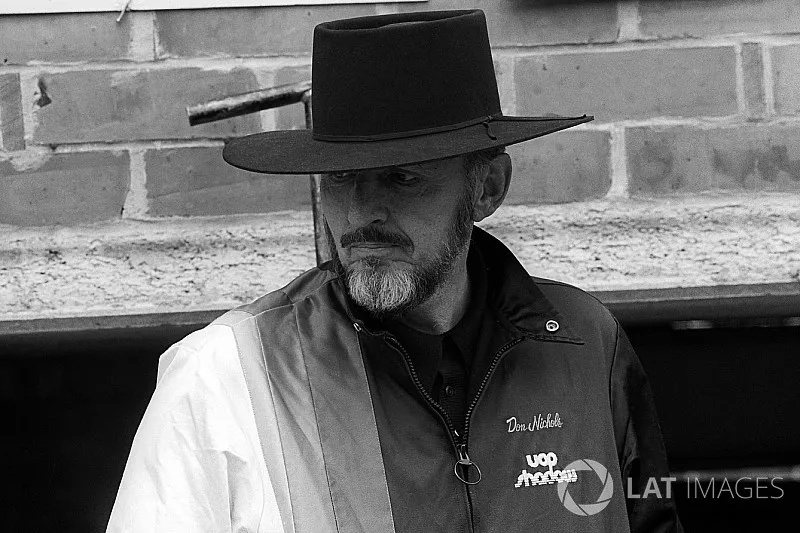
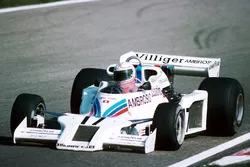

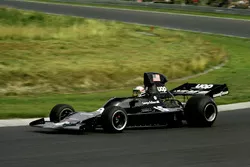

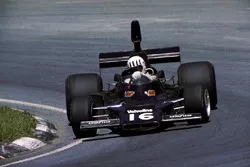
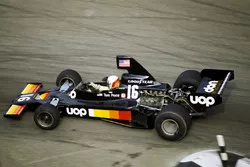
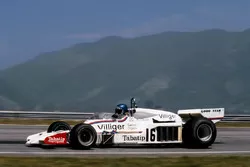
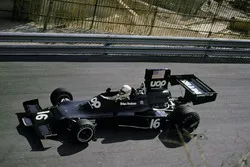

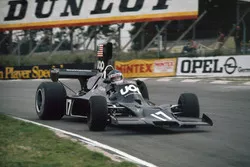

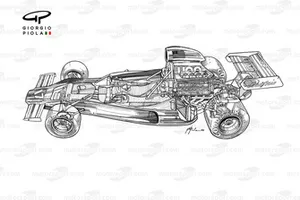
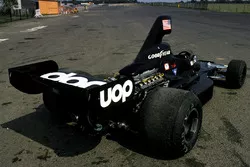


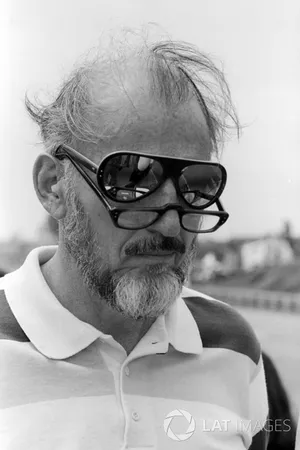
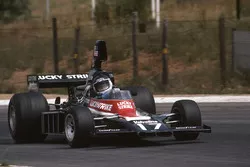
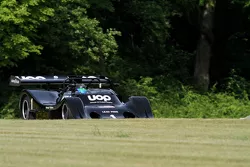
The “tiny-tires” AVS Shadow Mk.1 was a Can-Am car of the whacky, wonderful WTF? variety, but Shadow's Can-Am dominator of 1974 and most of the squad’s Formula 1 machinery were OMG-beautiful. Few other teams with such a brief span of success have produced such a cult following, but if the cars are gorgeous and jet black, the drivers go fast but struggle to gain results, and the owner is quiet and mysterious, that's a highly attractive blend. Don Nichols will remain a quiet hero to many.
Elton, Missouri-born Nichols served the U.S. Army in World War II and the Korean War, went on to sell Goodyear and Firestone tires in Japan, and then returned to the U.S. in 1968 to form the Advanced Vehicle Systems team. His plan was to take on the Can-Am world, where free-thinking and brilliance could be rewarded.
Even by the “pretty-much-anything-goes” standards of Can-Am racing, what designer Trevor Harris came up with was so far outside the box it made Smokey Yunick look like a drab follower of convention. In a bid to reduce drag, Harris’ guiding tenet was to reduce frontal area. He somehow persuaded Firestone to supply tires that were just 17 inches (front) and 19 (rear), compared with the 24 and 26 seen on normal Can-Am cars. The driver then sat in what appeared to be a bewinged go-kart but containing a Chevrolet V8 big-block, which looked huge-block in these circumstances, and whose cooling depended on air rushing into a radiator that was…built into the rear wing!
The small wheels were the main problem area, however, since it obliged the car to run small brake rotors, which were simply not man enough for the job and couldn’t dissipate heat quick enough. It was a problem that George Follmer bravely got around by slowing down via lateral friction, sliding the bizarre beast around in brave fashion.
Realizing this was no way to tackle the likes of McLaren and Porsche, Nichols acquired the titanium Ti22 design that Peter Bryant had created for the Autocoast team, and for 1971 Jackie Oliver was driving a Universal Oil Products-sponsored Shadow MkII that looked like the Ti22 (but contained little titanium) and with larger (but still not full-size) wheels. It was fast but fragile. The still more conventional MkIII of 1972 was no better.
But for 1973, the team hired Tony Southgate (ex-BRM designer) to pen a Formula 1 car and a Can-Am car. The DN2 Can-Am car was somewhat lumbering and heavy and still suffered reliability issues; the DN1 Formula 1 car looked great and, in the hands of Follmer and Oliver, went well, too. Reliability was a major problem, but Follmer scored a podium finish in only the team’s second ever grand prix, and Jackie O backed that up with another third place in the penultimate race.
People have tended to look askance at the dominance of the Shadow DN4 in the 1974 Can-Am championship and question its validity, as the domination by Penske’s Porsche 917/30 had driven McLaren and Lola away, and Porsche had departed too. But Southgate’s masterpiece demolished the opposition and Shadow’s 1-2 in the championship was well deserved.
In F1, however, the squad got off to a disastrous start when new driver Peter Revson, who’d scored two wins for McLaren, was killed in testing for the third race at Kyalami. His replacement, rising star Tom Pryce, and the other new driver, Jean-Pierre Jarier, showed plenty of pace and JP-J earned a podium finish at Monaco, but it wasn’t until the DN5 arrived for 1975 that the team really started showing its best.
Jarier took pole for the opening two races of the season, although his car failed on the warm-up lap in Argentina and then failed again while dominating in Brazil. Pryce won the non-championship Race of Champions in dreadful conditions at Brands Hatch, and then the second half of the season he gained momentum, with a pole for the British GP at Silverstone and a handful of top-six finishes. The team finished sixth in the Constructors’ Championship, ahead of Lotus and March.
However, ’76 was a year of treading water, as the team slipped to eighth, and Pryce’s podium in Brazil was the only true highlight. Jarier departed at year’s end, to be replaced initially by Renzo Zorzi, while Pryce stayed on.
But just three years after Revson’s fatal crash at Kyalami, Shadow suffered another catastrophe at the legendary South African track. A marshal carrying a fire extinguisher to a small fire in Zorzi’s car crossed the track and was struck by Pryce, killing driver and marshal outright.
It was a shattering blow to the little team, and came in stark contrast to the joy felt later in ’77 when future F1 World Champion, Alan Jones won in the wet at the Osterreichring. He’d go on to finish seventh in the drivers’ championship, matching the team’s achievement in the constructors’ championship.
That would remain the high point, however. The guts of the Shadow team were torn out by a mass staff migration to the new Arrows squad that winter, along with rising star driver Riccardo Patrese. While Nichols was able to sue the new squad and prevent it from running a copy of Southgate’s design for Shadow in 1978, that was barely more satisfying than the clutch of points finishes achieved by Hans-Joachim Stuck and Clay Regazzoni. The team’s last hurrah came in the ’79 finale when rookie Elio de Angelis scored a fourth place in the US GP.
Soon after, the struggling team’s quest for sponsorship had taken its toll, and Teddy Yip’s Theodore Racing team took over. Nichols then disappeared from the motorsport world before returning to attend historic race meetings, in which his cars remain fan favorites to this day.
We want your opinion!
What would you like to see on Motorsport.com?
Take our 5 minute survey.
- The Motorsport.com Team
Read and post comments
Read also :
Share Or Save This Story
Copy link
Share on Viber
Previous article James Key extends Toro Rosso contract
Next article McLaren faces engine dilemma as Honda gets Ilmor boost
Top Comments
There are no comments at the moment. Would you like to write one?
View More & Comment
More from
David Malsher-Lopez

Alex Zanardi: The man whose name is a synonym for “hero”
IndyCar
IndyCar 6 mo
Alex Zanardi: The man whose name is a synonym for “hero”
Remembering Michele Alboreto: F1 ace, Le Mans winner and a good man
Formula 1
Formula 1 6 mo
Remembering Michele Alboreto: F1 ace, Le Mans winner and a good man
IMSA Laguna Seca: Ganassi Cadillac holds off Porsche for victory
IMSA
IMSA
Laguna Seca
May 14, 2023
IMSA Laguna Seca: Ganassi Cadillac holds off Porsche for victory
Latest news
Dodge’s NASCAR Cup car unveil will include celebrity exhibition race during Snowball Derby
NASCAR Cup
NAS NASCAR Cup 2 h
Dodge’s NASCAR Cup car unveil will include celebrity exhibition race during Snowball Derby
Nikita Johnson targets Alex Palou’s rookie benchmark with Coyne ahead of 2027 IndyCar debut
IndyCar
Indy IndyCar 3 h
Nikita Johnson targets Alex Palou’s rookie benchmark with Coyne ahead of 2027 IndyCar debut
Max Verstappen reveals he is considering 2027 Daytona 24 Hours entry
Formula 1
F1 Formula 1
Las Vegas GP
7 h
Max Verstappen reveals he is considering 2027 Daytona 24 Hours entry
Tsunami RT announces 2027 IMSA Michelin Endurance Cup entry in GTD
IMSA
IMSA IMSA 8 h
Tsunami RT announces 2027 IMSA Michelin Endurance Cup entry in GTD
Feature
Discover prime content

Subscribe and access Motorsport.com with your ad-blocker.
From Formula 1 to MotoGP we report straight from the paddock because we love our sport, just like you. In order to keep delivering our expert journalism, our website uses advertising. Still, we want to give you the opportunity to enjoy an ad-free and tracker-free website and to continue using your adblocker.
You have 2 options:
- Become a subscriber.
- Disable your adblocker.
Subscribe now Already subscribed? Sign in here
Already disabled your adblocker?
Reload page
Manage Alerts
Subscribe