Formula 1
Carlos Sainz guest blog: bouncing back from that crash in Sochi
In his third guest blog for JA on F1, Carlos Sainz talks about his mental approach to bouncing back after his heavy crash in practice for the Russi...
Published: Oct 29, 2015, 11:22 PM
Copy link
Share on Viber

Motorsport Blog
Motorsport Blog
In his third guest blog for JA on F1, Carlos Sainz talks about his mental approach to bouncing back after his heavy crash in practice for the Russian Grand Prix and as he moves from Russia to the USA to Mexico, he reflects on what life on the road, living out of a suitcase, is really like for an F1 driver.
When he crashed at Turn 13 during Saturday Free Practice in Sochi, Sainz’s Toro Rosso decelerated from 153kph to zero in just four metres and the force of the impact was measured above 40g.

'Getting back on the horse' after Russia crash:
My crash in Sochi was apparently the biggest G-force measure, compared to the amount of deceleration time in history. In about 0.15s I went from 153kph to zero. It was a very tough one, but I was perfectly conscious all the time. This shows that the chassis protection and all the procedures the FIA has introduced since 1994 are working.
The first thing I did when I arrived in the hospital was to call my race engineer and tell him the feedback from the car on the long run I had just done. This shows that my brain, after such a huge crash, was focused on getting back in the car to rebuild my confidence by building the best car possible to do my best race.
It’s incredible how the brain reacts to such a tricky situation. I guess it’s easy to get the fear and become constrained, and let that pull you back a bit. But my feeling was that I just wanted to race and to have a good race. Of course you normally want to do that, but on that day I just felt it could not get any worse than starting P20. I was thinking that if I could go on to finish in P14 it would be good, and if I could get into the points just an amazing comeback!

I needed a good race because I needed some relief and to get my confidence back. Then I also realised it was a good chance to demonstrate my mental strength and to show that in difficult moments you have to reveal what you have inside.
I saw it as a great chance as I was starting P20 and I had nothing to lose; I could only go forwards and it was a great chance to show everyone that even in difficult times like that I can do a good race and I can perform solidly.
The first time I went through that corner on the lap to the grid was not easy.

In the race I felt totally confident; maybe I was leaving one-tenth at Turn 13 in the first two laps, but then after that I felt stronger and more confident every time. I thought I could not brake any later there and then I saw the data and I realised I could brake ten metres later.
Once you get to F1, everyone has more or less the same talent, everyone has the same will to win, and the same skills, and I think it’s just a matter of mental strength that makes you stands out. It’s one of the most demanding sports on mental strength and situations like that show it.
I don’t know if it was by coincidence or not, but I think I did my best race of the year in Sochi. I regained that confidence quickly, after ten laps or so, and from then on I could do it.
During the closing stages with my brake issue I had to drive extra carefully, trying to look after the brakes as best as possible.
But I just wanted to go forward and to regain my confidence, which didn’t allow me to feel any fear or any bad feelings, not even at that famous Turn 13.

I reckon Sochi is a track that has even more of a fine line than Monaco or Singapore. Maybe this is because it’s a circuit where the drivers’ go 100 per cent without knowing there is a big risk of having a big accident. In Monaco, you always drive at 98 per cent, you never really do a corner and say it’s impossible to have gone quicker, you just leave a tiny bit, except for some corners in qualifying where you just close your eyes and hope for it.
It shows that the drivers in F1 properly work on the limit and when a really small thing like a brake balance change or going a tiny bit off-line mean it takes virtually nothing to create a huge accident. It’s a very thin line.
Living out of a suitcase - Life on the road:
There was quite a long period of time between Singapore, Japan and Russia, so before Sochi I went home to London.
But races like Singapore and Japan (and USA and Mexico) are back-to-back and it’s tough. There are a couple of times even if it’s not back-to-back when you don’t come home, especially when you are really far away. For example I stayed in Thailand training and adapting to the humidity between Australia and Malaysia. But I actually prefer it when the races to come close together.
If I could design my ideal F1 calendar I would pair all the races as back-to-backs and then have consistent two-week gaps throughout the season. You’d get your suitcase and travel for two races with the whole team together. Logistically I’d imagine it’s easier to have the two races close to each other and then you go back home for a week. There you can rest and train, and then you’d go back to another flyaway for two weeks.
This would be better for training as your recovery improves because you’d have one conservative week where you can train and relax. When there is only one week to do everything, you get back on a Tuesday, then you have to do simulator work and then you only have two days and then you travel again to the next one, so there’s not time to properly recover.
On a typical long-haul trip, like my most recent one to Austin, I left London on Monday and got there in the evening. I usually spend the Tuesday doing nothing; just training a bit with a flash session to move the legs after the flight. Then I’ll go and visit the city or sometimes do a PR event.

Then on Wednesday, possibly because I am a rookie, they make me come to the track to have a track walk and get it out of the way early. After that we might go through the previous race with my engineers. It’s normally only on Thursday that I see Kimi Raikkonen or Fernando Alonso arriving at 11am and I’ve been at the track from 9am on the Wednesday!
I don’t find it easy to switch off between races because you actually have a lot of time to think about stuff – the previous race, the start, overtaking, qualifying – and you have a lot of reports and analysis that you receive from your engineers, as well as previews for the next race.
You keep receiving emails and calls from F1 people so you actually don’t disconnect fully. What you do is see your family, see your friends and train a bit, but you don’t really switch your mind off. The only point when you can do that is in the August break when everybody shuts down and goes on vacations. No one really wants to talk to each other for two weeks.

But generally, I just need to have dinner with my friends, a day with my family and then I feel ready to go to the next race. Because when you finish a Grand Prix, you always feel you could have done something better so you want the chance to do it another way; to improve or feel you could have prepared better, it’s a constant feeling.
Personally I am very good with jet lag, although I don’t know why. Maybe it’s an age thing and I just adapt very quickly. For example when my Dad comes to the races he takes two days to sleep properly and on the first night I’m able to sleep eight hours, no problem.
I always take a good look at the timing of available flights with my trainer. We look at which one to get, how many hours I need to sleep to make sure that when I arrive, if it’s in the afternoon, I am tired or to make sure than when I arrive I am really well rested to last the day.

The first time I went to Australia, I remember arriving at 7am and I had to stay awake for the whole day. Although you feel like a bit of zombie walking around the city or doing some sport, you always need to put in a bit of effort, but it’s good fun.
In his next guest blog for JA on F1, Carlos will interact with JA on F1 readers and answer your questions. So if you want to find out about more detail on his first season in F1; to know more about the Russia crash; life with Max Verstappen, submit you question in the comments section below and we will pick the best ones to put to Carlos himself to answer.
We want your opinion!
What would you like to see on Motorsport.com?
Take our 5 minute survey.
- The Motorsport.com Team
Read and post comments
Read also :
Share Or Save This Story
Copy link
Share on Viber
Previous article Grosjean hails overachieving Lotus team
Next article Sauber: FIA should focus on cost cuts, not alternative F1 engine
Top Comments
There are no comments at the moment. Would you like to write one?
View More & Comment
More from
Carlos Sainz
Five drivers set for grid penalties for engine changes at F1 Las Vegas GP
Formula 1
Formula 1
Las Vegas GP
5 d
Five drivers set for grid penalties for engine changes at F1 Las Vegas GP
What the Brazilian GP revealed about F1's ability to cope with rain
Formula 1
Formula 1
Sao Paulo GP
14 d
What the Brazilian GP revealed about F1's ability to cope with rain

More from
Racing Bulls
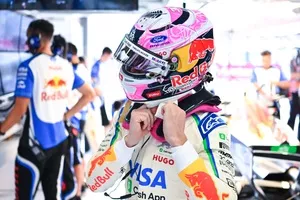
Liam Lawson had little doubt he would remain for F1 2027 amid Nikola Tsolov talk
Formula 1
Formula 1
Las Vegas GP
6 d
Liam Lawson had little doubt he would remain for F1 2027 amid Nikola Tsolov talk
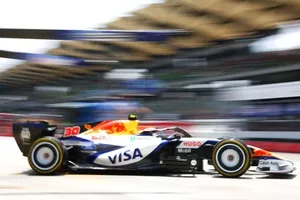
Speed, trust, controlled aggression - What really led to Liam Lawson's career-saving F1 2026
Formula 1
Formula 1
Las Vegas GP
7 d
Speed, trust, controlled aggression - What really led to Liam Lawson's career-saving F1 2026
Latest news
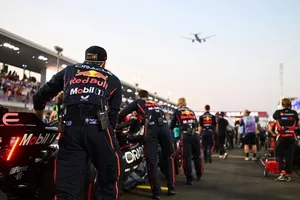
Five things to look out for at F1’s Qatar GP
Formula 1
F1 Formula 1
Qatar GP
2 h
Five things to look out for at F1’s Qatar GP
AF Corse USA steps up to full-season IMSA GTD campaign in 2027
IMSA
IMSA IMSA 3 h
AF Corse USA steps up to full-season IMSA GTD campaign in 2027
Williams, Alpine fall foul of F1's 2025 cost cap
Formula 1
F1 Formula 1 3 h
Williams, Alpine fall foul of F1's 2025 cost cap
Aprilia MotoGP duo set for fond farewell after Valencia duel: "We found something we didn't expect"
MotoGP
MGP MotoGP
Portuguese GP
3 h
Aprilia MotoGP duo set for fond farewell after Valencia duel: "We found something we didn't expect"
Feature
Discover prime content
Top 10 F1 cars of the 1990s
Formula 1
By Kevin Turner
Top 10 F1 cars of the 1990s

Subscribe and access Motorsport.com with your ad-blocker.
From Formula 1 to MotoGP we report straight from the paddock because we love our sport, just like you. In order to keep delivering our expert journalism, our website uses advertising. Still, we want to give you the opportunity to enjoy an ad-free and tracker-free website and to continue using your adblocker.
You have 2 options:
- Become a subscriber.
- Disable your adblocker.
Subscribe now Already subscribed? Sign in here
Already disabled your adblocker?
Reload page
Manage Alerts
Subscribe