Analysis
Formula 1
Band-aids not enough to fix F1's cash problems
Kate Walker explains why Formula One must get serious about cost control, and quickly.

Kate Walker
Edited: Mar 4, 2015, 11:55 AM
Copy link
Share on Viber


When it comes to fixing problems, there are two approaches that can be taken: one can identify the root causes and work to ameliorate them, or one can simply stick on a Band-aid and hope for the best.
Formula One is far better at the Band-aid option.
While the global financial crisis that hit the bulk of the world in 2008 took a little longer to be felt inside the paddock, the sport's financial problems date back to the end of tobacco sponsorship, those fat times of plenty.
The disappearance of the biggest source of sponsorship income did not happen overnight, of course. Those in charge of the sport forecast that lean years would follow, and attempts were made to rein in spending.
As history has since recorded, attempts to rein in spending through regulatory restriction proved unsuccessful.
A proposed cost cap failed. So too did former FIA president Max Mosley's 2009 suggestion to create a tiered sport in which those operating under restricted budgets were given greater technical freedom than those who chose to spend freely.
More recently, a unanimous F1 Strategy Group agreement to present "cost reduction and cost control regulations" to the World Motor Sport Council for introduction in 2015 was scuppered by the very group that agreed to its introduction.
Money continues to be a problem in Formula One.
Backmarkers' collapse hurt other teams
The collapse of Caterham and Marussia had a detrimental effect on the F1 supply chain, and teams that previously had generous lines of credit found themselves being forced to pay for components in advance.
With limited financial resources at the best of times, struggling teams found their car builds affected as they waited for the completion and delivery of fuel tanks and other core parts.
Force India has been open about the fact that it was a cash injection from Mercedes - in exchange for running Pascal Wehrlein - that ensured its presence in Barcelona.
While its rivals have been less public about the precise nature of their financial struggles, the winter was one of uncertainty when it came to the size and health of the 2015 grid.
Doubts about teams' futures continued into winter testing, and last week it emerged that Bernie Ecclestone was considering giving the beleaguered outfits an advance on the prize monies traditionally paid out over the course of the year.
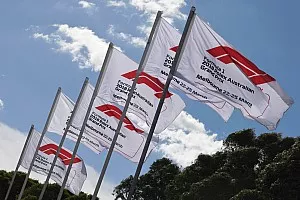
Earlier this week it was confirmed that Sauber, Lotus, and Force India would be benefiting from advances - reportedly $10 million, or £6.5 million apiece - aimed at ensuring their presence at the season-opener in Melbourne.
A useful Band-aid it may be, but a Band-aid nonetheless.
While the monies being paid to Sauber, Force India, and Lotus are advances on money due to the three teams, Bernie Ecclestone is not a man of infinite patience.
Nor are CVC Capital Partners, a business which exists for the sole purpose of turning money into larger sums of money. Advances on cash owed are not free from the perspective of the commercial rights holder - any interest lost through the premature transaction is money lost from the balance books.
No charity in F1
Teams in financial difficulties should not expect to see similar generosity in future: F1 is no charity, and it is only because of contracted minimum grid sizes with race promoters that the CRH's interests dovetailed with the needs of the impoverished teams on this occasion.
If Formula One does not get serious about cost control as a matter of urgency, the current situation will only get worse.
But the front-running teams have been upfront about their unwillingness to cede any of the competitive advantage found in their greater budgets; the CRH has no objections to a financial arms race; and the FIA's repeated efforts (under two presidents and spanning more than a decade) to cut costs or impose caps have led to threatened breakaway series, overrule by teams, and have achieved no reductions of note.
To fix the problem, egos need to be swallowed for the greater good as a genuine concerted effort is made to come to - and stick to - an agreement.
The FIA-commissioned McKinsey report has shown it is possible to cut costs by up to 50 percent, if only the teams would take a Utilitarian approach to long-term thinking.
When it comes to cooperation, and Formula One, however, there is only one question worth asking: Did anyone bring the Band-aids?
We want your opinion!
What would you like to see on Motorsport.com?
Take our 5 minute survey.
- The Motorsport.com Team
Read and post comments
Read also :
Share Or Save This Story
Copy link
Share on Viber
Previous article Payments Help Keep the F1 Show on the Road
Next article Hamilton wants to "dominate even more" in 2015
Top Comments
There are no comments at the moment. Would you like to write one?
View More & Comment

More from
Kate Walker

How local knowledge and data are keys to F1 growth in Asia
Formula 1
Formula 1 Jun 18, 2018
How local knowledge and data are keys to F1 growth in Asia
Insight: How race promoters benefit from F1’s marketing push
Formula 1
Formula 1 Apr 12, 2018
Insight: How race promoters benefit from F1’s marketing push

Analysis: Assessing Formula 1's financial prospects
Formula 1
Formula 1 Dec 10, 2017
Analysis: Assessing Formula 1's financial prospects
More from
Bernie Ecclestone

Ex-F1 boss Bernie Ecclestone reportedly arrested for travelling with shotgun in Portugal
Formula 1
Formula 1
Italian GP
2 mo
Ex-F1 boss Bernie Ecclestone reportedly arrested for travelling with shotgun in Portugal

Bernie Ecclestone sends major F1 warning ahead of 2026: 'Danger is we lose the fans'
Formula 1
Formula 1
Bahrain Pre-Season 2
8 mo
Bernie Ecclestone sends major F1 warning ahead of 2026: 'Danger is we lose the fans'

Bernie Ecclestone slams "over-confident" Lando Norris as he backs Max Verstappen for 2025 title
Formula 1
Formula 1
Abu Dhabi GP
11 mo
Bernie Ecclestone slams "over-confident" Lando Norris as he backs Max Verstappen for 2025 title

More from
Team Lotus

Emerson Fittipaldi on Jochen Rindt’s death and how he became Team Lotus’ F1 leader
Formula 1
Formula 1 1 mo
Emerson Fittipaldi on Jochen Rindt’s death and how he became Team Lotus’ F1 leader


On this day: Ayrton Senna beats Nigel Mansell to victory by 0.01s
Formula 1
Formula 1 7 mo
On this day: Ayrton Senna beats Nigel Mansell to victory by 0.01s
Latest news
What the Valtteri Bottas contract renewal says about Cadillac's F1 future
Formula 1
F1 Formula 1
Las Vegas GP
23 min
What the Valtteri Bottas contract renewal says about Cadillac's F1 future

Valtteri Bottas beats Colton Herta to 2027 Cadillac F1 seat
Formula 1
F1 Formula 1
Las Vegas GP
24 min
Valtteri Bottas beats Colton Herta to 2027 Cadillac F1 seat

23XI Racing makes crew chief change for Bubba Wallace and Corey Heim
NASCAR Cup
NAS NASCAR Cup 36 min
23XI Racing makes crew chief change for Bubba Wallace and Corey Heim
IndyCar 2026 season review: Arrow McLaren
IndyCar
Indy IndyCar 2 h
IndyCar 2026 season review: Arrow McLaren
Feature
Discover prime content
Top 10 F1 cars of the 1980s
Formula 1
By Kevin Turner
Top 10 F1 cars of the 1980s


Subscribe and access Motorsport.com with your ad-blocker.
From Formula 1 to MotoGP we report straight from the paddock because we love our sport, just like you. In order to keep delivering our expert journalism, our website uses advertising. Still, we want to give you the opportunity to enjoy an ad-free and tracker-free website and to continue using your adblocker.
You have 2 options:
- Become a subscriber.
- Disable your adblocker.
Subscribe now Already subscribed? Sign in here
Already disabled your adblocker?
Reload page
Manage Alerts
Subscribe