Formula 1
A chat with a doctor about accidents in modern Formula 1
One of the more interesting characters behind the scenes in current F1 is Dr Luke Bennett, who is Medical and Sports Performance Director at Hintsa...
Edited: Aug 4, 2016, 2:05 PM
Copy link
Share on Viber

Motorsport Blog
Motorsport Blog
One of the more interesting characters behind the scenes in current F1 is Dr Luke Bennett, who is Medical and Sports Performance Director at Hintsa Performance, which looks after many of the F1 drivers’ physical and medical needs.
Bennett, who hails from Australia where he worked for the Royal Flying Doctor Service in the remote northwest, is at every Grand Prix and in addition to managing managing or supporting twelve of the driver physios, including Lewis Hamilton’s and Sebastian Vettel’s, he is also team doctor for the Mercedes and McLaren teams. So he has a patient roster of around 350 people at every race, like a busy GP’s practice!

As well as doling out medicine to sick engineers or patching up a mechanic who’s collided with a fork-lift, Bennett is a deep thinker about the sport and a chat over a coffee on race morning is always enlightening. Sunday in Germany brought to light some thoughts he’s had on accidents in modern F1 and the circumstances in which they happen.
Notwithstanding the accident of Jules Bianchi in the rain in Suzuka 2014, the majority of accidents, which end up with a driver attending the medical centre, happen in dry conditions and in races, rather than qualifying, practice or testing,
The German GP last weekend was the 50th race under the current hybrid engine regulations, which began in 2014. And Bennett thought It would be interesting to look back and assess what kind of situations these days lead to risk incidents, where one of the drivers ends up in the medical centre. (This informal analysis is for F1 only - GP2 and GP3 are excluded.)

The results are not what you might expect.
“The FIA does a fantastic job in terms of trackside medical rescue, and also in very detailed crash analysis with new innovations like the HD high-speed cockpit camera and accident data recorder,” says Bennett. “From the team doctor perspective, however, I’m responsible for managing the driver post injury and getting him back into competition.
“I wanted to step back and take a wider view of on-track incident patterns in the current era.
“In attending F1 events over the past 3 seasons, and being directly involved in the care of many of these drivers, I managed to identify 23 medical incidents involving 24 drivers
“A medical incident is one in which the driver attended the FIA's trackside medical centre, either because they were injured or because the impact warning light on the car was displayed." The FIA impact light currently activates at a sustained force on the car over 15G (this threshold has been a bit higher in previous years) and these incidents are generally well reported in the public domain.

Here’s what Bennett found:
• The vast majority of medical incidents (87%) occurred on a dry track, and usually this was in race conditions (65% of all incidents). Only 30% occurred in Practice or Qualifying (despite twice as much running time as the race).
• Seven incidents (30%, all under race conditions) involved two cars but only once did both drivers involved need medical assessment – usually only one driver suffers a severe impact in these contacts.
• There were five rollover accidents since 2014, only one of which resulted in injury: Daniil Kvyat in Suzuka, Esteban Gutierrez in Bahrain, Alonso in Melbourne (which causes the Spaniard to miss the Bahrain Grand Prix with rib and lung injuries), Sergio Perez in Hungary last year

• Eleven circuits produced all of the medical incidents,with six circuits having more than one
incident each. Trackside teams at the Hungaroring were kept busy, with 25% of all incidents occurring at this venue after a couple of action-packed race weekends in 2014-15.
• Four incidents caused a driver to miss at least one subsequent race, two of them for Fernando Alonso. One of which was an unusual episode not related to a crash (Valtteri Bottas’s back injury in Melbourne 2015).

• Injury accidents in testing are rare. In 48 days of testing since the hybrids came in there is only Alonso’s accident at Barcelona to consider where there was an injury. Considering that F1 cars are prototypes with experimental parts on them, this is massive progress from the past when drivers were killed or injured in testing.
Its interesting to compare this to footballers and rugby players, for example, who can reasonably expect incidents on the pitch to lead to an injury which will mean they miss the next match or several matches. In F1 a driver missed the next race only on four occasions out of 50 Grands Prix.
Also interesting to note from what Bennett has observed, is that despite these high speed impacts neck injuries are rare, thanks to the HANS device. F1 drivers also have very strong necks to cope with the G forces.

“In considering these incidents along with some that have occurred in the WEC, actual injury to a driver in the modern era is associated with high speeds on a dry track, high G-force impacts on the car (especially over 40G), and lateral or rotational impacts,” says Bennett.
“Head injury (including concussion) and occasional mild to moderate chest injuries are the most likely medical reasons for a an elite-level driver to be excluded from racing in recent times."
Side impacts remain an issue, as with Alonso’s testing accident in Spain. “The human brain is not designed for that and it leads to concussion,” says Bennett.

So what of 2017 and the new faster F1 cars, I hear you ask? Next season F1 is doing something unprecedented and is stepping up the performance of the cars, rather than slowing them down which is the historical precedent, to make them up to five seconds a lap faster. Is there a risk that this will increase the risk of injury to drivers?
In the FIA press conference on Friday the top team engineers like Ferrari’s Jock Clear said no, they were building them very safe as well as fast.
We will have to wait and see what comes out, but judging from Bennett’s observations, the circumstances where accidents occur will no doubt be the same as now, but the cornering speeds will be higher.

“These are observations, not a research study and we should not draw hard conclusions from such a small set of data, “ says Bennett. “But the first observation might be that F1 remains very safe in historical terms, despite the terrible tragedy of Jules Bianchi’s death.
“Outcomes from even high-speed impacts are usually fairly benign.”
Long may that continue.
What do you make of Bennett's assessment? Leave your thoughts in the comment section below or head over the JAonF1 Facebook page for more discussion.
We want your opinion!
What would you like to see on Motorsport.com?
Take our 5 minute survey.
- The Motorsport.com Team
Read and post comments
Read also :
Share Or Save This Story
Copy link
Share on Viber
Previous article Tech analysis: Williams' search for missing performance
Next article F1 needs "simple" solution for track limits - Horner
Top Comments
There are no comments at the moment. Would you like to write one?
View More & Comment
Latest news
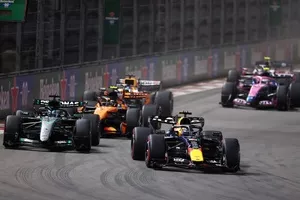
F1 set to reduce customer teams as key 2030 details emerge
Formula 1
F1 Formula 1
Las Vegas GP
2 h
F1 set to reduce customer teams as key 2030 details emerge
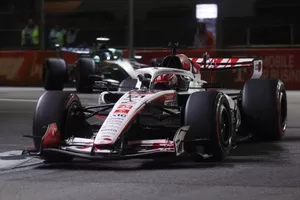
Haas keeps Rafael Camara in F1, ending his 2026 F2 title bid
Formula 1
F1 Formula 1
Las Vegas GP
4 h
Haas keeps Rafael Camara in F1, ending his 2026 F2 title bid

Laurin Heinrich "deeply disappointed but not surprised" by Raffaele Marciello after Macau clash
GT
GT GT 5 h
Laurin Heinrich "deeply disappointed but not surprised" by Raffaele Marciello after Macau clash
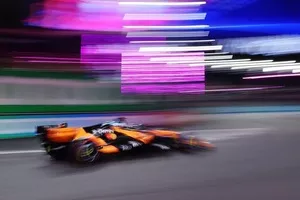
"I actually liked it" – McLaren boss defends Piastri's four-letter outburst in Las Vegas GP
Formula 1
F1 Formula 1
Las Vegas GP
5 h
"I actually liked it" – McLaren boss defends Piastri's four-letter outburst in Las Vegas GP
Feature
Discover prime content


Subscribe and access Motorsport.com with your ad-blocker.
From Formula 1 to MotoGP we report straight from the paddock because we love our sport, just like you. In order to keep delivering our expert journalism, our website uses advertising. Still, we want to give you the opportunity to enjoy an ad-free and tracker-free website and to continue using your adblocker.
You have 2 options:
- Become a subscriber.
- Disable your adblocker.
Subscribe now Already subscribed? Sign in here
Already disabled your adblocker?
Reload page
Manage Alerts
Subscribe