Special feature
Formula 1
How F1 teams will attack the Austrian GP season opener
More than three months after the first race of the season was due to take place, F1 teams will descend on the Red Bull Ring this weekend for an Austrian double-header that will kick start the campaign.
Matt Somerfield Giorgio Piola
Edited: Jun 29, 2020, 1:06 PM
Copy link
Share on Viber

The first race, first scheduled as the 11th round of the championship, occupies its same original date on the calendar so will throw up its usual challenges.
So allied to the normal hot weather and potential for storms, the dominating characteristic that will be on the team's minds is that the Red Bull Ring sits 660m above sea-level and puts them on the back foot as they do their best to reach the best cooling and aerodynamic compromise.
But added to the mix this year of the Austria challenge is the fact that teams are all bringing updates that were planned for races that should have taken place. So it will be a step into the unknown.
As James Allison, Mercedes technical director recently explained, there is months of development work that can now be rolled into one major upgrade.
"A lot of time has passed since we launched this car and if you imagine the car that would have gone to Australia, that was frozen around about Christmas.," he said.
"So, there was the whole of January, February, March - all making the car quicker in the wind tunnel and design departments. So we've got quite a lot of ideas about how to make it quicker.
"And quite a lot of those ideas were already in progress before we were forced to shut down nine weeks ago. So, our challenge now is to make sure that quarter of a year's worth of development can get off the drawing boards and onto the car as swiftly as possible and we hope to have a chunk of that for the first race in Austria."
Read Also:
- 2020 Formula 1 Austrian Grand Prix session timings and preview
- Tents, awnings to replace motorhomes in Austrian GP paddock
Meanwhile, Ferrari are expected to have some new parts to rectify issues discovered during the pre-season test and a second generation of its power unit that should improve power output and reliability.
But, it has already admitted that visually the SF1000 will look similar to the one that was ready to compete in Australia.
Over at Red Bull it ran some upgrades at last week's filming day, which all point to a decent aerodynamic step that will be added to the car for some evaluation on the Friday.
That will be particularly important to the team on its 'home' turf, because it's always had a car that performs well around the circuit to it will be hoping to seize the opportunity to start the campaign on top.
Red Bull Racing technical detail
Photo by: Giorgio Piola
Red Bull has previously been well adept at mastering the aero compromises that come from opening the cooling in Austria.
Continuing to use a saddle-style cooler arrangement above the power unit, as can be seen above, the team might even consider using the cooling outlet in the engine cover's spine in Austria.
The solution was first seen in Hungary last season and, whilst not raced, it has had other outings since too. It's also a very similar solution to the one first seen and raced by Mercedes back in 2017.
Renault has joined the list of teams confirming that it will be bring a raft of new parts to the race too, as team principal Cyril Abiteboul explained last week.
"It's been a huge effort from internal production to get the package from races three, five and six - the initial numbering obviously - from Vietnam, the Netherlands and Barcelona that will be on our car in Austria," he said.
"Those races have obviously not happened, but the performance that was supposed to come will be in Spielberg."
The development battle becomes more protracted the further you venture down the pack though, with Andy Green admitting that much of Racing Point's efforts will shift to 2021 and in dealing with the consequences of the regulation changes made to the floor.
"It became quite clear that our focus has to turn quite quickly onto 2021 because of that. There isn't going to be a significant amount of aerodynamic carry over from '20 to '21."
Mercedes AMG F1 W10, barge board
Photo by: Giorgio Piola
The team has already suggested that it is unlikely to develop the RP20 extensively throughout 2020, although it's likely it will introduce an update package in Austria that was originally assigned for Australia.
The update sees changes to the bargeboards, sidepod deflectors and associated aerodynamic furniture in furtherance of its Mercedes mimicry, as the Silver Arrows introduced a similar package at the Japanese Grand Prix last season.
Meanwhile, at Haas it will wait on the announcement of the full calendar before planning its development programme, according to Gunther Steiner.
"We are not planning any upgrades until we know exactly what we are doing this year budget wise, and what we are doing race wise," he said.
Coping with cooling
Here we look at how teams have reacted to the headache of managing the cooling in Austria in the past, with the high altitude meaning that engines need more air.

Mercedes W10 rear end with a slightly larger rear cooling outlet.
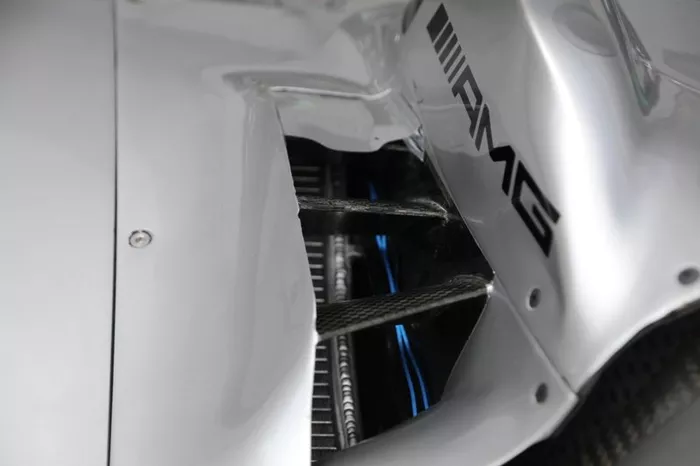
The larger of the louvred cockpit panels used by Mercedes featured on the W10 in Austria
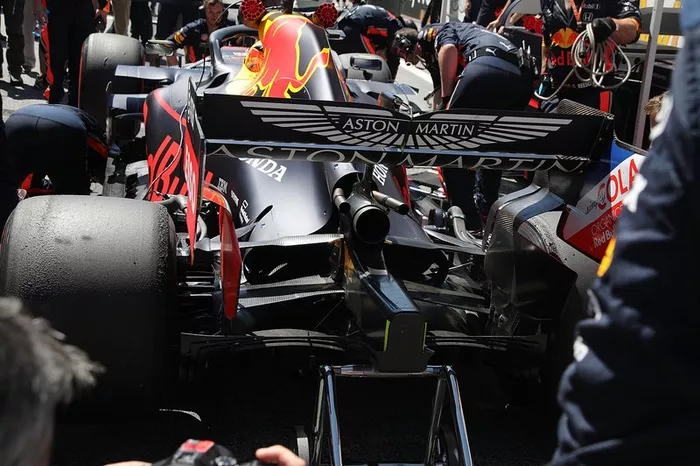
The larger rear cooling outlet on the Red Bull RB16 at the Austrian GP in 2019.
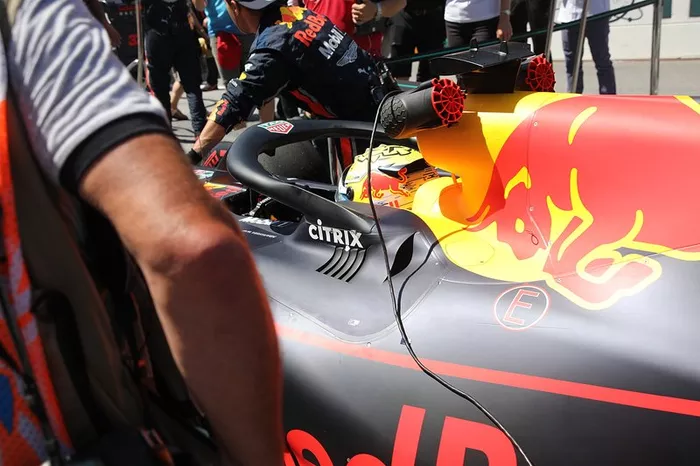
The interchangeable panels alongside the cockpit and halo on the RB16 allow for different cooling parameters. In this case the team chose to have an opening where the bodywork blends out of the halo structure and a row of louvres to enable heat to escape.

Ferrari using a larger cooling outlet at the rear of the SF90 in Austria relative to some of the lower altitude circuits.
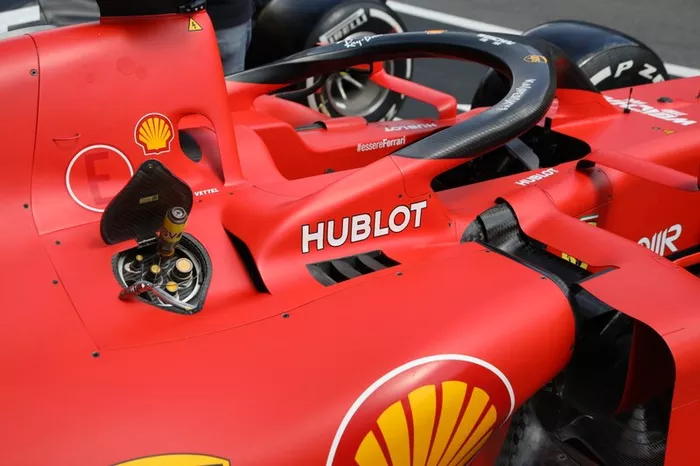
Ferrari had a double cooling arrangement alongside the cockpit, one outlet formed by the transition of the halo and a three louvre panel.
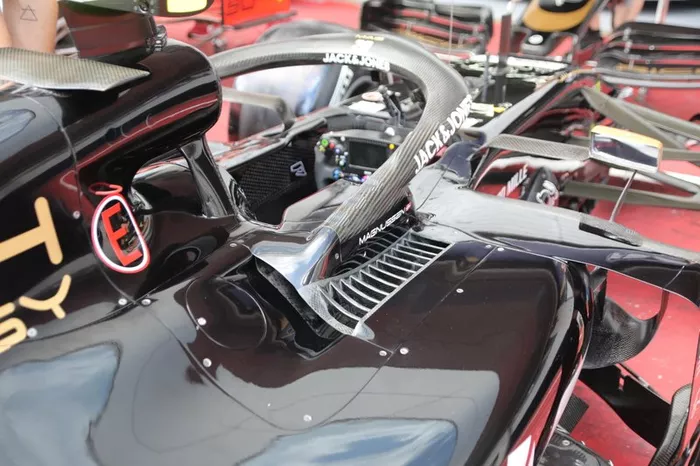
Haas looked to evacuate airflow and heat from the upper surface of the sidepod with a louvred panel and a transition outlet.
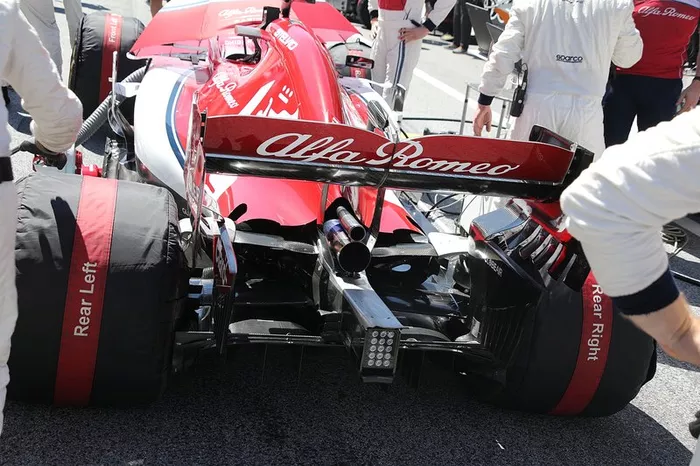
A suitably large rear cooling outlet was used at the rear of the Alfa Romeo C38.
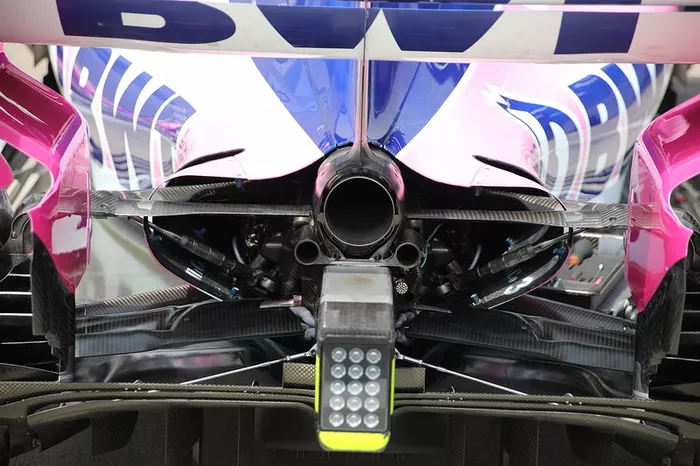
Racing Point used a particularly large rear cooling outlet in Austria last season.
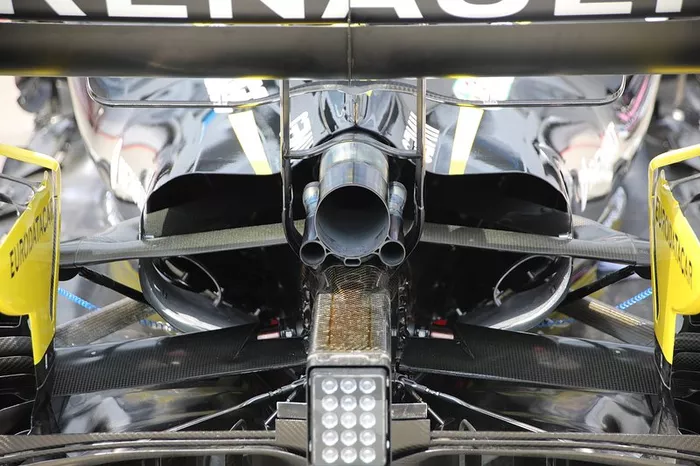
The Renault R19 had possibly one of the largest rear outlets on display in Austria in order to reject the heat created by the Renault power unit.
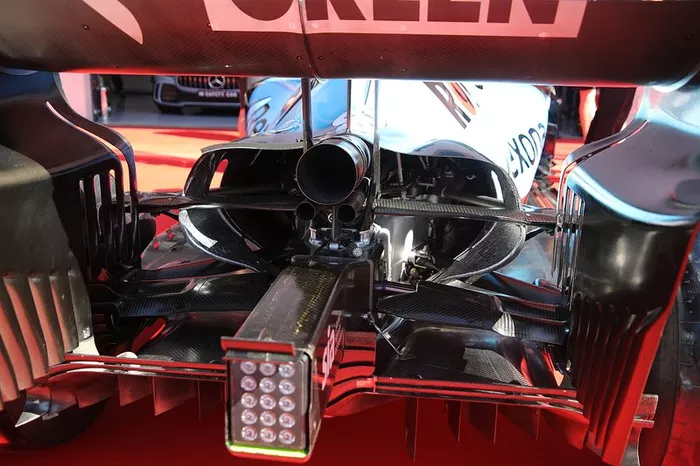
Meanwhile, Williams gave them a run for their money in the largest outlet stakes with a large rear cooling outlet of their own.
11
We want your opinion!
What would you like to see on Motorsport.com?
Take our 5 minute survey.
- The Motorsport.com Team
Read and post comments
Read also :
Share Or Save This Story
Copy link
Share on Viber
Previous article 2020 Formula 1 Austrian Grand Prix session timings and preview
Next article Brundle: Ferrari split could help Vettel "fly" in 2020
Top Comments
There are no comments at the moment. Would you like to write one?
View More & Comment

More from
Matt Somerfield

Gallery: How F1 tech evolved during the 2024 season
Formula 1
Formula 1 Dec 31, 2024
Gallery: How F1 tech evolved during the 2024 season
How McLaren’s rear wing push changed the game in F1
Formula 1
Formula 1 Dec 20, 2024
How McLaren’s rear wing push changed the game in F1
How 2026 F1 rules will help avoid identikit designs
Formula 1
Formula 1 Dec 16, 2024
How 2026 F1 rules will help avoid identikit designs
Latest news
Why Peugeot is quitting WEC’s Hypercar class
WEC
WEC WEC 51 min
Why Peugeot is quitting WEC’s Hypercar class

Spire returns check to Joe Gibbs Racing; rejects attempt to settle countersuit
NASCAR Cup
NAS NASCAR Cup 4 h
Spire returns check to Joe Gibbs Racing; rejects attempt to settle countersuit
Dodge’s NASCAR Cup car unveil will include celebrity exhibition race during Snowball Derby
NASCAR Cup
NAS NASCAR Cup 11 h
Dodge’s NASCAR Cup car unveil will include celebrity exhibition race during Snowball Derby
Feature
Discover prime content


Subscribe and access Motorsport.com with your ad-blocker.
From Formula 1 to MotoGP we report straight from the paddock because we love our sport, just like you. In order to keep delivering our expert journalism, our website uses advertising. Still, we want to give you the opportunity to enjoy an ad-free and tracker-free website and to continue using your adblocker.
You have 2 options:
- Become a subscriber.
- Disable your adblocker.
Subscribe now Already subscribed? Sign in here
Already disabled your adblocker?
Reload page
Manage Alerts
Subscribe