Analysis
Formula 1
Singapore GP and Renault engine technical feature
Edited: Sep 20, 2012, 7:46 PM
Copy link
Share on Viber

The Formula 1 World Championship lands in Singapore this week for the 14th race of the 2012 season.
The challenge of racing at night and negotiating the tricky 23-turn street track, poses unique difficulties. With the vast majority of turns taken at low speed, a neutral set-up is critical to the perfect lap and the perfect race.
As Renault Sport F1 engine engineer for Red Bull Racing David Mart explains, the role of the engine engineer is a crucial piece of a larger puzzle that sees everyone aiming to maximise their own areas to give the driver exactly the set-up he wants from his car.

Renault F1 Team engine
Photo by: xpb.cc
The work between engine supplier and team begins even before arriving at the track. In the days leading up to the race, simulations and dyno tests carried out at Viry Châtillon produce huge volumes of data that is collated and sent to the individual teams to help them take an initial decision on set-up.
“The initial information that we collate at the factory goes into a brief report, which outlines operation for the event. It is sent the week before the race and includes data from the simulations we run at the factory,” David divulges.
“It takes input from laps we did the previous year and from data for the current car at the other circuits this year. This allows us to predict fuel consumption and the effect of engine performance for the track layout.
“You will also predict engine temperatures from data you’ve collected and thus what cooling levels you think the car needs to start on.
There are different blanking options on different panels of the car and that allows you various options going into the sessions to cool the engine and gearbox. Also the gear ratios will be predicted. All these baseline settings are then tested during the practice sessions at the track.”
From these practice sessions onward, there are numerous briefing and de-briefing sessions over the weekend, during which any alterations are discussed and any planned changes proposed.
“The actual briefings are broken up between everyone involved. It will start with the driver and then their engineers and performance engineers will relate their findings, and the relevant engineers will discuss aerodynamics and then we’ll look at the engine, gearbox and KERS.
We’ll decide if the cooling levels are adequate and if we need to make a change, and obviously we’ll get a better idea on fuel consumption and be able to amend our predictions.”
With the ban on in-season testing, the quality of simulation work has reached such a high level that teams arrive at tracks with a pretty clear idea of what needs to be done and what set-ups need to be tried. As David explains, there are rarely many calls for any major amendments.
“It is very rare that you will deviate from what has been established in simulations as being the optimum for the track. It is usually just fine tuning.
This is where the relationship between the chassis engineers and engine engineers needs to be seamless as each relies on the other to feed information to get the maximum from their own specific area. As David explains, this is key to getting the most from the weekend.
“Some of the jobs that the chassis engineers do and that we as engine engineers do, interlink. We both react to driver feedback as to how the weekend and the direction of set-up has developed. On the engine side we’ll work on pedal maps, improving response in the provision of power.
“We also react to changes to the set-up such as a shift in aerodynamics. We have to be constantly aware of set-up changes, because that will affect how the power needs to be delivered.
For instance, if a big change is made in terms of downforce levels, and the guys are looking for longer at full throttle or higher top speeds, then we might need to look at ratios, how the engine behaves in cruise at the end of the straight and then throttle maps to ensure that we are taking advantage of the increased window we’ve been afforded by a set-up change from an engine perspective.
It is an iterative process until we arrive at the perfect set-up for the driver that allows him to put together his perfect lap.”
Source: Renault Sport F1
We want your opinion!
What would you like to see on Motorsport.com?
Take our 5 minute survey.
- The Motorsport.com Team
Read and post comments
Read also :
Share Or Save This Story
Copy link
Share on Viber
Previous article Marussia F1 Team appoints Max Chilton reserve driver until Brazil
Next article 'Hamilton saga' dominates in Singapore
Top Comments
There are no comments at the moment. Would you like to write one?
View More & Comment

More from
Red Bull Racing
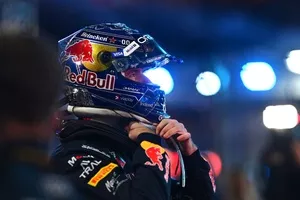
Max Verstappen without Gianpiero Lambiase at Qatar GP as Tom Hart steps in
Formula 1
Formula 1
Qatar GP
9 h
Max Verstappen without Gianpiero Lambiase at Qatar GP as Tom Hart steps in
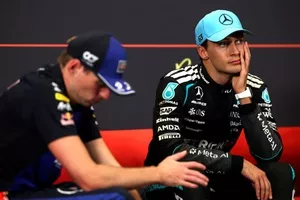
George Russell: Max Verstappen comments "amusing", but I stand by what I said
Formula 1
Formula 1
Qatar GP
13 h
George Russell: Max Verstappen comments "amusing", but I stand by what I said
Latest news
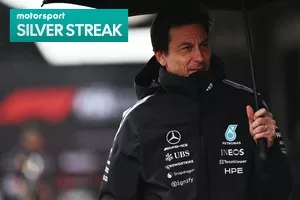
Mercedes boss Toto Wolff reveals why rival F1 teams never try to hire him
Formula 1
F1 Formula 1
Las Vegas GP
4 h
Mercedes boss Toto Wolff reveals why rival F1 teams never try to hire him
Jack Miller to revive unraced Australian GP livery for MotoGP farewell
MotoGP
MGP MotoGP
Valencia GP
7 h
Jack Miller to revive unraced Australian GP livery for MotoGP farewell
Max Verstappen without Gianpiero Lambiase at Qatar GP as Tom Hart steps in
Formula 1
F1 Formula 1
Qatar GP
9 h
Max Verstappen without Gianpiero Lambiase at Qatar GP as Tom Hart steps in

Ford reveals name for 2027 WEC LMDh challenger
WEC
WEC WEC 11 h
Ford reveals name for 2027 WEC LMDh challenger
Feature
Discover prime content


Top 10 F1 cars of the 1990s
Formula 1
By Kevin Turner
Top 10 F1 cars of the 1990s

Subscribe and access Motorsport.com with your ad-blocker.
From Formula 1 to MotoGP we report straight from the paddock because we love our sport, just like you. In order to keep delivering our expert journalism, our website uses advertising. Still, we want to give you the opportunity to enjoy an ad-free and tracker-free website and to continue using your adblocker.
You have 2 options:
- Become a subscriber.
- Disable your adblocker.
Subscribe now Already subscribed? Sign in here
Already disabled your adblocker?
Reload page
Manage Alerts
Subscribe